Basic 6 · Science · Life Cycle of Organism
The Life Cycle of a Flowering Plant
In this topic you will describe the stages in the life cycle of a flowering plant, from seed to seed.
By the end of these notes you should be able to:
- Name the stages in the life cycle of a flowering plant
- Explain pollination and fertilisation
- Describe how seeds are dispersed
What you already know
- Germination (Basic 5)
Copy everything that has a blue line on its left into your notebook. The other parts are for reading.
- Strand
- Cycle
- Sub-strand
- Life Cycle of Organism
- Indicator
- B6.2.2.1.2 – Observe the life cycle of a plant
Introduction
A maize seed becomes a tall plant that produces cobs full of new seeds. Those seeds can grow into new plants. This repeating pattern is called a life cycle.
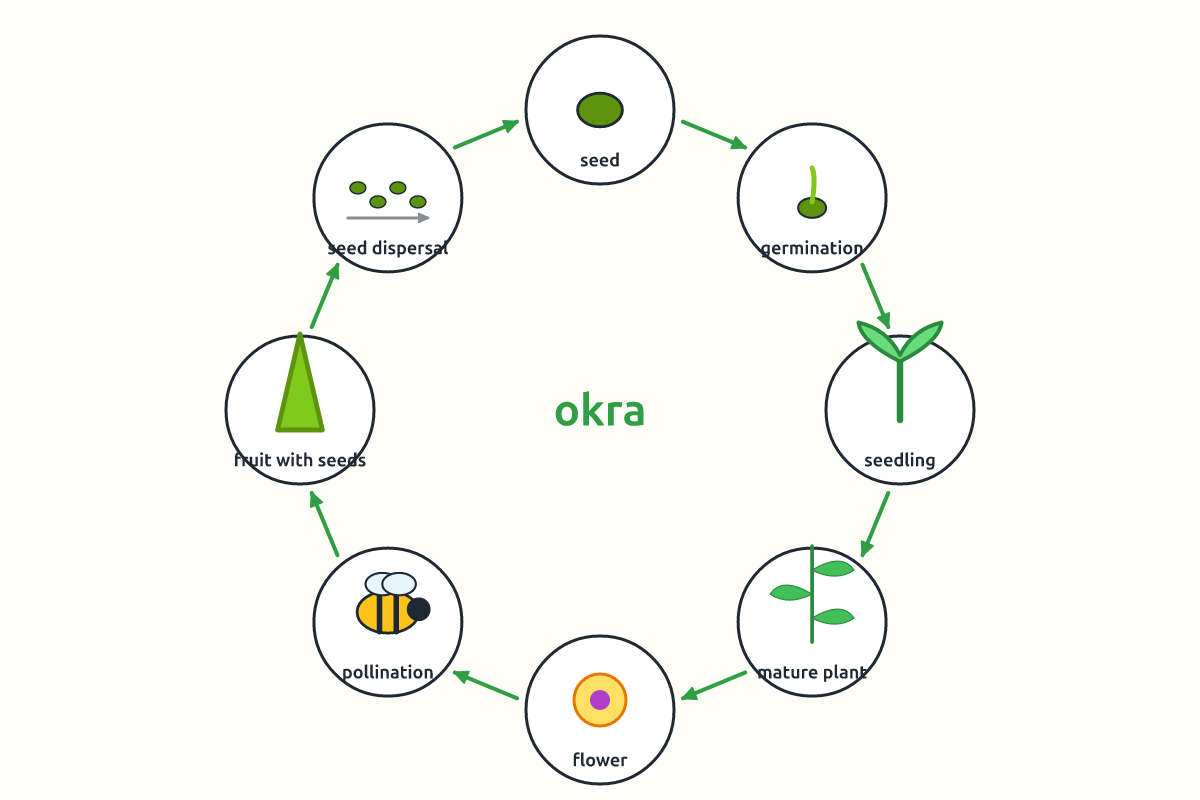
1. Stages of the Life Cycle
| Stage | What happens |
|---|---|
| seed | contains a baby plant (embryo) and stored food |
| germination | the seed absorbs water, swells and the radicle and plumule grow |
| seedling | the young plant grows its first true leaves and makes food |
| mature plant | the plant grows bigger with more roots, stems and leaves |
| flowering | the plant produces flowers |
| pollination | pollen is carried from the stamen to the stigma |
| fertilisation | the male cell in pollen joins the female cell in the ovule |
| fruit and seed formation | the ovary becomes the fruit and ovules become seeds |
| seed dispersal | seeds are spread away from the parent plant |
2. Parts of a Flower
| Part | Function |
|---|---|
| petals | attract insects with colour and scent |
| sepals | protect the flower bud |
| stamen (anther and filament) | male part; makes pollen |
| carpel/pistil (stigma, style, ovary) | female part; the stigma receives pollen and the ovary contains ovules |
3. Pollination and Fertilisation
Pollination is the transfer of pollen from the anther to the stigma. Insects such as bees and butterflies carry pollen as they feed on nectar (insect pollination). Wind carries pollen in plants such as maize and grasses (wind pollination). After pollination, a pollen tube grows down to the ovule and fertilisation happens. The ovary then grows into a fruit containing seeds.
4. Seed Dispersal
| Method | Features | Examples |
|---|---|---|
| animals | juicy fruits eaten; seeds passed out, or hooks stick to fur | mango, pawpaw, Bidens (sticky burr) |
| wind | light seeds with wings or hairs | silk cotton, Tridax, mahogany |
| water | seeds that float | coconut |
| explosion (self-dispersal) | pods dry and burst open | okra, beans, Balsam |
Dispersal reduces overcrowding and competition with the parent plant and helps plants spread to new places.
New words
- life cycle
- The stages a living thing goes through from birth to reproduction.
- pollination
- The transfer of pollen to the stigma.
- fertilisation
- The joining of male and female cells.
- ovule
- The part of the ovary that becomes a seed.
- seed dispersal
- The spreading of seeds away from the parent plant.
- stamen
- The male part of a flower.
Summary
- The life cycle runs from seed to seedling, mature plant, flower, fruit and back to seed.
- Pollination moves pollen; fertilisation joins male and female cells.
- The ovary becomes the fruit and the ovules become seeds.
- Seeds are dispersed by animals, wind, water and explosion.
Class activity: Flower Dissection
- Take a hibiscus flower and carefully remove its parts.
- Stick each part on paper and label it.
- Write the function of each part.
You need: Viable maize, Okra seeds, Soil-filled pots or school garden bed, Watering can, Plant-growth record cards
Exercises
Answer in your exercise book first, then check your answers.
1. Which comes first in the life cycle?
- A. Seed
- B. Fruit
- C. Flower
- D. Seed dispersal
Show answer
Answer: SeedThe cycle starts with a seed.2. The transfer of pollen to the stigma is…
- A. pollination
- B. fertilisation
- C. germination
- D. dispersal
Show answer
Answer: pollinationBefore fertilisation.3. Coconut seeds are dispersed by…
- A. water
- B. explosion
- C. wind
- D. hooks
Show answer
Answer: waterThey float.4. The ovary becomes the fruit.
- A. True
- B. False
Show answer
Answer: TrueOvules become seeds.5. Maize is pollinated mainly by insects.
- A. True
- B. False
Show answer
Answer: FalseMaize is wind-pollinated.6. The male part of a flower that makes pollen is the ______.
Show answer
Answer: stamen (anther)Anther on a filament.7. List the stages of the plant life cycle in order.
Show answer
Answer: Seed, germination, seedling, mature plant, flowering, pollination, fertilisation, fruit and seed, dispersal.In order.8. Why is seed dispersal important?
Show answer
Answer: It reduces overcrowding and competition with the parent plant and spreads the plant to new areas.Survival.
Homework
- Collect four seeds dispersed in different ways and explain each method.