Basic 6 · Science · Earth Science
Conserving Water at Home, School and in the Community
In this topic you will investigate how water is wasted and ways to conserve it at home, in school and in the community.
By the end of these notes you should be able to:
- Explain why water must be conserved
- Investigate how water is wasted
- Suggest and practise ways to conserve water
What you already know
- The water cycle (Basic 5)
Copy everything that has a blue line on its left into your notebook. The other parts are for reading.
- Strand
- Cycle
- Sub-strand
- Earth Science
- Indicator
- B6.2.1.4.1 – Investigate ways of conserving water in the home school and community
Introduction
Only a very small part of the water on earth is fresh water that we can drink. In many Ghanaian communities, people walk long distances or queue for hours for water. Every drop counts.
1. Why Conserve Water?
- Fresh water is limited; most of the earth's water is salty seawater.
- Treating and pumping water costs money and energy.
- Rivers are being polluted by galamsey and waste, reducing clean water.
- Droughts and climate change make water scarcer.
- Saving water means more for everyone, including future generations.
2. How Water Is Wasted
| Place | Wasteful practice |
|---|---|
| home | leaving taps running while brushing teeth or washing dishes |
| home | leaking pipes and taps |
| school | broken taps; pupils playing with water |
| community | burst main pipes not repaired; washing cars with running hoses |
| farms | watering at midday when much water evaporates |
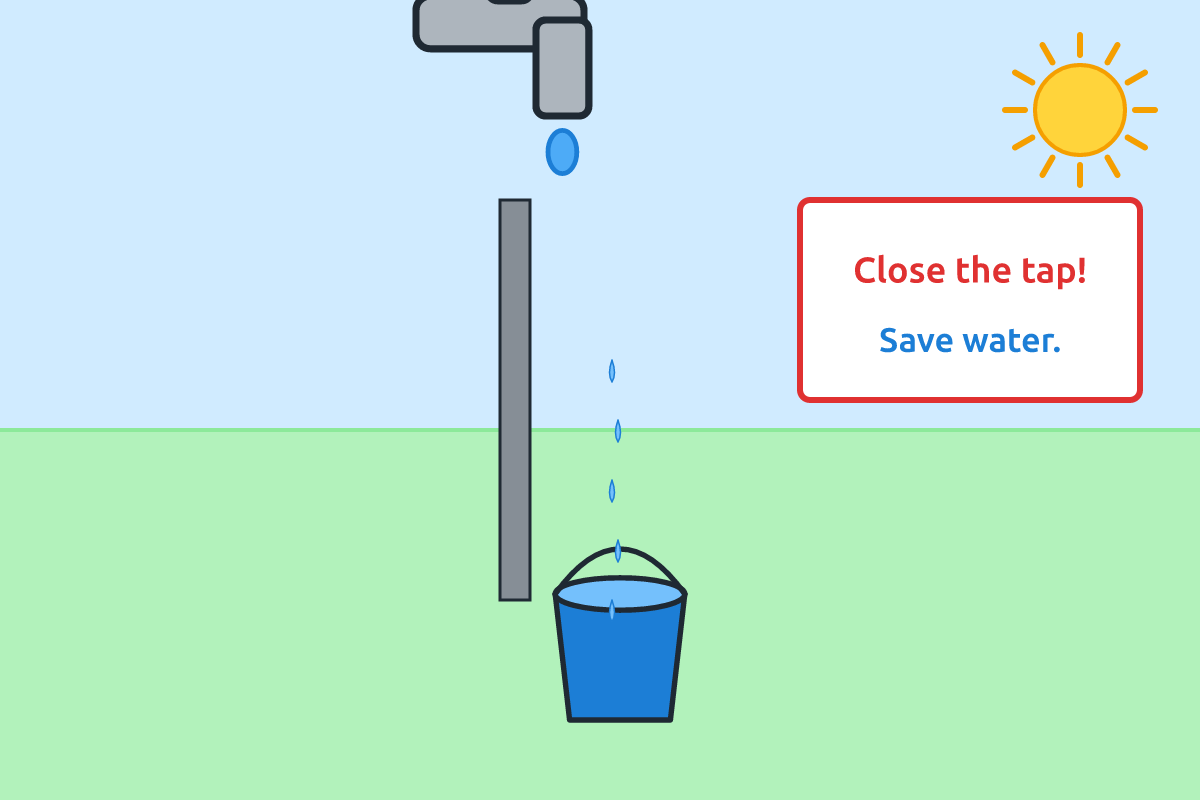
A tap that drips once every second can waste thousands of litres in a year.
3. Ways to Conserve Water
| Place | Action |
|---|---|
| home | close taps tightly; fix leaks; use a cup when brushing teeth; reuse washing water for flushing or plants |
| school | report broken taps; fit taps that close automatically; put up reminders |
| community | harvest rainwater from roofs; repair burst pipes quickly; protect rivers from pollution |
| farms | water in the early morning or evening; use drip irrigation; mulch soil to keep moisture |
4. Rainwater Harvesting
Rainwater can be collected from roofs using gutters and stored in tanks, polytanks or large drums. It can be used for washing, cleaning, flushing and watering plants. Stored water should be covered to keep out dirt and mosquitoes. Rainwater for drinking must be filtered and boiled or treated.
Many schools and homes in Ghana now use polytanks to store rainwater for the dry season, which reduces the demand on pipe-borne water.
Safety: Cover all water containers to prevent mosquitoes from breeding.
New words
- conserve
- To use carefully and avoid waste.
- fresh water
- Water that is not salty.
- rainwater harvesting
- Collecting and storing rain for use.
- drip irrigation
- Watering plants slowly at their roots.
- mulch
- A covering of leaves or straw that keeps soil moist.
- scarce
- Not enough for everyone.
Summary
- Fresh water is limited and must be conserved.
- Leaks, running taps and pollution waste water.
- Close taps, fix leaks and reuse water.
- Harvest rainwater and protect water sources.
Class activity: Water Audit
- Survey the taps and water containers in your school.
- Record leaks, broken taps and uncovered containers.
- Report your findings to the headteacher with suggestions.
You need: Local water samples in clear bottles, Clean cotton cloth, Covered water container
Exercises
Answer in your exercise book first, then check your answers.
1. Which action saves water?
- A. Closing the tap while brushing
- B. Leaving taps running
- C. Ignoring leaks
- D. Washing with a running hose
Show answer
Answer: Closing the tap while brushingUse a cup.2. Collecting rain from roofs is called…
- A. rainwater harvesting
- B. irrigation
- C. evaporation
- D. condensation
Show answer
Answer: rainwater harvestingStored in tanks.3. The best time to water crops is…
- A. early morning or evening
- B. midday
- C. midnight only
- D. never
Show answer
Answer: early morning or eveningLess evaporation.4. Most water on earth is fresh water.
- A. True
- B. False
Show answer
Answer: FalseMost is salty seawater.5. A dripping tap can waste thousands of litres a year.
- A. True
- B. False
Show answer
Answer: TrueDrips add up.6. Covering soil with leaves to keep it moist is called ______.
Show answer
Answer: mulchingIt saves water.7. Give three ways to conserve water at home.
Show answer
Answer: Close taps, fix leaks, reuse washing water (or use a cup when brushing).Any three.8. Explain why galamsey makes water conservation even more important.
Show answer
Answer: It pollutes rivers, reducing the clean water available, so the remaining clean water must be used carefully.Pollution reduces supply.
Homework
- Record how many buckets of water your household uses in a day and suggest two ways to save.