Basic 6 · Science · Earth Science
Carbon and the Carbon Cycle
In this topic you will learn the forms of carbon and how carbon moves through the environment in the carbon cycle.
By the end of these notes you should be able to:
- Identify forms of carbon in the environment
- Describe the processes in the carbon cycle
- Explain the importance of carbon to living things
What you already know
- Carbon dioxide and its effects (Basic 5)
Copy everything that has a blue line on its left into your notebook. The other parts are for reading.
- Strand
- Cycle
- Sub-strand
- Earth Science
- Indicator
- B6.2.1.3.1 – Know the functions of carbon within the environment
Introduction
The pencil lead you write with, the charcoal used for cooking and the food you eat all contain carbon. Carbon is an element found in all living things.
1. Forms of Carbon
| Form | Where found | Use |
|---|---|---|
| graphite | pencil "lead" | writing, lubricants, batteries |
| diamond | mined from rocks (e.g. at Akwatia, Ghana) | jewellery, cutting tools |
| charcoal | made by burning wood with little air | cooking fuel, filters |
| coal, crude oil, natural gas | underground (fossil fuels) | fuel and electricity |
| carbon dioxide | air | photosynthesis |
| carbohydrates, fats, proteins | food and living things | energy and growth |
2. Functions of Carbon in the Environment
- All living things are built from carbon compounds (sugars, fats, proteins).
- Plants use carbon dioxide to make food in photosynthesis.
- Carbon fuels (charcoal, firewood, gas, petrol) provide energy.
- Carbon dioxide in the air keeps the earth warm through the greenhouse effect.
- Charcoal filters clean water and air.
3. The Carbon Cycle
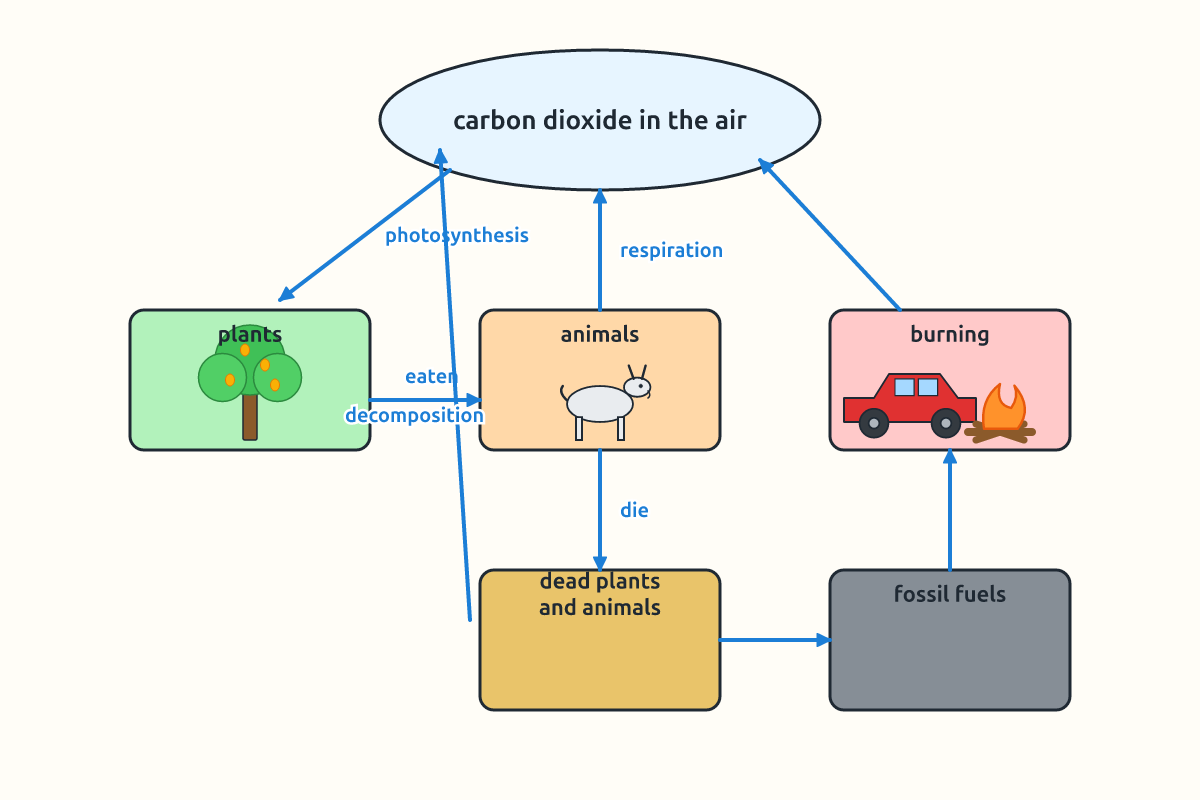
Carbon moves continuously between the air, living things, the soil and the oceans. This movement is called the carbon cycle.
| Process | What happens to carbon |
|---|---|
| photosynthesis | plants take in carbon dioxide from the air and turn it into food |
| feeding | animals eat plants and take in the carbon |
| respiration | plants and animals release carbon dioxide into the air |
| decomposition | when living things die, decomposers break them down, releasing carbon dioxide |
| fossil fuel formation | over millions of years, buried remains become coal, oil and gas |
| combustion | burning fuels releases carbon dioxide into the air |
4. Keeping the Cycle in Balance
Normally, the carbon taken in by plants balances the carbon released. But burning large amounts of fossil fuels, charcoal and forests adds extra carbon dioxide to the air, causing global warming. Planting trees and reducing burning help to restore the balance.
Charcoal production in Ghana also cuts down many trees, so using improved cookstoves and gas helps to protect forests.
New words
- carbon
- An element found in all living things and many fuels.
- graphite
- A soft form of carbon used in pencils.
- carbon cycle
- The movement of carbon through the environment.
- decomposition
- The breaking down of dead matter.
- combustion
- Burning.
- fossil fuel
- Fuel formed from ancient remains, e.g. coal and oil.
Summary
- Carbon exists as graphite, diamond, charcoal, fuels and carbon dioxide.
- All living things contain carbon.
- Photosynthesis, respiration, decomposition and combustion move carbon around.
- Too much burning upsets the carbon balance and warms the earth.
Class activity: Carbon Cycle Role-Play
- Each pupil is a part of the cycle: air, plant, animal, decomposer or factory.
- Pass a "carbon" card along as you explain each process.
- Discuss what happens if the "factory" passes too many cards.
You need: Charcoal pieces, Graphite pencils, Printed photographs of local foods plants, The carbon cycle
Exercises
Answer in your exercise book first, then check your answers.
1. Which form of carbon is used in pencils?
- A. Graphite
- B. Diamond
- C. Charcoal
- D. Coal
Show answer
Answer: GraphiteIt is soft.2. Which process removes carbon dioxide from the air?
- A. Photosynthesis
- B. Respiration
- C. Burning
- D. Decomposition
Show answer
Answer: PhotosynthesisPlants use it.3. Diamonds are mined in Ghana at…
- A. Akwatia
- B. Tema
- C. Keta
- D. Bolgatanga
Show answer
Answer: AkwatiaEastern Region.4. All living things contain carbon.
- A. True
- B. False
Show answer
Answer: TrueIn sugars, fats, proteins.5. Decomposition adds carbon dioxide to the air.
- A. True
- B. False
Show answer
Answer: TrueDecomposers release it.6. Burning is also called ______.
Show answer
Answer: combustionIt releases CO₂.7. Name three processes in the carbon cycle.
Show answer
Answer: Photosynthesis, respiration and decomposition (or combustion, feeding).Any three.8. Explain how cutting down forests affects the carbon cycle.
Show answer
Answer: Fewer trees take in carbon dioxide, and burning them releases more, so carbon dioxide in the air increases.Imbalance.
Homework
- List ten things in your home that contain carbon.