Basic 6 · History · Impact of European Presence
European Impact: Social and Cultural Changes
In this topic you will assess the social and cultural changes brought about by the European presence, such as language, dress, food, architecture and town life.
By the end of these notes you should be able to:
- Identify social and cultural changes caused by European contact
- Explain how towns grew
- Assess which changes were helpful or harmful
What you already know
- Infrastructure and health
Copy everything that has a blue line on its left into your notebook. The other parts are for reading.
- Strand
- Europeans In Ghana
- Sub-strand
- Impact of European Presence
- Indicator
- B6.3.4.1.1 – Assess the changes that the European presence brought to Ghana
Introduction
English is Ghana's official language, many people wear suits to work and towns have streets with European names. These are signs of the social and cultural changes that came with European presence.
1. Language and Names
English became the language of government, courts and schools. Portuguese words entered some Ghanaian languages, for example "paano" (bread, from Portuguese "pão") and "krataa" (paper or letter, from Portuguese "carta"). Many families have European names, such as Bannerman, Hansen, Brew, Ribeiro and Van Dyck, from European ancestors or names given at baptism.
2. Dress and Food
| Area | Changes |
|---|---|
| dress | suits, shirts, trousers, school uniforms and frocks; kente and other local cloth remained important |
| food | bread, tea, rice, tinned foods, sugar and new crops such as maize and cassava |
| household goods | metal pots, glass, mirrors, umbrellas, bicycles |
3. Architecture and Towns
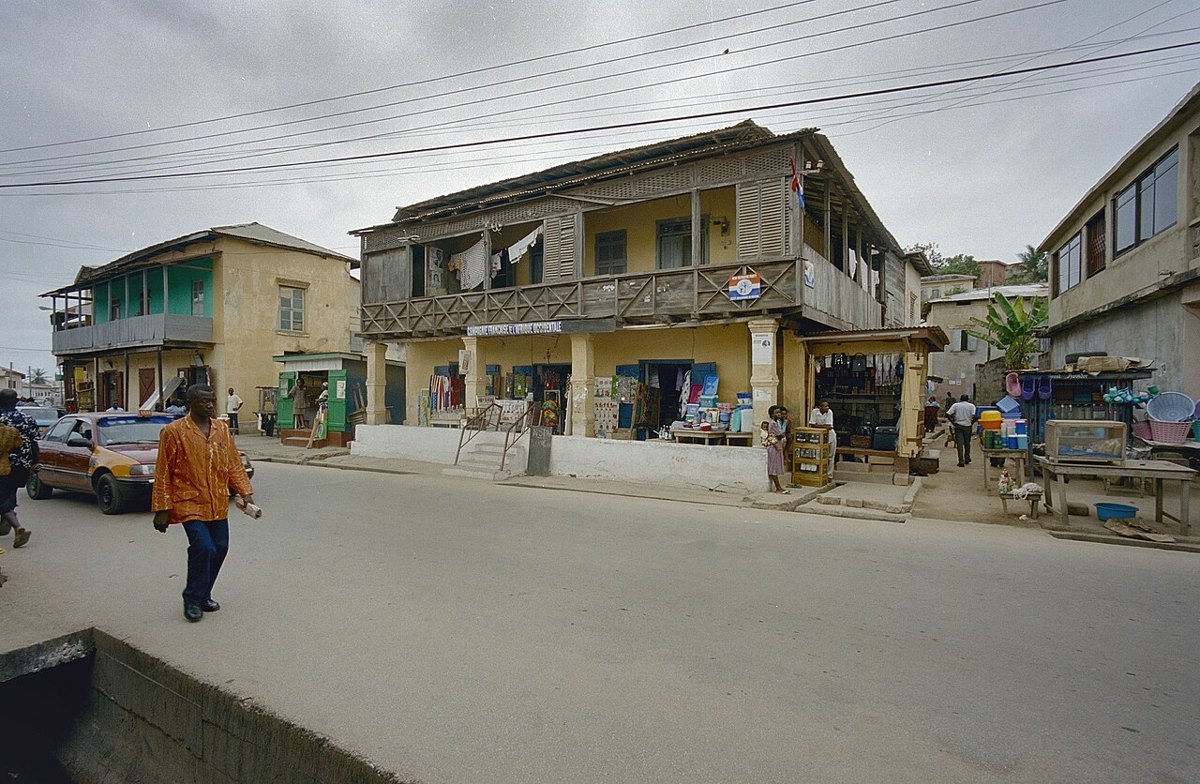
Europeans built forts, castles and houses with stone, bricks and corrugated iron roofs. Coastal towns such as Cape Coast, Elmina and Accra grew around the forts. Later, mining and railway towns such as Tarkwa, Obuasi and Sekondi-Takoradi grew. People moved from villages to towns to find work in offices, mines, ports and trade. This movement is called urbanisation.
4. New Social Groups
A new class of educated Africans emerged: teachers, clerks, lawyers, doctors and merchants. They read newspapers, formed clubs and later political organisations. The Aborigines' Rights Protection Society (ARPS), formed in 1897, was led by educated Africans and chiefs to protect Ghanaian land rights.
5. Assessing Social and Cultural Changes
| Positive | Negative |
|---|---|
| a common language (English) helps Ghanaians of different groups communicate | some people looked down on Ghanaian languages and culture |
| new skills, professions and goods | dependence on imported goods |
| growth of towns and trade | overcrowding and poor sanitation in towns |
| new ideas that helped the independence struggle | weakening of some family and community ties |
Ghanaians did not simply copy European ways. They mixed new ideas with their own culture. For example, highlife music combined European instruments with African rhythms.
New words
- culture
- The way of life of a people.
- urbanisation
- The growth of towns as people move from villages.
- architecture
- The style of buildings.
- official language
- The language used by the government.
- ARPS
- Aborigines' Rights Protection Society, formed in 1897.
- loanword
- A word borrowed from another language.
Summary
- English became the official language; Portuguese words entered local languages.
- Dress, food, buildings and towns changed.
- Educated Africans formed new social groups and organisations.
- Ghanaians blended European ideas with their own culture.
Class activity: Culture Mix Chart
- List five things in daily life that came from European contact.
- List five things that are purely Ghanaian.
- Discuss which you would keep and why.
You need: Ghana map, Printed photographs of forts, Early mission schools, Cowrie shells, Trade beads
Exercises
Answer in your exercise book first, then check your answers.
1. Ghana's official language is…
- A. English
- B. Portuguese
- C. Dutch
- D. Danish
Show answer
Answer: EnglishUsed in government and schools.2. The word "paano" (bread) comes from…
- A. Portuguese
- B. Danish
- C. French
- D. German
Show answer
Answer: PortugueseFrom "pão".3. The ARPS was formed in…
- A. 1897
- B. 1957
- C. 1482
- D. 2000
Show answer
Answer: 1897To protect land rights.4. Towns such as Tarkwa grew because of mining.
- A. True
- B. False
Show answer
Answer: TrueWorkers moved there.5. Ghanaians completely abandoned their culture.
- A. True
- B. False
Show answer
Answer: FalseThey blended old and new.6. The growth of towns as people move from villages is ______.
Show answer
Answer: urbanisationRural to urban movement.7. Name two social changes caused by European contact.
Show answer
Answer: English language and European-style dress (or new foods, towns, architecture).Any two.8. Explain how highlife music shows a blend of cultures.
Show answer
Answer: It uses European instruments such as guitars and trumpets with African rhythms and languages.Cultural mixing.
Homework
- Find three Ghanaian surnames of European origin and find out their history.