Basic 6 · English Language
Poems and Experience, Content and Function Words, Articles, Brainstorming National Issues and Noun Phrases for Conditions
In this topic you will relate poems to your experiences, use content and function words, use articles, brainstorm a national issue and use noun phrases to describe conditions.
By the end of these notes you should be able to:
- Relate the central message of a poem to your experience
- Use content and function words appropriately
- Use definite and indefinite articles correctly, including zero article
- Brainstorm ideas on a national issue
- Use noun phrases to describe conditions
What you already know
- Composing Songs, Minimal Pairs, Proper Nouns, Modes of Writing and Quotation Marks
Copy everything that has a blue line on its left into your notebook. The other parts are for reading.
Lesson 1
- Strand
- Oral Language
- Sub-strand
- Poems
- Indicator
- B6.1.3.1.1 – Relate the central messages of poems to personal experiences
Introduction
Poems can describe situations we have lived through. When we relate a poem to our own lives, we understand it more deeply.
Relating a Poem to Experience
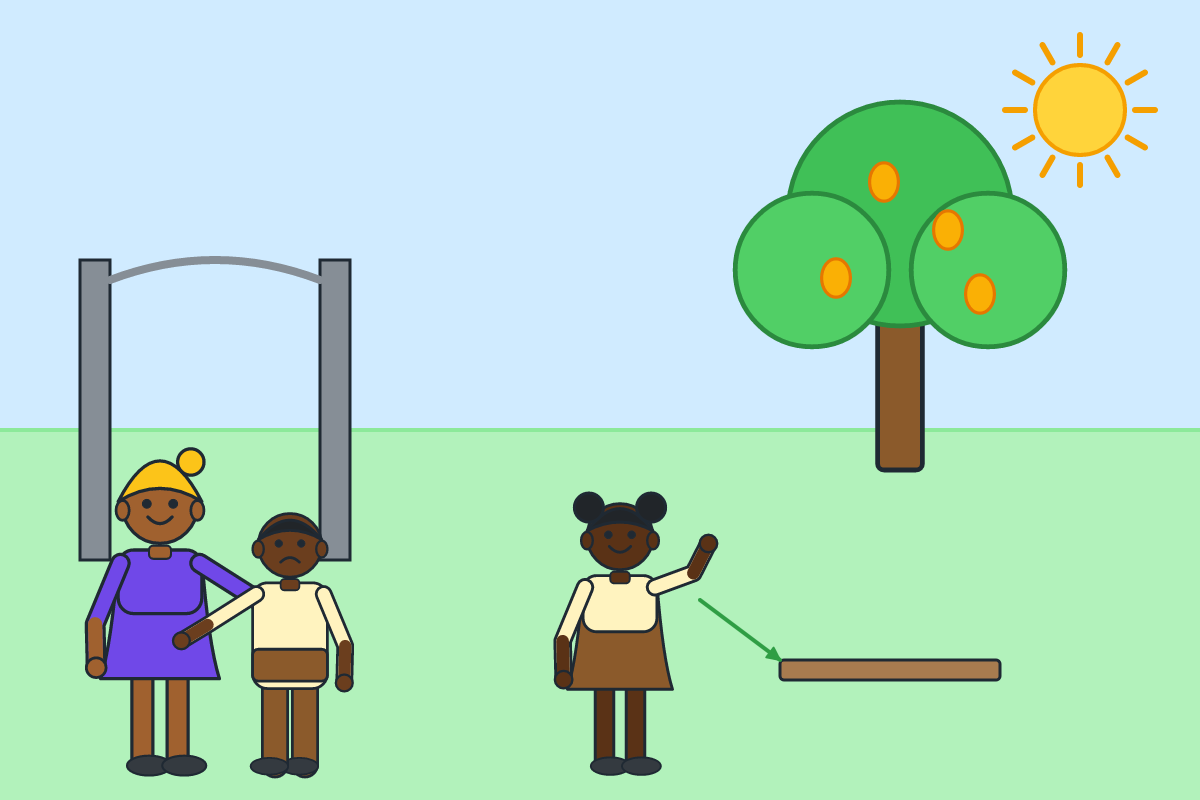
"First Day"
"The gate was tall, the walls were wide,
I held my mother's hand inside;
The faces new, the voices loud,
I felt so small within the crowd.
But then a girl with braided hair
Said, 'Come and sit with me right there.'
And from that moment, fear was gone;
A friend can make the weak feel strong."
| Question | Answer |
|---|---|
| How did the speaker feel at first? | small, nervous and afraid |
| What changed the speaker's feelings? | a girl invited the speaker to sit with her |
| Central message | kindness and friendship can remove fear |
| Personal link (example) | when I joined a new school, a classmate showed me around |
New words
- central message
- The main idea of a poem.
- nervous
- Feeling worried or afraid.
- relate
- To connect one thing with another.
Summary
- "First Day" shows how kindness removes fear.
- Relating poems to experience makes them meaningful.
Exercises
Answer in your exercise book first, then check your answers.
1. How did the speaker feel at first?
- A. small and afraid
- B. happy and proud
- C. angry
- D. bored
Show answer
Answer: small and afraid"I felt so small".2. A girl helped the speaker feel welcome.
- A. True
- B. False
Show answer
Answer: TrueShe invited them to sit.3. "A friend can make the weak feel ______."
Show answer
Answer: strongLast line.4. Relate the poem to an experience of your own.
Show answer
Answer: Answers will vary, e.g. a classmate helped me on my first day.Personal link.
Lesson 2
- Strand
- Reading
- Sub-strand
- Vocabulary
- Indicator
- B6.2.6.1.1 – Use level-appropriate content words and function words appropriately in spoken and written communication
Introduction
In Basic 5 you learnt that content words carry meaning and function words hold sentences together. Now you will use them to speak and write more clearly.
Using Content and Function Words
| Sentence | Content words | Function words |
|---|---|---|
| The farmer sold his yams at the market. | farmer, sold, yams, market | the, his, at, the |
| Ama and Kofi quickly finished their work. | Ama, Kofi, quickly, finished, work | and, their |
When we speak, we stress content words and say function words lightly: "The FARMER SOLD his YAMS at the MARKET." When we write headlines or text messages, we often leave out function words: "Farmer Sells Yams at Market"; "Coming home now."
In formal writing, keep all the function words so your sentences are complete and clear.
New words
- content word
- A word that carries meaning (noun, verb, adjective, adverb).
- function word
- A word that connects (article, preposition, conjunction, pronoun).
- headline
- A short title, often without function words.
Summary
- Content words are stressed; function words are said lightly.
- Headlines drop function words; formal writing keeps them.
Exercises
Answer in your exercise book first, then check your answers.
1. Which is a function word?
- A. at
- B. farmer
- C. sold
- D. yams
Show answer
Answer: atPreposition.2. Headlines often leave out function words.
- A. True
- B. False
Show answer
Answer: TrueTo save space.3. In speech, we stress ______ words.
Show answer
Answer: contentThey carry meaning.4. Rewrite as a full sentence: "Pupils Win Quiz Contest."
Show answer
Answer: The pupils won the quiz contest.Add function words.
Lesson 3
- Strand
- Grammar
- Sub-strand
- Determiners
- Indicator
- B6.3.2.1.1 – Identify and use definite and indefinite articles
Introduction
Articles help show whether a noun is general, particular or not used with an article at all.
Articles and the Zero Article
| Article | Use | Example |
|---|---|---|
| a / an | one of many, not specific | a teacher; an orange |
| the | specific or already mentioned; unique things | the teacher we met; the sun |
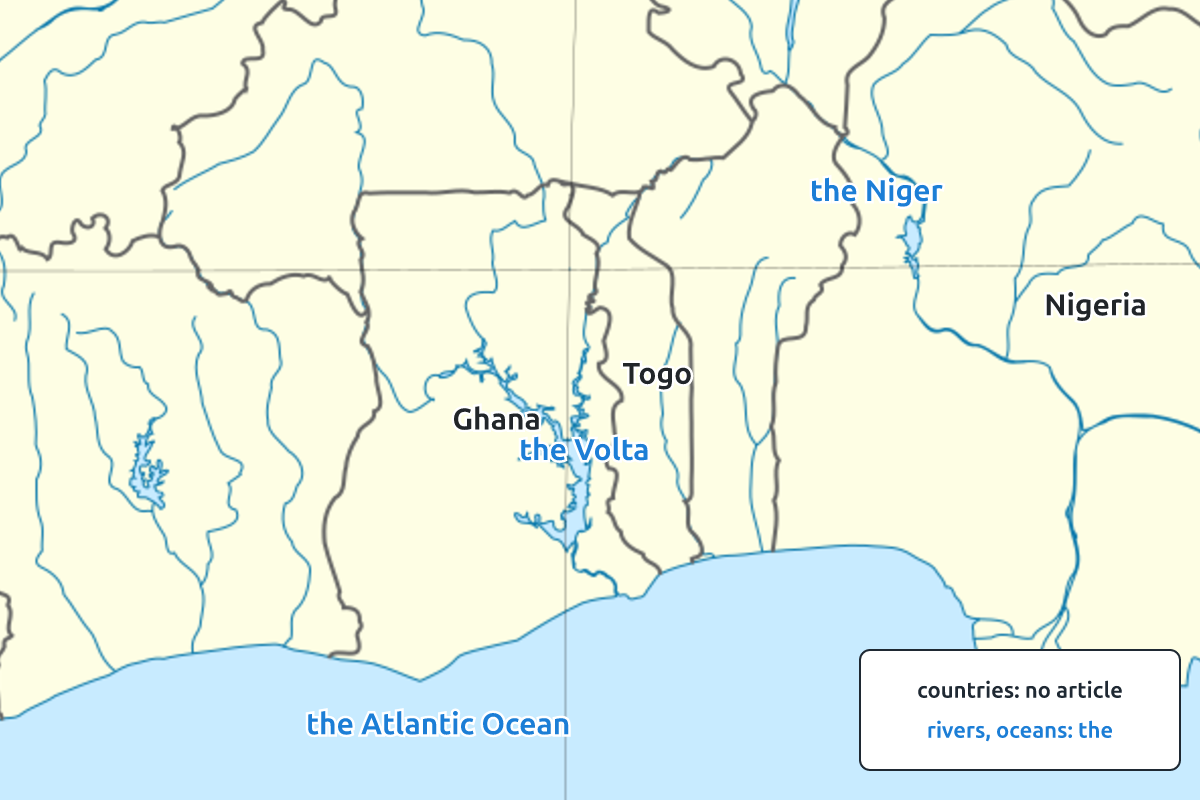
| no article (zero article) | plural or uncountable nouns in general; most names | Mangoes are sweet. Water is life. Ghana is beautiful. |
Special uses of "the": with rivers, seas and groups of islands (the Volta, the Atlantic Ocean), with superlatives (the tallest), with musical instruments (play the drum) and with national groups (the Ewe).
No article: with most countries and cities (Ghana, Accra), meals (We had breakfast), and school subjects (I like Mathematics).
New words
- definite article
- "the".
- indefinite article
- "a" or "an".
- zero article
- Using no article before a noun.
Summary
- Use a/an for any one; the for specific or unique things.
- Use no article with general plurals, uncountables and most names.
Exercises
Answer in your exercise book first, then check your answers.
1. Choose: ___ Volta is a long river.
- A. The
- B. A
- C. An
- D. no article
Show answer
Answer: TheRivers take "the".2. We say "I like Mathematics" without an article.
- A. True
- B. False
Show answer
Answer: TrueSchool subjects.3. She plays ______ guitar very well. (a/the)
Show answer
Answer: theMusical instruments.4. Correct: "The Ghana is a beautiful country."
Show answer
Answer: Ghana is a beautiful country.No article with most countries.
Lesson 4
- Strand
- Writing
- Sub-strand
- Writing As a Process
- Indicator
- B6.4.9.1.1 – Select a topic of choice on a national issue brainstorm ideas and organize them before writing
Introduction
Writing about national issues starts with choosing a topic you care about and brainstorming ideas.
Brainstorming a National Issue
| Issue | Possible focus |
|---|---|
| galamsey | effects on rivers and farms |
| unemployment | why young people cannot find jobs |
| road accidents | causes and prevention |
| plastic waste | flooding in cities |
| teenage pregnancy | effects on girls' education |
Brainstorming methods
- listing: write every idea quickly in a list
- mind map: put the issue in the centre and branch out causes, effects and solutions
- questions: ask who, what, why, where, when and how
- discussion: talk with classmates and note new ideas
Example mind map for "Road Accidents": causes (speeding, drunk driving, bad roads, phone use); effects (deaths, injuries, poverty, orphans); solutions (enforce speed limits, repair roads, education, seat belts).
New words
- national issue
- A matter affecting the whole country.
- brainstorm
- To generate many ideas quickly.
- mind map
- A diagram linking ideas to a central topic.
Summary
- Choose a national issue you care about.
- Use lists, mind maps and questions to brainstorm.
Exercises
Answer in your exercise book first, then check your answers.
1. Which is a national issue?
- A. road accidents
- B. my pencil
- C. my lunch
- D. my shoe
Show answer
Answer: road accidentsAffects the country.2. A mind map links ideas to a central topic.
- A. True
- B. False
Show answer
Answer: TrueBranches.3. Brainstorming means generating many ______ quickly.
Show answer
Answer: ideasBefore writing.4. List three causes of road accidents for a mind map.
Show answer
Answer: Speeding, drunk driving, phone use (or bad roads).Any three.
Lesson 5
- Strand
- Writing Conventions/ Extensive Reading
- Sub-strand
- Using Naming Words, Building the Love and Culture of Reading
- Indicator
- B6.5.3.1.1 – Identify and use noun phrases to describe conditions
Introduction
A noun phrase is a group of words built around a noun. Noun phrases can describe conditions in detail.
Noun Phrases for Conditions
| Head noun | Noun phrase | Condition described |
|---|---|---|
| road | a narrow, pothole-ridden road | poor road condition |
| rain | a heavy, non-stop downpour | weather |
| patient | a weak, feverish patient | health |
| market | a crowded, noisy market | situation |
| harvest | a poor harvest after the long drought | farming |
Reading extract: "After three days of a heavy downpour, the narrow, pothole-ridden road to our village became a muddy river. A long queue of stranded trotros stood at the broken bridge, and a group of tired, hungry passengers waited under the trees."
New words
- noun phrase
- A group of words built around a noun.
- head noun
- The main noun in a noun phrase.
- stranded
- Unable to move or continue a journey.
Summary
- Noun phrases add detail to the head noun.
- They describe conditions such as weather, health and roads.
Exercises
Answer in your exercise book first, then check your answers.
1. In "a crowded, noisy market", the head noun is…
- A. market
- B. crowded
- C. noisy
- D. a
Show answer
Answer: marketMain noun.2. Noun phrases can describe conditions.
- A. True
- B. False
Show answer
Answer: Truee.g. weather.3. A long queue of ______ trotros stood at the bridge.
Show answer
Answer: strandedFrom the extract.4. Write two noun phrases describing the condition of your school compound.
Show answer
Answer: E.g. a clean, sandy compound; a tall, shady mango tree.Head noun + description.
Homework
- Draw a mind map for a national issue and write two noun phrases about it.