Basic 6 · Creative Arts · Planning, Making and Composing
Experimenting with Performing Arts Media and Techniques
In this topic you will experiment with performing arts media and techniques, such as voice, body, instruments, improvisation and call-and-response, to create performances.
By the end of these notes you should be able to:
- Identify media used in performing arts
- Experiment with techniques such as improvisation, mime and call-and-response
- Create a short performance piece
What you already know
- International performing artists
Copy everything that has a blue line on its left into your notebook. The other parts are for reading.
- Strand
- Performing Arts
- Sub-strand
- Planning, Making and Composing
- Indicator
- B6.2.2.2.1 – Experiment with available performing arts media and techniques to create performing artworks
Introduction
Visual artists use paint and clay; performing artists use their voices, bodies, instruments and the stage. By experimenting, performers discover new ways to express ideas.
1. Performing Arts Media
| Medium | Examples |
|---|---|
| voice | singing, speaking, chanting |
| body | movement, gestures, facial expressions, dance |
| instruments | drums, xylophone (gyil), flute, bells, guitar |
| props and costumes | stools, calabashes, cloth, masks |
| space and sound | stage, lighting, microphones |
2. Techniques to Experiment With
| Technique | Meaning | Example |
|---|---|---|
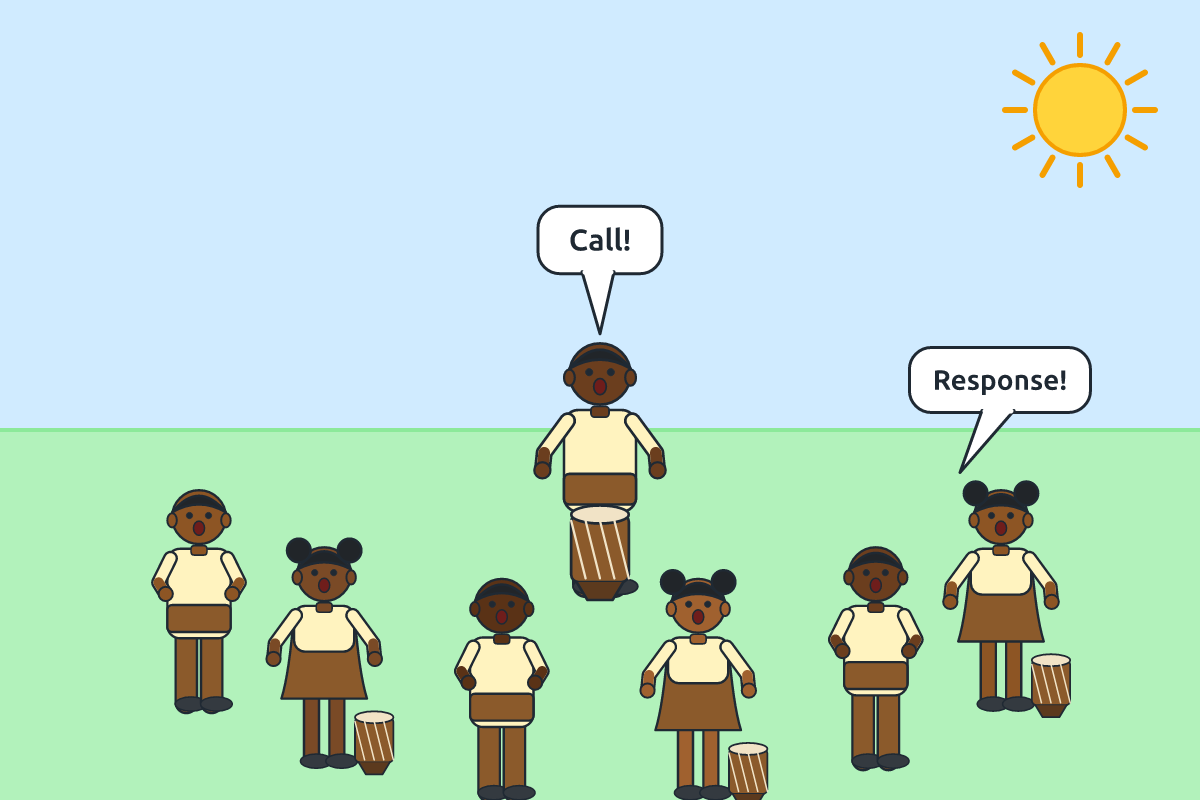
| call-and-response | a leader sings or speaks and the group answers | many Ghanaian folk songs |
| improvisation | making up music, words or movement on the spot | jazz solos, drama games |
| mime | telling a story with actions and no words | acting out cooking or fishing |
| polyrhythm | several rhythms played at the same time | Ghanaian drum ensembles |
| tableau | a frozen picture made by actors | showing a scene in a story |
| dynamics | changing from loud to soft | building excitement in a song |
3. Polyrhythm in Ghanaian Music
Ghanaian drum music often layers different rhythms. In a simple example, the bell (gankogui) plays a steady pattern, a supporting drum repeats a short rhythm, and the master drummer plays changing patterns that signal dancers. Together they create a rich, exciting sound.
4. Creating a Short Piece
- Choose a theme (e.g. a market day or a rainstorm).
- Experiment: make rain sounds with fingers, palms and feet; add drums for thunder.
- Use dynamics: start softly, grow louder, then fade away.
- Add movement or mime to show people running from the rain.
- Rehearse and perform for the class.
New words
- medium
- The material or means used to create art.
- call-and-response
- A leader's call answered by a group.
- improvisation
- Creating on the spot without preparation.
- mime
- Acting without words.
- polyrhythm
- Several rhythms played together.
- tableau
- A still picture formed by performers.
Summary
- Performing arts use voice, body, instruments, props and space.
- Techniques include call-and-response, improvisation, mime and polyrhythm.
- Ghanaian drumming uses rich polyrhythms.
- Experimenting helps create original performances.
Class activity: Rainstorm Performance
- Create a two-minute "rainstorm" using body percussion, drums and mime.
- Use dynamics from soft to loud to soft.
- Perform it and explain the techniques used.
You need: Locally made drum, Gourd shaker, Printed photographs of Ghanaian, African performances
Exercises
Answer in your exercise book first, then check your answers.
1. Acting without words is…
- A. mime
- B. singing
- C. drumming
- D. chanting
Show answer
Answer: mimeActions only.2. A leader sings and the group answers. This is…
- A. call-and-response
- B. tableau
- C. improvisation
- D. polyrhythm
Show answer
Answer: call-and-responseCommon in Ghana.3. Several rhythms played at the same time is…
- A. polyrhythm
- B. silence
- C. solo
- D. tempo
Show answer
Answer: polyrhythmLayered rhythms.4. The body can be a medium in performing arts.
- A. True
- B. False
Show answer
Answer: TrueMovement and gesture.5. Improvisation means reading a fixed script.
- A. True
- B. False
Show answer
Answer: FalseIt means making it up on the spot.6. A still picture formed by performers is a ______.
Show answer
Answer: tableauA frozen scene.7. Name three performing arts techniques.
Show answer
Answer: Call-and-response, mime, improvisation (or polyrhythm, tableau).Any three.8. How can dynamics make a performance more exciting?
Show answer
Answer: Changing from soft to loud builds tension and excitement, and fading out creates a strong ending.Contrast.
Homework
- Create a short call-and-response song about a school rule.