Basic 6 · Creative Arts · Planning, Making and Composing
Creating Functional and Decorative Artworks
In this topic you will experiment with available media and methods to create functional (useful) and decorative visual artworks.
By the end of these notes you should be able to:
- Distinguish functional from decorative artworks
- Experiment with media such as clay, fabric, beads and fibres
- Create one functional or decorative artwork
What you already know
- Experimenting with media (Basic 5)
Copy everything that has a blue line on its left into your notebook. The other parts are for reading.
- Strand
- Visual Arts
- Sub-strand
- Planning, Making and Composing
- Indicator
- B6.1.2.2.1 – Experiment with available visual arts media and methods to create functional and decorative visual artworks
Introduction
A clay pot holds water, a basket carries goods and a bead necklace makes a person look beautiful. Some artworks are made to be used, others to decorate, and many do both.
1. Functional and Decorative Art
| Type | Purpose | Examples |
|---|---|---|
| functional | to be used | pots, baskets, mats, stools, bags, clothes |
| decorative | to beautify | wall hangings, beads, paintings, sculptures |
| both | useful and beautiful | a carved stool, a kente cloth, a decorated calabash |
2. Media and Methods
| Craft | Media | Product |
|---|---|---|
| pottery | clay | bowls, pots, flower vases |
| basketry | raffia, cane, straw, palm fronds | baskets, fans, mats |
| bead-making | glass, clay, seeds, recycled paper | necklaces, bracelets |
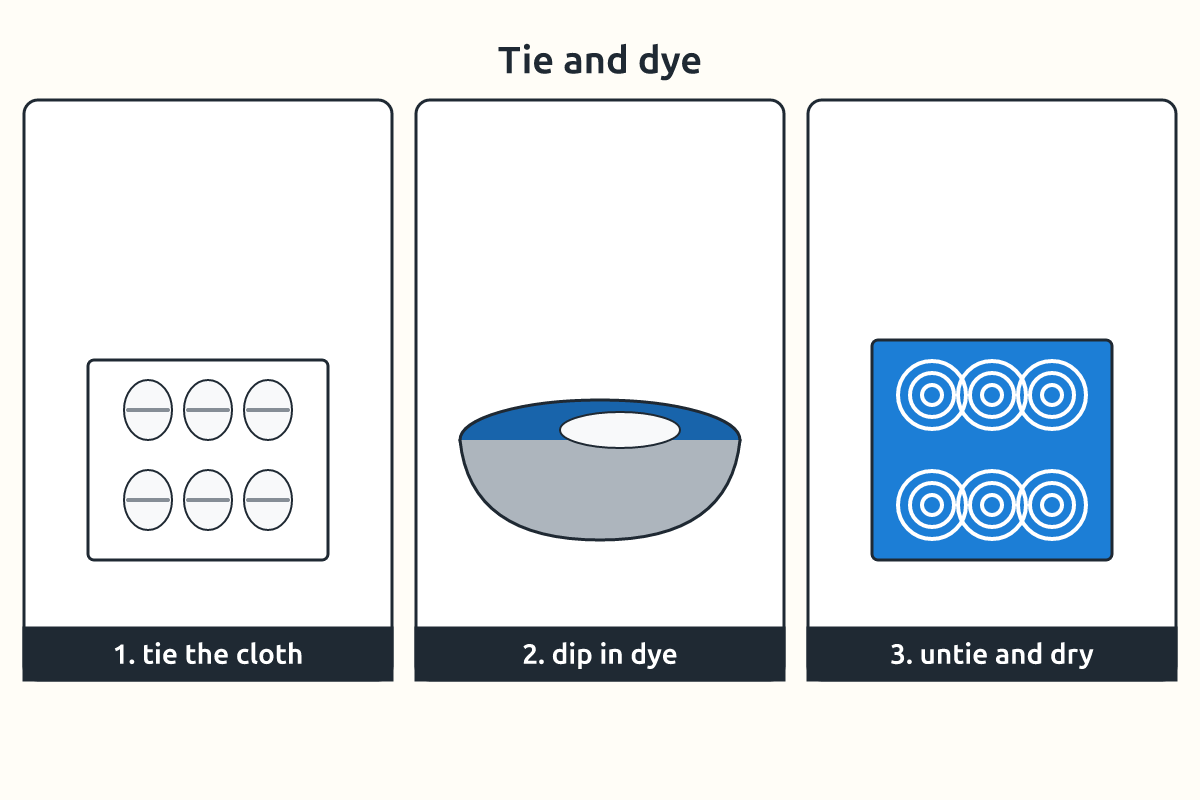
| tie-dye and batik | white cloth, dye, wax, string | patterned fabric |
| weaving | yarn, strips of paper, raffia | mats, kente-style strips |
| leatherwork | leather, thread | bags, sandals |
3. Making a Coil Pot (Example)
- Knead the clay to remove air bubbles.
- Make a flat round base.
- Roll long coils (like snakes) of equal thickness.
- Place coils on top of each other around the base, joining them with slip (watery clay).
- Smooth the inside and outside.
- Decorate with patterns using sticks or shells.
- Allow it to dry slowly in the shade, then fire it if possible.
4. Making Paper Beads (Example)
- Cut long triangles from old magazines.
- Roll each triangle tightly around a stick from the wide end.
- Glue the tip and slide off the stick.
- Coat with clear glue or varnish to make them shiny.
- Thread the beads to make a necklace or bracelet.
Safety: Wear gloves when using dyes. Handle knives and needles carefully and wash hands after working with clay and glue.
New words
- functional art
- Art made to be used.
- decorative art
- Art made to beautify.
- coil
- A long rolled piece of clay.
- slip
- Watery clay used to join pieces.
- tie-dye
- Patterning cloth by tying it before dyeing.
- kneading
- Pressing and folding clay to make it smooth.
Summary
- Functional art is useful; decorative art beautifies; many works are both.
- Media include clay, raffia, beads, fabric and leather.
- Coil pots and paper beads can be made with local materials.
- Follow safety rules when using tools and dyes.
Class activity: Craft Workshop
- Choose one craft: coil pot, paper beads, tie-dye or basket.
- Plan, make and finish your artwork.
- Label it as functional, decorative or both and explain why.
You need: Pencils, Crayons, Old cartons, Manila paper, Kente, Adinkra samples
Exercises
Answer in your exercise book first, then check your answers.
1. Which is a functional artwork?
- A. A basket
- B. A wall painting
- C. A necklace only for show
- D. A poster
Show answer
Answer: A basketIt carries things.2. Watery clay used to join coils is called…
- A. slip
- B. glaze
- C. kiln
- D. dye
Show answer
Answer: slipIt glues clay.3. Tie-dye creates patterns by…
- A. tying cloth before dyeing
- B. painting with a brush
- C. weaving threads
- D. carving wood
Show answer
Answer: tying cloth before dyeingTied parts resist dye.4. A carved stool can be both functional and decorative.
- A. True
- B. False
Show answer
Answer: TrueUseful and beautiful.5. Clay should be dried quickly in hot sun.
- A. True
- B. False
Show answer
Answer: FalseIt may crack; dry slowly in shade.6. Pressing and folding clay to make it smooth is ______.
Show answer
Answer: kneadingRemoves air bubbles.7. Give two examples each of functional and decorative artworks.
Show answer
Answer: Functional: pot, basket. Decorative: wall hanging, painting.Two each.8. Why is it good to use recycled materials such as old magazines for beads?
Show answer
Answer: It reduces waste, costs little and turns rubbish into useful or beautiful items.Sustainability.
Homework
- Collect materials for a craft and write the steps you will follow.