Basic 5 · Science · Earth Science
Carbon Dioxide: Uses and Effects
In this topic you will describe the uses of carbon dioxide and its effects on humans and life on earth.
By the end of these notes you should be able to:
- Describe where carbon dioxide comes from
- State the uses of carbon dioxide
- Explain the effects of too much carbon dioxide
What you already know
- Photosynthesis and the water cycle
Copy everything that has a blue line on its left into your notebook. The other parts are for reading.
- Strand
- Cycles
- Sub-strand
- Earth Science
- Indicator
- B5.2.1.4.1 – Describe the uses of carbon dioxide and its effects on humans and life on earth
Introduction
Every time you breathe out, you release a gas called carbon dioxide. Plants need it to make food, but too much of it in the air can harm people and the planet.
1. Sources of Carbon Dioxide
Carbon dioxide is a colourless gas with no smell. It is found naturally in the air, but only in a small amount. It is produced when living things respire, when fuels such as charcoal, firewood, petrol and diesel are burnt, when plants and animals rot, and when volcanoes erupt.
| Natural sources | Human sources |
|---|---|
| respiration of plants and animals | burning charcoal and firewood |
| rotting of dead things | vehicles burning petrol and diesel |
| volcanoes | factories and power stations |
| forest fires started by lightning | bush burning by people |
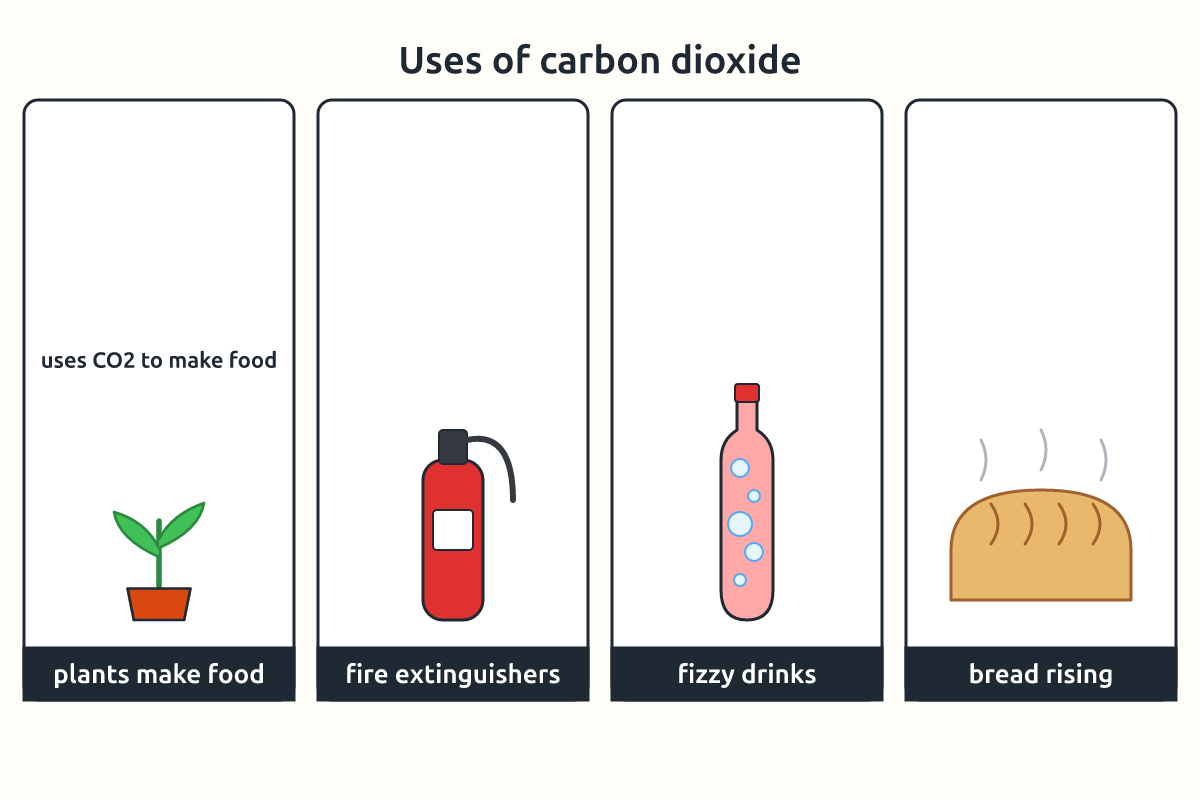
2. Uses of Carbon Dioxide
| Use | Explanation |
|---|---|
| photosynthesis | green plants use it to make food |
| fire extinguishers | it does not support burning, so it puts out fires |
| soft drinks | it is dissolved in drinks to make them fizzy |
| baking | yeast gives out carbon dioxide which makes bread rise |
| dry ice | solid carbon dioxide keeps things very cold |
3. Effects of Too Much Carbon Dioxide
Carbon dioxide traps heat in the air around the earth, like the glass of a greenhouse. A small amount keeps the earth warm enough for life. But people now burn so much fuel and cut down so many trees that the amount of carbon dioxide is rising. This makes the earth warmer, a problem called global warming. It leads to climate change: irregular rainfall, droughts, floods, and rising sea levels that wash away coastal towns such as Keta.
In a closed room, burning charcoal uses up oxygen and produces carbon dioxide and carbon monoxide. Breathing these gases causes headaches, dizziness and can even cause death.
Safety: Never use a coal pot inside a closed room or sleep with a burning coal pot indoors.
We can reduce carbon dioxide by planting trees, avoiding bush burning, using cleaner stoves and gas, walking short distances, and using solar energy.
New words
- carbon dioxide
- A colourless gas given out in respiration and burning.
- fossil fuel
- Fuel such as petrol and diesel formed from ancient remains.
- greenhouse effect
- Gases trapping heat around the earth.
- global warming
- The rise in the earth's temperature.
- climate change
- Long-term changes in weather patterns.
- extinguisher
- A device used to put out fires.
Summary
- Carbon dioxide comes from respiration, burning and rotting.
- Plants use it in photosynthesis; it is used in extinguishers and drinks.
- Too much carbon dioxide causes global warming and climate change.
- Planting trees and burning less fuel reduce it.
Class activity: Charcoal Jar
- Your teacher places a lit candle in a jar and covers it.
- Observe what happens to the flame.
- Discuss why the flame goes out and how this relates to fire extinguishers.
You need: Potted green plant, Charcoal piece in a clear jar, Printed carbon-dioxide use-and-effect cards
Exercises
Answer in your exercise book first, then check your answers.
1. Which process gives out carbon dioxide?
- A. Respiration
- B. Photosynthesis
- C. Freezing
- D. Filtration
Show answer
Answer: RespirationLiving things breathe it out.2. Why is carbon dioxide used in fire extinguishers?
- A. It does not support burning
- B. It is hot
- C. It is a liquid
- D. It smells
Show answer
Answer: It does not support burningIt cuts off oxygen.3. What makes soft drinks fizzy?
- A. Carbon dioxide
- B. Oxygen
- C. Salt
- D. Sugar
Show answer
Answer: Carbon dioxideIt is dissolved under pressure.4. Planting trees helps reduce carbon dioxide.
- A. True
- B. False
Show answer
Answer: TrueTrees use it for photosynthesis.5. It is safe to sleep with a burning coal pot in a closed room.
- A. True
- B. False
Show answer
Answer: FalseIt can cause death.6. The rise in the earth's temperature is called global ______.
Show answer
Answer: warmingGlobal warming.7. Give two human activities that add carbon dioxide to the air.
Show answer
Answer: Burning charcoal and vehicles burning fuel (or bush burning, factories).Any two.8. Explain how too much carbon dioxide affects coastal towns like Keta.
Show answer
Answer: It causes global warming, which melts ice and raises sea levels, leading to flooding and erosion.Climate change effects.
Homework
- Write five things your family can do to reduce carbon dioxide in the air.