Basic 5 · Religious and Moral Education · Religious Worship
Worship in Islam: Salat and Its Moral Lessons
In this topic you will study Islamic worship, especially the five daily prayers, and the moral lessons they teach.
By the end of these notes you should be able to:
- Name the five daily prayers and their times
- Describe ablution (wudu) before prayer
- Explain the moral importance of salat
What you already know
- The moral importance of worship
Copy everything that has a blue line on its left into your notebook. The other parts are for reading.
- Strand
- Religious Practices
- Sub-strand
- Religious Worship
- Indicator
- B5.2.1.1.1 – Discuss the moral importance of worship
Introduction
Five times every day, the call to prayer (adhan) is heard from mosques across Ghana. Muslims stop what they are doing to pray. Salat is the second Pillar of Islam.
1. The Five Daily Prayers
| Prayer | Approximate time |
|---|---|
| Fajr | dawn, before sunrise |
| Dhuhr (Zuhr) | early afternoon, after midday |
| Asr | late afternoon |
| Maghrib | just after sunset |
| Isha | night |
On Fridays, Muslim men gather at the mosque for Jumu'ah, a congregational prayer with a sermon (khutbah), in place of Dhuhr.
2. Ablution (Wudu)
Before praying, Muslims perform wudu, washing parts of the body with clean water. They wash the hands, rinse the mouth and nose, wash the face and the arms up to the elbows, wipe the head and ears, and wash the feet up to the ankles. Wudu shows that a person must be clean in body and mind before standing before Allah.
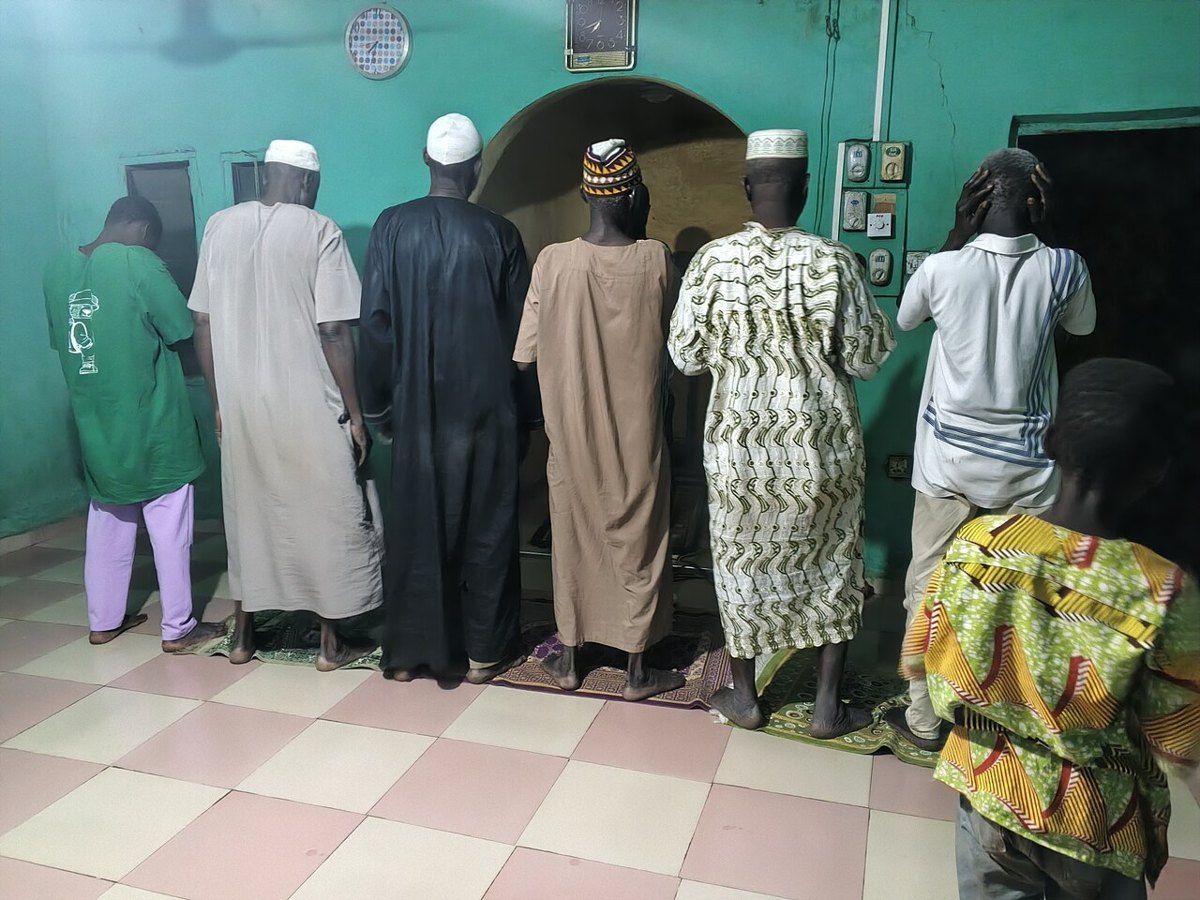
3. The Positions of Prayer
Salat includes standing (qiyam) and reciting from the Qur'an, bowing (ruku'), prostrating with the forehead on the ground (sujud) and sitting (julus). All worshippers face the Ka'bah in Makkah, a direction called the qiblah.
4. Moral Lessons from Salat
| Practice | Moral lesson |
|---|---|
| praying at fixed times | punctuality and discipline |
| wudu before prayer | cleanliness |
| standing in straight rows | equality and unity; rich and poor stand together |
| following the imam | obedience to leaders |
| prostrating | humility before Allah |
| praying five times daily | remembering God and avoiding wrongdoing |
The Qur'an says that prayer restrains a person from shameful and evil deeds (Qur'an 29:45). A Muslim who prays sincerely should be honest, punctual, clean and kind to others.
Pupils of other religions can learn from these values too. Being on time for school, keeping the body and classroom clean, respecting leaders and treating everyone as equal are good for all people. In a school with pupils of different religions, Muslim pupils should be given time and space to pray, and others should respect them while they pray.
New words
- salat
- The five daily prayers in Islam.
- wudu
- Washing before prayer.
- adhan
- The call to prayer.
- qiblah
- The direction of the Ka'bah in Makkah.
- imam
- The person who leads prayer.
- sujud
- Prostrating with the forehead on the ground.
Summary
- Muslims pray five times daily: Fajr, Dhuhr, Asr, Maghrib and Isha.
- Wudu cleans the body before prayer.
- Salat includes standing, bowing, prostrating and sitting.
- It teaches punctuality, cleanliness, equality and humility.
Class activity: Prayer Times Chart
- Make a chart of the five prayers and their times.
- Add one moral lesson for each.
- Discuss how pupils of all religions can learn from these values.
You need: Qur’an, Prayer mat, Printed photographs of worship in a local Ghanaian mosque, Islamic worship-action cards
Exercises
Answer in your exercise book first, then check your answers.
1. How many times a day do Muslims pray?
- A. Five
- B. Three
- C. Seven
- D. Two
Show answer
Answer: FiveSalat is five daily prayers.2. The washing before prayer is called…
- A. wudu
- B. zakat
- C. hajj
- D. adhan
Show answer
Answer: wuduIt shows cleanliness.3. Which prayer is said at dawn?
- A. Fajr
- B. Isha
- C. Maghrib
- D. Asr
Show answer
Answer: FajrBefore sunrise.4. Muslims face Makkah when praying.
- A. True
- B. False
Show answer
Answer: TrueThe direction is the qiblah.5. Standing in straight rows teaches inequality.
- A. True
- B. False
Show answer
Answer: FalseIt teaches equality and unity.6. The person who leads prayer is the ______.
Show answer
Answer: imamOthers follow him.7. Name the five daily prayers.
Show answer
Answer: Fajr, Dhuhr, Asr, Maghrib, Isha.In order.8. Explain two moral lessons from salat.
Show answer
Answer: Praying at fixed times teaches punctuality; wudu teaches cleanliness (or rows teach equality).Any two explained.
Homework
- Listen to the adhan (or ask a Muslim friend) and write what it calls people to do.