Basic 5 · English Language
Values in Poems, Reading for Meaning, Quantifiers, Organising Ideas and Festivals
In this topic you will relate poems to daily life, read a passage and construct meaning, use quantifiers, organise ideas into an outline and use proper nouns for festivals.
By the end of these notes you should be able to:
- Relate values in poems to daily life
- Read a passage and answer questions on it
- Use quantifiers correctly
- Organise brainstormed ideas into an outline
- Use proper nouns for Ghanaian festivals
What you already know
- Poems, Content and Function Words, Articles, Brainstorming and Partitive Nouns
Copy everything that has a blue line on its left into your notebook. The other parts are for reading.
Lesson 1
- Strand
- Oral Language
- Sub-strand
- Poems
- Indicator
- B5.1.3.1.2 – Relate values in poems to day-to-day life
Introduction
Poems carry values we can use every day. When we relate a poem to our lives, we understand it better.
Relating Values in Poems to Daily Life
"If You Have a Little"
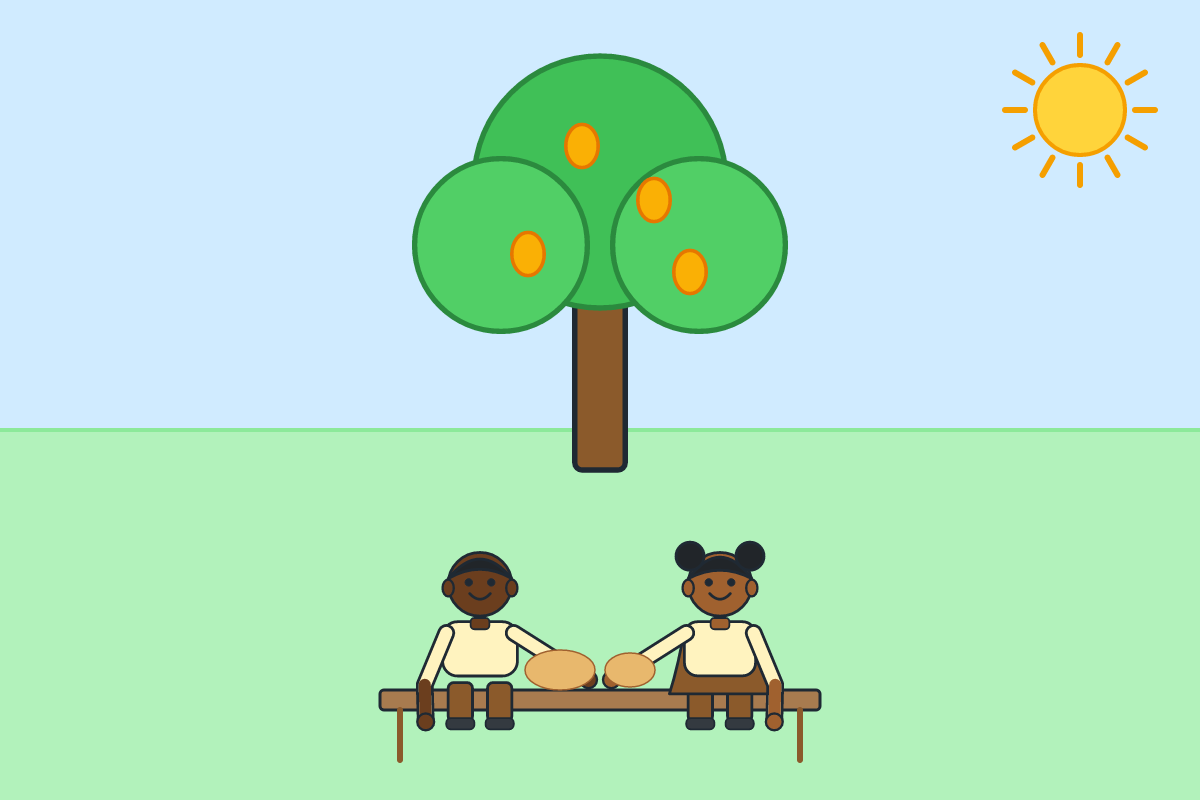
"If you have a little, share a little,
If you have a lot, then share a lot;
The hand that gives is never empty,
And the heart that cares is never forgot.
The neighbour's child is also yours,
The stranger's need is also near;
Open your door and open your hand,
And kindness will live here."
| Line | Value | Daily-life example |
|---|---|---|
| "share a little" | generosity | sharing lunch with a friend who has none |
| "the neighbour's child is also yours" | community care | helping a neighbour's child cross the road |
| "open your door" | hospitality | welcoming a visitor with water |
New words
- generosity
- Willingness to give and share.
- hospitality
- Welcoming and caring for guests.
- stranger
- A person you do not know.
Summary
- The poem teaches generosity, community care and hospitality.
- We live these values by sharing and helping others.
Exercises
Answer in your exercise book first, then check your answers.
1. Which value does "share a little" teach?
- A. generosity
- B. laziness
- C. pride
- D. anger
Show answer
Answer: generosityGiving to others.2. The poem says giving makes the giver poor.
- A. True
- B. False
Show answer
Answer: False"The hand that gives is never empty."3. "The neighbour's ______ is also yours."
Show answer
Answer: childFrom the poem.4. Give one way to show hospitality at home.
Show answer
Answer: Welcome a visitor and offer water.Ghanaian custom.
Lesson 2
- Strand
- Reading
- Sub-strand
- Comprehension
- Indicator
- B5.2.7.1.1 – Construct meaning from text read
Introduction
Reading is not just saying words; it is understanding them. Read the passage carefully and construct its meaning.
Reading Passage: The Village Library
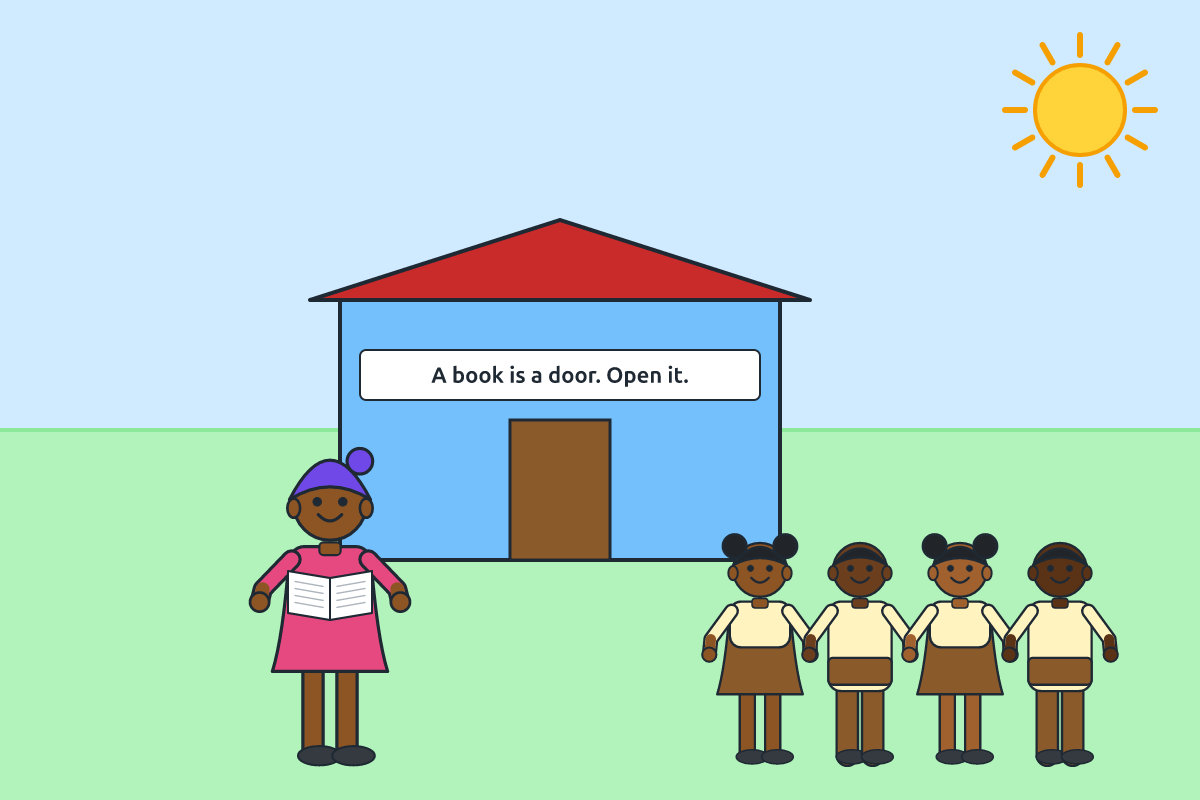
"When the new library opened in Nkwanta, nobody expected much. It was only one room with three shelves of donated books, two tables and a ceiling fan that squeaked. Madam Esinam, a retired teacher, sat at the door every afternoon with a register and a warm smile.
At first, only a few children came. They looked at the pictures and left quickly. But Madam Esinam had a plan. Every Friday she read a story aloud, stopping at the most exciting part. 'If you want to know what happens next,' she would say, 'the book is on the second shelf.' The next Monday, there would be a queue at the door.
Kojo, a boy who had never finished a book, borrowed one about a girl who built a radio from scraps. He read it under the streetlight because his house had no electricity. Months later, Kojo fixed his grandfather's old radio, and the whole family listened to the news together for the first time in years.
Today the Nkwanta library has five rooms and hundreds of books. Above the door, a sign painted by the children reads: 'A book is a door. Open it.'"
| Question | Answer |
|---|---|
| Who ran the library? | Madam Esinam, a retired teacher |
| How did she get children interested? | She read exciting stories aloud and stopped at the best part |
| Why did Kojo read under the streetlight? | His house had no electricity |
| What did Kojo learn from his book? | He was inspired to fix a radio |
| What does "A book is a door" mean? | Books open new knowledge and opportunities |
New words
- donated
- Given freely as a gift.
- retired
- No longer working because of age.
- inspire
- To give someone the desire to do something.
Summary
- Madam Esinam made children love reading through storytelling.
- Reading can change lives, as it did for Kojo.
Exercises
Answer in your exercise book first, then check your answers.
1. Where was the library?
- A. Nkwanta
- B. Accra
- C. Kumasi
- D. Tamale
Show answer
Answer: NkwantaFirst line.2. Kojo read under a streetlight because he had no electricity at home.
- A. True
- B. False
Show answer
Answer: TrueFrom paragraph 3.3. Madam Esinam read stories every ______.
Show answer
Answer: FridayParagraph 2.4. Why did Madam Esinam stop at the most exciting part?
Show answer
Answer: To make the children want to borrow and read the book themselves.Inference.
Lesson 3
- Strand
- Grammar
- Sub-strand
- Determiners
- Indicator
- B5.3.2.1.2 – Identify and use quantifiers to show qualities
Introduction
Quantifiers are words that tell us how much or how many. They come before nouns.
Quantifiers
| With countable nouns (how many) | With uncountable nouns (how much) | With both |
|---|---|---|
| many, a few, few, several | much, a little, little | some, any, a lot of, enough, no, all |
Examples: "Many pupils came. A few chairs were broken. There is little water in the tank. We have enough rice for everyone."
Common mistake: Do not say "much pupils". Use "many" for countable nouns and "much" for uncountable nouns.
"A few" and "a little" are positive (some). "Few" and "little" are negative (almost none): "Few people came, so the hall was empty."
Passage: "Many traders came to the market on Saturday, but few customers arrived because of the rain. Auntie Akos had a lot of tomatoes and some pepper, but very little money by noon. 'Is there any hope?' she asked. Then a few women came with umbrellas and bought enough tomatoes to make her smile."
New words
- quantifier
- A word that shows how much or how many.
- countable
- Able to be counted.
- uncountable
- Not able to be counted one by one.
Summary
- Use many and a few with countable nouns; much and a little with uncountable nouns.
- Some, any, enough and a lot of work with both.
Exercises
Answer in your exercise book first, then check your answers.
1. Choose: There are ___ mangoes on the tree.
- A. many
- B. much
- C. little
- D. a little
Show answer
Answer: manyMangoes are countable.2. "Much water" is correct.
- A. True
- B. False
Show answer
Answer: TrueWater is uncountable.3. We have ______ (a little / a few) sugar left.
Show answer
Answer: a littleSugar is uncountable.4. Explain the difference: "few friends" and "a few friends".
Show answer
Answer: "Few" means almost none (negative); "a few" means some (positive).Meaning changes.
Lesson 4
- Strand
- Writing
- Sub-strand
- Writing As a Process
- Indicator
- B5.4.9.1.1 – Select a topic of choice on issues in their community brainstorm and organize ideas before writing
Introduction
After brainstorming, writers organise their ideas into an outline before drafting.
Organising Ideas into an Outline
| Part | Ideas |
|---|---|
| introduction | plastic waste is a growing problem in our town |
| paragraph 1: causes | sachet water, plastic bags, few bins |
| paragraph 2: effects | blocked gutters, floods, mosquitoes, ugly streets |
| paragraph 3: solutions | more bins, recycling, education, fines |
| conclusion | everyone must help keep our town clean |
Each paragraph has one main idea. The outline helps you write in a clear order and avoid repeating yourself.
Next, write a first draft from the outline. Do not worry about small mistakes yet; you will correct them when you revise and edit.
New words
- outline
- A plan showing the order of ideas.
- draft
- A first version of writing.
- conclusion
- The ending that sums up.
Summary
- An outline arranges ideas into introduction, body paragraphs and conclusion.
- Write a first draft from the outline.
Exercises
Answer in your exercise book first, then check your answers.
1. A plan showing the order of ideas is an…
- A. outline
- B. poem
- C. letter
- D. address
Show answer
Answer: outlineIt organises ideas.2. Each paragraph should have one main idea.
- A. True
- B. False
Show answer
Answer: TrueIt keeps writing clear.3. The first version of a piece of writing is a ______.
Show answer
Answer: draftIt will be revised.4. What goes in the conclusion of the plastic waste essay?
Show answer
Answer: A summary saying everyone must help keep the town clean.The ending.
Lesson 5
- Strand
- Writing Conventions/ Extensive Reading
- Sub-strand
- Using Naming Words, Building the Love and Culture of Reading
- Indicator
- B5.5.3.1.2 – Identify and use proper nouns to refer to festivals
Introduction
Ghana has many festivals. Their names are proper nouns and always begin with capital letters.
Proper Nouns for Festivals
| Festival | People | Region | Time |
|---|---|---|---|
| Homowo | Ga | Greater Accra | August–September |
| Aboakyer | Effutu | Central (Winneba) | May |
| Hogbetsotso | Anlo Ewe | Volta | November |
| Damba | Dagomba and others | Northern | according to the Islamic calendar |
| Odwira | Akuapem and others | Eastern | September–October |
| Fetu Afahye | Oguaa (Cape Coast) | Central | September |
| Kundum | Ahanta and Nzema | Western | August–November |
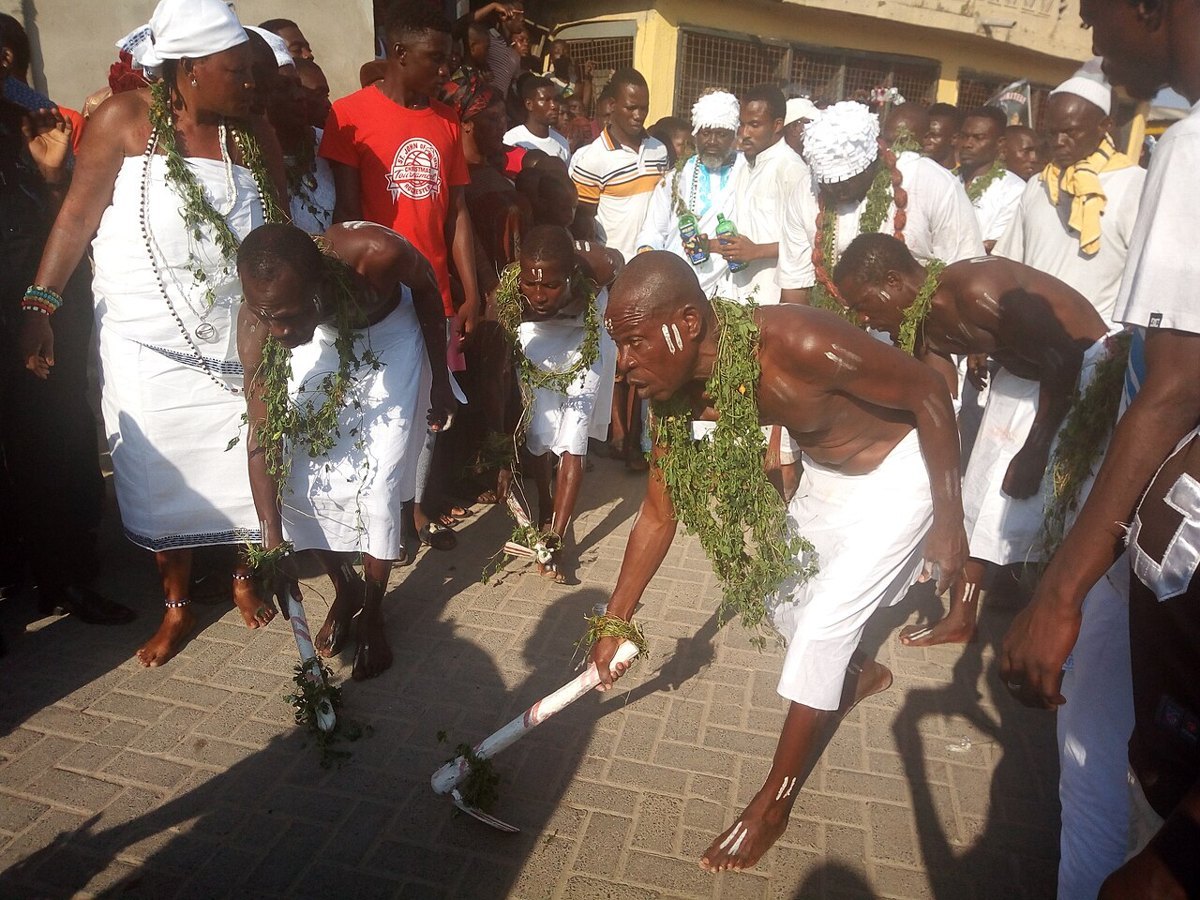
Reading extract: "During Homowo, the Ga people sprinkle kpokpoi on the streets of Accra. The word Homowo means 'hooting at hunger'. It celebrates the end of a famine long ago."
Remember that the names of the people (Ga, Ewe, Effutu), their towns (Winneba, Anloga) and the festivals themselves all take capital letters, but the general word "festival" does not, unless it is part of a full name, such as "the Chale Wote Street Art Festival".
New words
- festival
- A special celebration of a people.
- kpokpoi
- A special maize meal eaten at Homowo.
- famine
- A severe shortage of food.
Summary
- Names of festivals are proper nouns and take capital letters.
- Homowo, Aboakyer, Hogbetsotso and Damba are Ghanaian festivals.
Exercises
Answer in your exercise book first, then check your answers.
1. Which festival is celebrated by the Ga?
- A. Homowo
- B. Aboakyer
- C. Damba
- D. Kundum
Show answer
Answer: HomowoHooting at hunger.2. Festival names begin with capital letters.
- A. True
- B. False
Show answer
Answer: TrueThey are proper nouns.3. Homowo means "hooting at ______".
Show answer
Answer: hungerFrom the extract.4. Write a sentence about a festival using a proper noun correctly.
Show answer
Answer: E.g. The Anlo celebrate Hogbetsotso in November.Capital letters.
Homework
- Write a paragraph about a Ghanaian festival using at least four proper nouns.