Basic 4 · Ghanaian Language · Narrative Writing
Punctuation in Narrative Writing
In this topic you will use commas, full stops and question marks correctly in narrative writing.
By the end of these notes you should be able to:
- Explain narrative writing
- Use punctuation correctly in a narrative
- Correct punctuation mistakes in a short story
What you already know
- Full stops, commas and question marks
Copy everything that has a blue line on its left into your notebook. The other parts are for reading.
- Strand
- Composition Writing
- Sub-strand
- Narrative Writing
- Indicator
- B4.4.1.1.1-3 – Demonstrate the use of commas full stops and question marks appropriately in narrative writing
Introduction
A narrative is a story. Good punctuation helps the reader follow what happens and who is speaking.
1. What is a Narrative?
Narrative: Writing that tells a story of events in order.
2. Punctuation in a Narrative
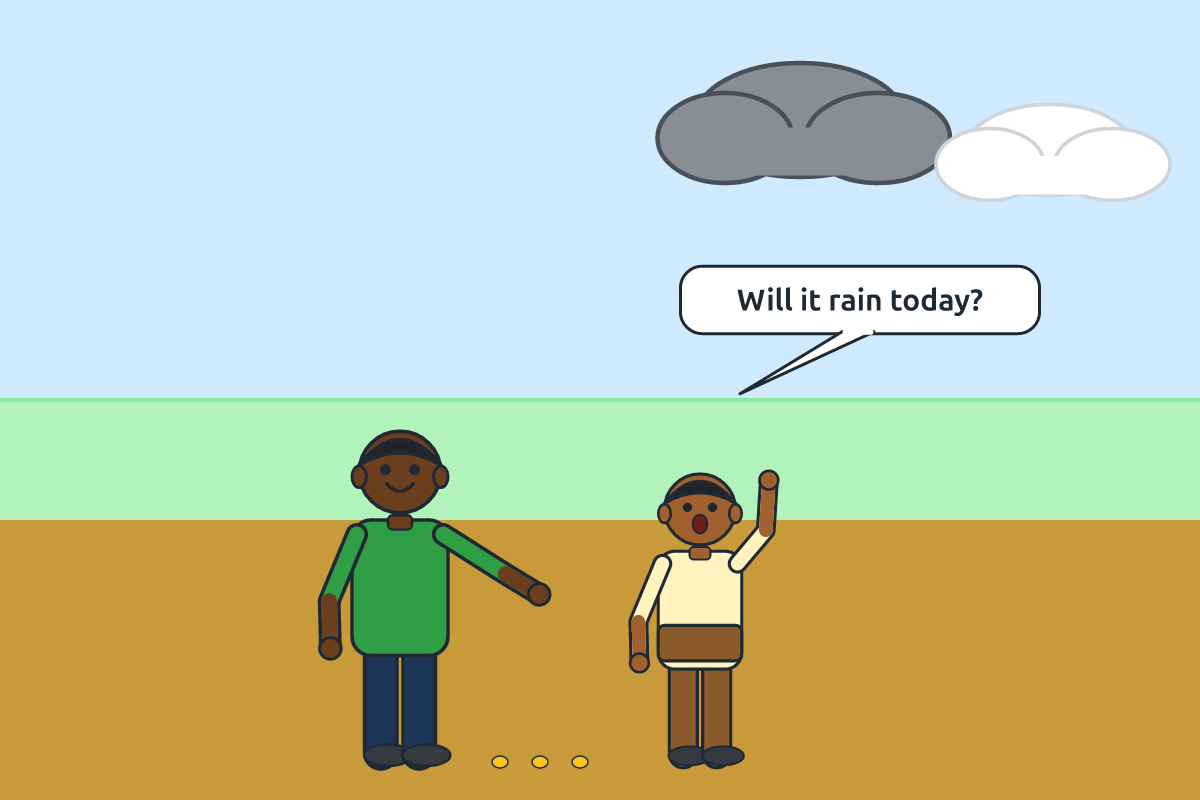
Example: "On Saturday, Kweku went to the farm with his father. They planted maize, beans and okra. 'Will it rain today?' Kweku asked. His father looked at the sky and smiled."
| Mark | Where used |
|---|---|
| comma | after "On Saturday"; in the list "maize, beans and okra" |
| full stop | at the end of statements |
| question mark | after Kweku's question |
3. Correcting Mistakes
Example
Correct: "yesterday ama bought bread milk and sugar did she pay"
- Capital letters: Yesterday, Ama, Did.
- Commas in the list: bread, milk and sugar.
- Full stop after sugar; question mark after pay.
Answer: Yesterday, Ama bought bread, milk and sugar. Did she pay?
New words
- narrative
- A story of events in order.
- event
- Something that happens.
- sequence
- The order of events.
- dialogue
- Words spoken by characters.
- correct
- To fix mistakes.
- paragraph
- A group of sentences about one idea.
Summary
- A narrative tells a story in order.
- Commas separate lists and introductory words.
- Full stops end statements; question marks end questions.
- Correct punctuation makes stories clear.
Class activity: Story Doctor
- Read a short story with punctuation missing.
- Add commas, full stops and question marks.
- Read the corrected story aloud.
You need: Printed photographs of a local market or festival, Locally made story-planning cards, Exercise books, Pencils
Exercises
Answer in your exercise book first, then check your answers.
1. Writing that tells a story is…
- A. Narrative
- B. A list
- C. A poem only
- D. A label
Show answer
Answer: NarrativeThat is narrative.2. Where is the comma in "On Monday we went to school"?
- A. After Monday
- B. After we
- C. After went
- D. After school
Show answer
Answer: After Monday"On Monday, we went to school."3. Words spoken by characters are…
- A. Dialogue
- B. Setting
- C. Plot
- D. Title
Show answer
Answer: DialogueThat is dialogue.4. Events in a narrative are told in order.
- A. True
- B. False
Show answer
Answer: TrueThat is sequence.5. Questions in a story end with a full stop.
- A. True
- B. False
Show answer
Answer: FalseThey end with a question mark.6. The order of events is the ______.
Show answer
Answer: sequenceThat is sequence.7. Correct: "my mother cooked rice stew and salad"
Show answer
Answer: My mother cooked rice, stew and salad.Capital, commas and full stop.8. Write two sentences of a narrative with a question in dialogue.
Show answer
Answer: E.g. Afia saw a cat. "Whose cat is this?" she asked.Use the marks correctly.
Homework
- Write a five-sentence story with correct punctuation.