Basic 4 · English Language
Spoken Language, Vocabulary, Comparing Adjectives and Writing About Family
In this topic you will explore features of spoken language, use words in speech and writing, compare with adjectives and write about your family.
By the end of these notes you should be able to:
- Identify features of spoken language
- Use different terms in speech and writing
- Use adjectives to compare
- Write information about your family
What you already know
- Pronouns and narratives
Copy everything that has a blue line on its left into your notebook. The other parts are for reading.
Lesson 1
- Strand
- Oral Language
- Sub-strand
- Presentation
- Indicator
- B4.1.10.1.1 – Demonstrate awareness of the features of spoken language
Introduction
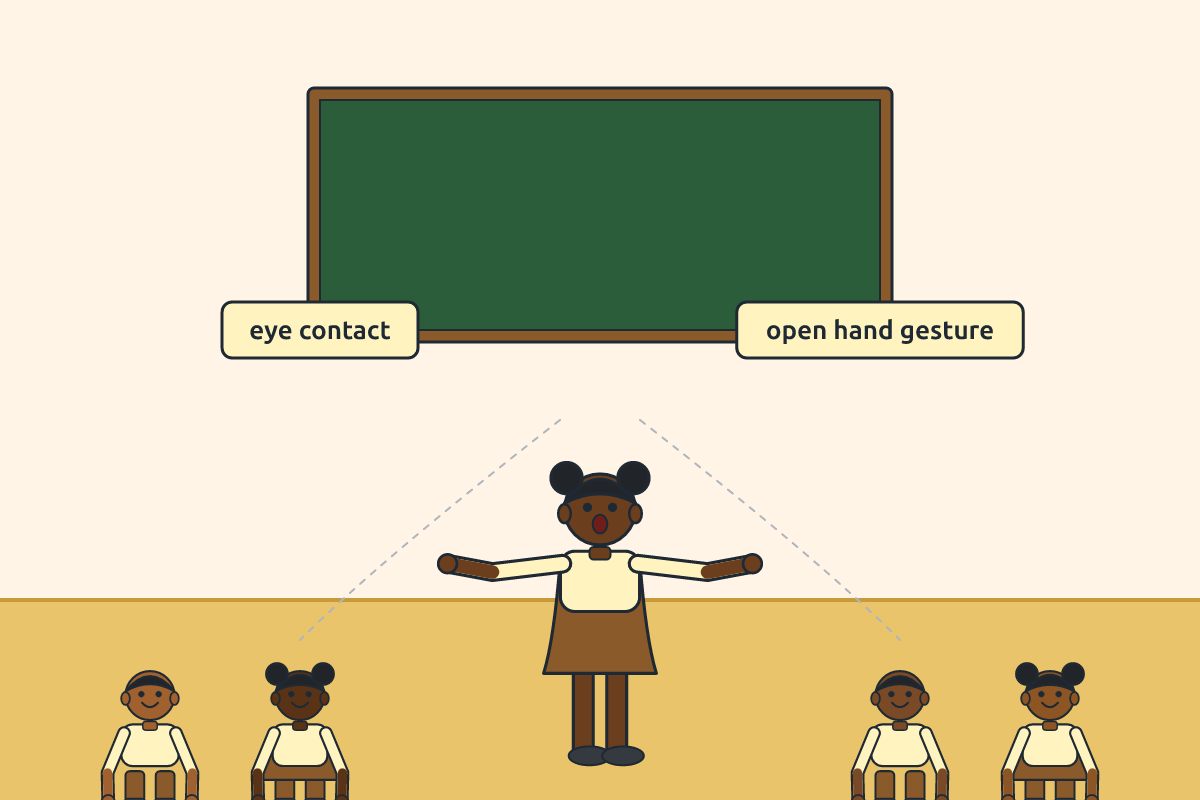
When we speak, we use our voice, face and body to share meaning.
Features of Spoken Language
| Feature | Meaning |
|---|---|
| pace | speed of speaking |
| volume | loudness |
| tone | the feeling in the voice |
| pause | short stops |
| gestures | hand and body movements |
| eye contact | looking at listeners |
New words
- pace
- Speed of speaking.
- volume
- Loudness.
- gesture
- A movement that shows meaning.
Summary
- Spoken language uses pace, volume, tone and pauses.
- Gestures and eye contact help listeners.
Exercises
Answer in your exercise book first, then check your answers.
1. Loudness of speech is…
- A. Volume
- B. Pace
- C. Tone
- D. Pause
Show answer
Answer: VolumeThat is volume.2. Eye contact helps listeners.
- A. True
- B. False
Show answer
Answer: TrueIt keeps attention.3. A hand movement that shows meaning is a ______.
Show answer
Answer: gestureThat is a gesture.4. Name three features of spoken language.
Show answer
Answer: Any three: pace, volume, tone, pause, gestures, eye contact.These shape speech.
Lesson 2
- Strand
- Reading
- Sub-strand
- Vocabulary
- Indicator
- B4.2.6.1.2 – Use the different terms in spoken and written expressions
Introduction
Some words are used more in speech, others more in writing.
Spoken and Written Words
| Spoken (informal) | Written (formal) |
|---|---|
| kids | children |
| get | receive |
| a lot of | many |
| buy | purchase |
New words
- formal
- Suitable for serious writing.
- informal
- Relaxed, used with friends.
- term
- A word or phrase.
Summary
- Informal words suit conversation.
- Formal words suit letters and reports.
Exercises
Answer in your exercise book first, then check your answers.
1. Which is formal?
- A. children
- B. kids
- C. guys
- D. folks
Show answer
Answer: childrenIt suits writing.2. "Purchase" is more formal than "buy".
- A. True
- B. False
Show answer
Answer: TrueIt is formal.3. Relaxed language used with friends is ______.
Show answer
Answer: informalThat is informal.4. Rewrite formally: "I got a lot of gifts."
Show answer
Answer: I received many gifts.Use formal words.
Lesson 3
- Strand
- Grammar
- Sub-strand
- Adjectives
- Indicator
- B4.3.4.1.1.1 – Use adjectives to make comparison
Introduction
Adjectives can compare two or more things.
Comparing with Adjectives
| Positive | Comparative | Superlative |
|---|---|---|
| tall | taller | tallest |
| big | bigger | biggest |
| good | better | best |
| beautiful | more beautiful | most beautiful |
"Kofi is tall. Yaw is taller than Kofi. Kwame is the tallest of the three."
New words
- comparative
- Comparing two things (-er or more).
- superlative
- Comparing three or more (-est or most).
- positive
- The basic adjective.
Summary
- Use -er or more to compare two.
- Use -est or most to compare three or more.
Exercises
Answer in your exercise book first, then check your answers.
1. The comparative of "small" is…
- A. smaller
- B. smallest
- C. more small
- D. small
Show answer
Answer: smallerAdd -er.2. "Best" is the superlative of "good".
- A. True
- B. False
Show answer
Answer: Truegood, better, best.3. This is the ______ (big) mango of all.
Show answer
Answer: biggestSuperlative.4. Compare three sticks of different lengths in sentences.
Show answer
Answer: E.g. The red stick is long. The blue stick is longer. The green stick is the longest.Use all three degrees.
Lesson 4
- Strand
- Composition Writing
- Sub-strand
- Letter Writing
- Indicator
- B4.4.14.1.1 – Write words giving information about family
Introduction
Writing about your family gives information to readers.
Writing About My Family
Example: "There are five people in my family. My father is a carpenter and my mother is a nurse. I have one brother and one sister. We live in Sunyani. We like to eat fufu together on Sundays."
Include
- number of people
- what each person does
- where you live
- what you do together
New words
- information
- Facts about something.
- occupation
- A person's job.
- family
- People related to each other.
Summary
- Give clear facts about your family.
- Organise information in a paragraph.
Exercises
Answer in your exercise book first, then check your answers.
1. What job does the mother in the example do?
- A. Nurse
- B. Teacher
- C. Farmer
- D. Driver
Show answer
Answer: NurseFrom the example.2. The family lives in Sunyani.
- A. True
- B. False
Show answer
Answer: TrueFrom the example.3. A person's job is their ______.
Show answer
Answer: occupationThat is an occupation.4. Write two sentences about your family.
Show answer
Answer: Answers will differ.Give facts.
Lesson 5
- Strand
- Writing Conventions/ Extensive Reading
- Sub-strand
- Using Adjectives, Building the Love and Culture of Reading
- Indicator
- B4.5.5.1.1 – Use adjectives to make comparisons
Introduction
Let us practise comparing with adjectives in a reading passage.
Comparisons in a Passage
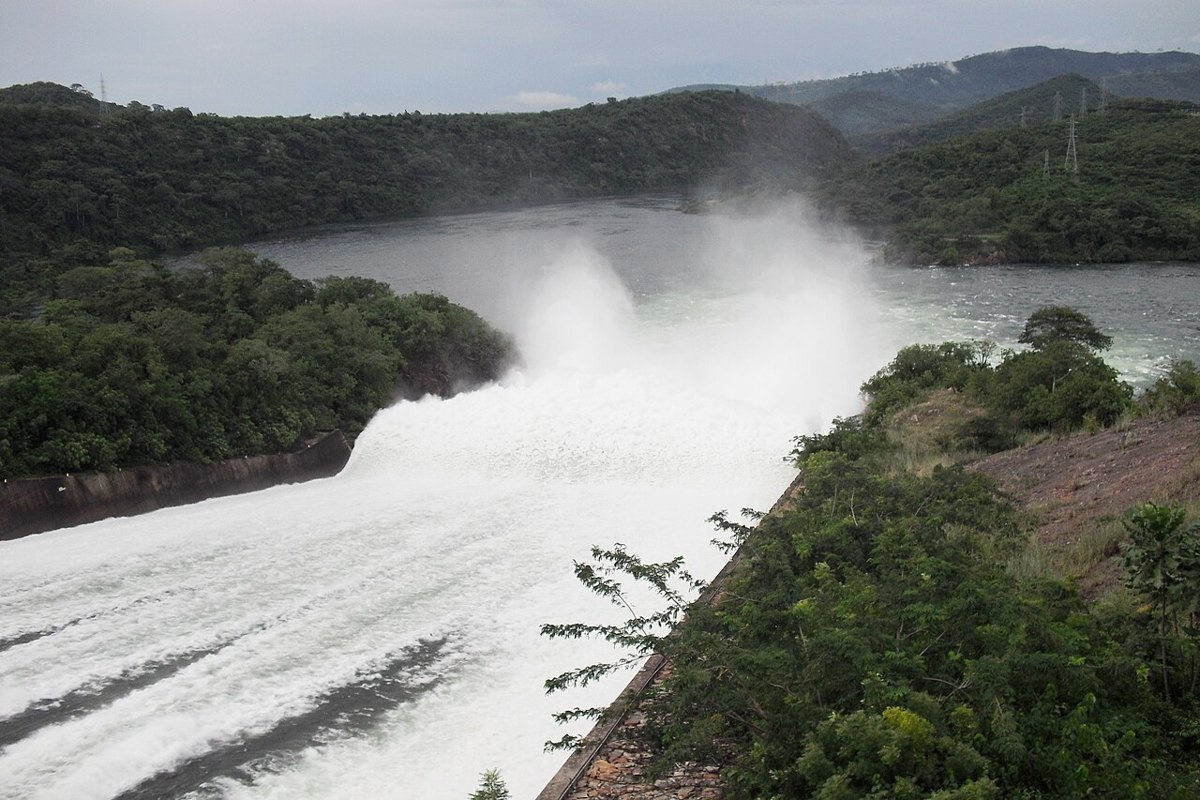
Reading passage: "Lake Volta is bigger than Lake Bosomtwe. In fact, Lake Volta is one of the largest man-made lakes in the world. The Akosombo Dam, which created the lake, is very important because it produces electricity for many homes."
New words
- dam
- A wall built to hold back water.
- man-made
- Made by people.
- electricity
- Power used for lights and machines.
Summary
- Lake Volta is bigger than Lake Bosomtwe.
- The Akosombo Dam produces electricity.
Exercises
Answer in your exercise book first, then check your answers.
1. Which lake is bigger?
- A. Lake Volta
- B. Lake Bosomtwe
- C. Both equal
- D. Neither
Show answer
Answer: Lake VoltaFrom the passage.2. Lake Volta is man-made.
- A. True
- B. False
Show answer
Answer: TrueThe dam created it.3. The Akosombo Dam produces ______.
Show answer
Answer: electricityFrom the passage.4. Find a comparative and a superlative in the passage.
Show answer
Answer: bigger; largest-er and -est.
Homework
- Write a paragraph about your family with at least three adjectives.