Basic 6 · Our World and Our People · Home and School
Keeping Food Safe: The Five Keys
In this topic you will identify ways of promoting food safety using the Five Keys to Safer Food.
By the end of these notes you should be able to:
- Explain food safety and foodborne illness
- Describe the Five Keys to Safer Food
- Practise safe food handling at home and school
What you already know
- Personal hygiene
Copy everything that has a blue line on its left into your notebook. The other parts are for reading.
- Strand
- All About Us
- Sub-strand
- Home and School
- Indicator
- B6.1.4.1.1 – Identify ways of promoting food safely
Introduction
Every year many people fall ill from eating contaminated food. Cholera, typhoid and diarrhoea can spread through unsafe food. Simple steps can keep food safe.
1. What Is Food Safety?
Food safety: Handling, preparing and storing food in ways that prevent illness.
Food can be contaminated by germs (bacteria, viruses, parasites), chemicals (pesticides, cleaning agents) or physical objects (stones, hair, glass). Contaminated food may look, smell and taste normal, so we must always handle it carefully.
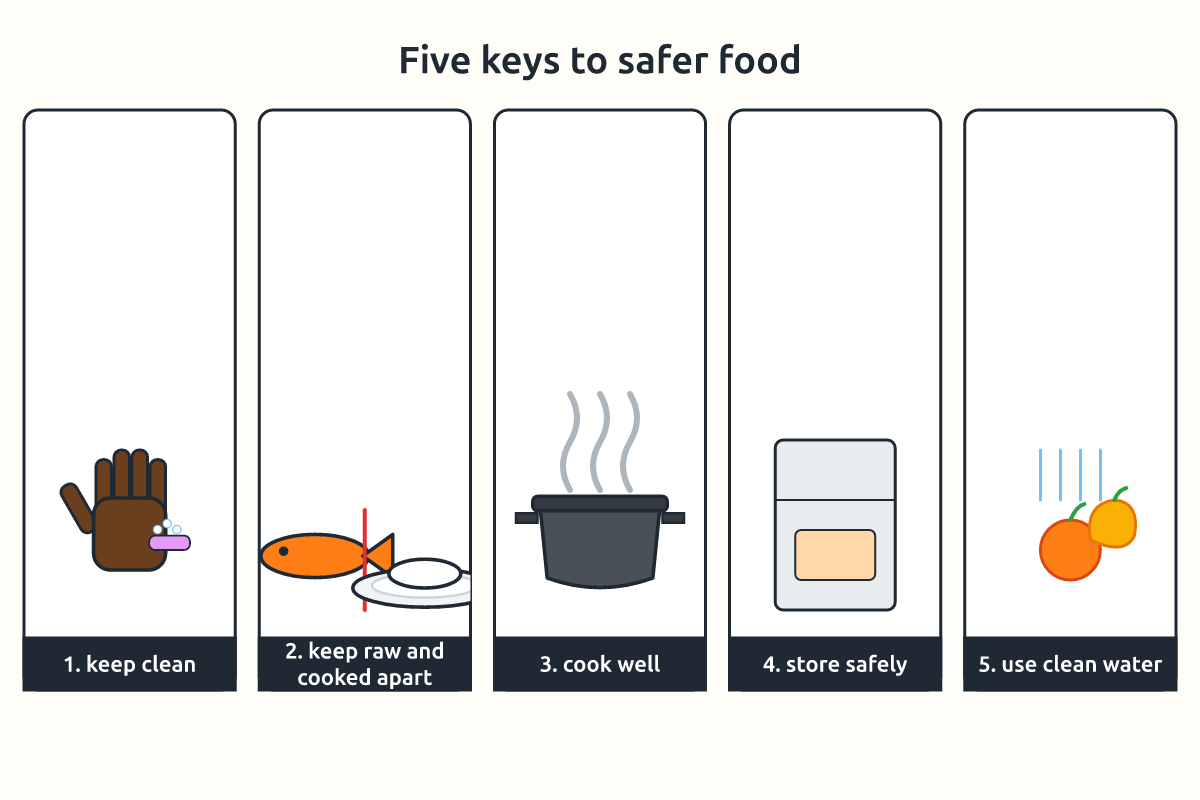
2. The Five Keys to Safer Food
| Key | Practices |
|---|---|
| 1. Keep clean | wash hands with soap before and during cooking; clean surfaces and utensils; keep insects, rats and animals away |
| 2. Separate raw and cooked | keep raw meat and fish away from cooked food; use separate knives and boards |
| 3. Cook thoroughly | cook meat, eggs and fish well; reheat leftovers until very hot |
| 4. Keep food at safe temperatures | do not leave cooked food at room temperature for more than 2 hours; refrigerate leftovers |
| 5. Use safe water and raw materials | use clean or treated water; wash fruits and vegetables; check expiry dates |
3. Food Safety at School
- Wash hands with soap before eating.
- Buy food from clean, covered vendors with clean hands and aprons.
- Do not buy food exposed to flies or dust.
- Do not share spoons or drink from one cup.
- Throw away leftovers that have been out for too long.
4. Food Vendors
The Food and Drugs Authority (FDA) and district environmental health officers inspect food vendors and require them to have medical certificates. Good vendors cover food, wear aprons and hairnets, use clean water and keep their stalls clean. School feeding caterers must follow the same rules.
At home, everyone can help by keeping the kitchen clean, covering food, washing hands and reminding others of the Five Keys.
New words
- food safety
- Preventing illness from food.
- contamination
- The presence of harmful substances in food.
- foodborne illness
- Sickness caused by eating contaminated food.
- raw
- Not cooked.
- expiry date
- The date after which food should not be eaten.
- FDA
- Food and Drugs Authority, which checks food safety in Ghana.
Summary
- Food can be contaminated by germs, chemicals or objects.
- The Five Keys: keep clean, separate, cook thoroughly, safe temperatures, safe water and raw materials.
- Buy food from clean, covered vendors.
- The FDA and health officers inspect food sellers.
Class activity: Kitchen Inspection
- Use a checklist based on the Five Keys.
- Observe your school kitchen or a food stall (with permission).
- Report what is done well and what should improve.
You need: Bar of soap, Covered bowl of local food, Printed food-hygiene picture cards
Exercises
Answer in your exercise book first, then check your answers.
1. What should you do before eating?
- A. Wash hands with soap
- B. Play football
- C. Sleep
- D. Touch a dog
Show answer
Answer: Wash hands with soapKeep clean.2. Raw meat should be kept…
- A. away from cooked food
- B. on top of cooked food
- C. in the sun
- D. uncovered
Show answer
Answer: away from cooked foodSeparate.3. Cooked food should not be left at room temperature for more than…
- A. 2 hours
- B. 2 days
- C. 1 week
- D. 1 month
Show answer
Answer: 2 hoursGerms grow.4. Contaminated food always smells bad.
- A. True
- B. False
Show answer
Answer: FalseIt may look and smell normal.5. Fruits should be washed before eating.
- A. True
- B. False
Show answer
Answer: TrueTo remove germs and chemicals.6. The date after which food should not be eaten is the ______ date.
Show answer
Answer: expiryCheck labels.7. List the Five Keys to Safer Food.
Show answer
Answer: Keep clean; separate raw and cooked; cook thoroughly; keep food at safe temperatures; use safe water and raw materials.All five.8. Why should separate knives be used for raw meat and cooked food?
Show answer
Answer: Germs from raw meat can spread to cooked food and cause illness.Cross-contamination.
Homework
- Check five food packages at home for expiry dates and record them.