Basic 6 · Our World and Our People · Home and School
Food Poisoning and Food Preservation
In this topic you will identify the signs and prevention of food poisoning and describe safe ways to preserve and store food.
By the end of these notes you should be able to:
- Describe the causes and signs of food poisoning
- Explain first aid for food poisoning
- Describe safe methods of preserving and storing food
What you already know
- Keeping food safe
Copy everything that has a blue line on its left into your notebook. The other parts are for reading.
- Strand
- All About Us
- Sub-strand
- Home and School
- Indicator
- B6.1.4.1.1 – Identify ways of promoting food safely
Introduction
After a party, several guests fall ill with stomach pain and vomiting. The food had been left uncovered for hours in the heat. This is food poisoning.
1. Food Poisoning
Food poisoning: Illness caused by eating food contaminated with germs or harmful substances.
Signs of food poisoning usually appear a few hours to a few days after eating bad food:
- stomach pain and cramps
- vomiting and nausea (feeling like vomiting)
- diarrhoea
- fever and weakness
- headache
2. First Aid and Treatment
- Give the sick person plenty of clean water or ORS to replace lost fluids.
- Let the person rest.
- Do not give unknown medicines.
- Take the person to a health facility, especially if there is blood in the stool, high fever, or the person is a child, pregnant woman or elderly.
3. Preventing Food Poisoning
- Follow the Five Keys to Safer Food.
- Do not eat food from damaged, bulging or rusty cans.
- Avoid food that smells bad or looks mouldy.
- Eat freshly cooked food when possible.
- Store food properly.
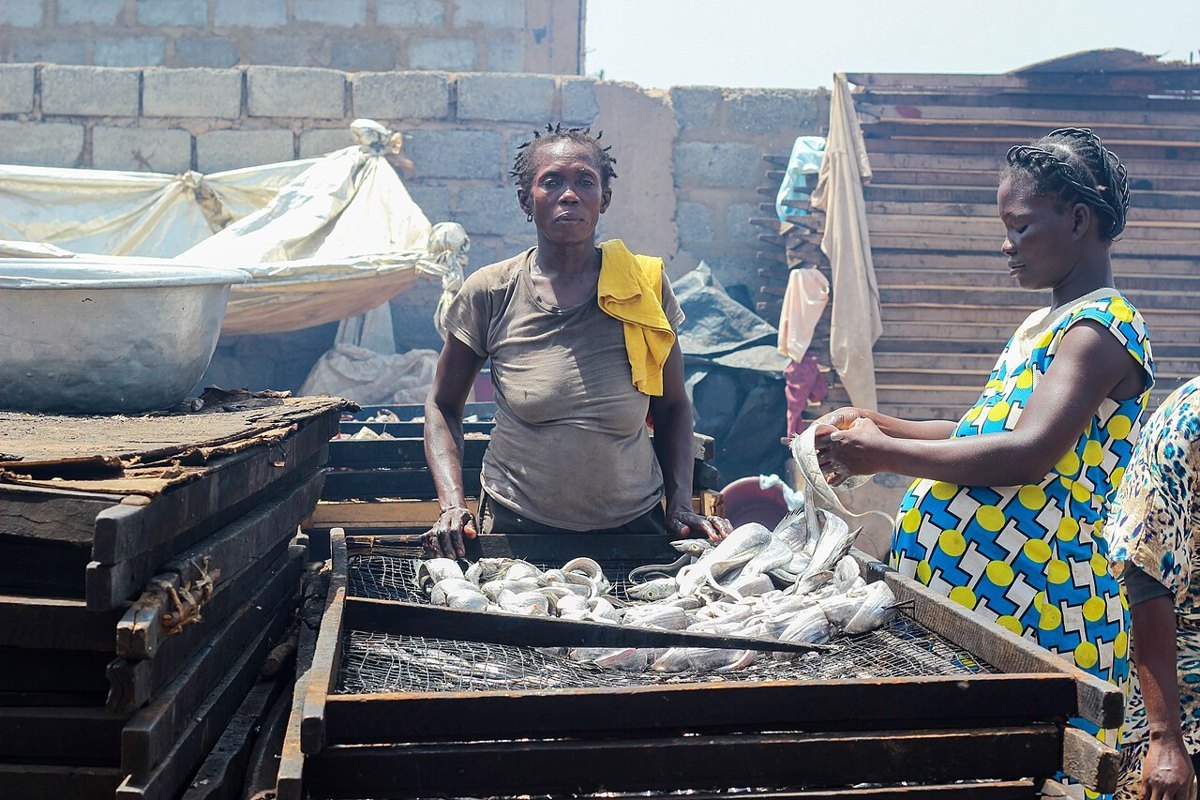
4. Preserving and Storing Food
| Method | How it works | Examples |
|---|---|---|
| drying | removes water so germs cannot grow | dried fish, kokonte, dried pepper, maize |
| smoking | dries and adds chemicals from smoke that slow decay | smoked fish and meat |
| salting | salt draws out water | salted fish (koobi), salted beef |
| refrigeration and freezing | cold slows germ growth | fish, meat, leftovers |
| canning/bottling | sealed containers after heating kill germs | tomato paste, sardines |
| fermentation | good bacteria preserve the food | kenkey, koko, gari |
5. Safe Storage
Store food in clean, covered containers away from insects and rats. Keep grains dry to prevent mould. Mouldy groundnuts and maize can contain aflatoxins, which are harmful to the liver, so they must be thrown away. Store chemicals and pesticides far from food.
Never store food or water in empty pesticide or chemical containers, even after washing them.
New words
- food poisoning
- Illness from eating contaminated food.
- preservation
- Keeping food from going bad.
- mould
- A fungus that grows on damp food.
- aflatoxin
- A poison produced by mould on groundnuts and grains.
- dehydration
- Loss of body fluids.
- fermentation
- Using good microbes to change and preserve food.
Summary
- Food poisoning causes stomach pain, vomiting and diarrhoea.
- Give fluids and seek medical help.
- Prevent it by following the Five Keys and avoiding spoiled food.
- Drying, smoking, salting, cooling, canning and fermentation preserve food.
Class activity: Preservation Display
- Collect samples or pictures of preserved foods.
- Label each with its preservation method.
- Explain how each method stops food from spoiling.
You need: Bar of soap, Covered bowl of local food, Printed food-hygiene picture cards
Exercises
Answer in your exercise book first, then check your answers.
1. Which is a sign of food poisoning?
- A. Vomiting
- B. Good appetite
- C. Fast growth
- D. Clear skin
Show answer
Answer: VomitingCommon sign.2. Kokonte is preserved by…
- A. drying
- B. freezing
- C. canning
- D. smoking
Show answer
Answer: dryingDried cassava.3. Aflatoxins are found on…
- A. mouldy groundnuts and maize
- B. fresh oranges
- C. boiled eggs
- D. clean water
Show answer
Answer: mouldy groundnuts and maizeHarmful to the liver.4. ORS helps replace fluids lost through diarrhoea.
- A. True
- B. False
Show answer
Answer: TruePrevents dehydration.5. It is safe to eat food from a bulging can.
- A. True
- B. False
Show answer
Answer: FalseIt may contain harmful germs.6. Keeping food from going bad is food ______.
Show answer
Answer: preservatione.g. drying.7. Name three methods of preserving fish.
Show answer
Answer: Smoking, drying and salting (or freezing).Any three.8. Why should mouldy groundnuts be thrown away?
Show answer
Answer: They may contain aflatoxins, which damage the liver and can cause serious illness.Food safety.
Homework
- Find out how your family preserves one type of food and write the steps.