Basic 6 · History · Impact of European Presence
European Impact: Formal Education
In this topic you will assess how European presence introduced formal (Western) education to Ghana and how it changed society.
By the end of these notes you should be able to:
- Describe how formal education began in the Gold Coast
- Name early schools and their founders
- Assess the effects of formal education
What you already know
- Europeans on the Gold Coast (Basic 5)
Copy everything that has a blue line on its left into your notebook. The other parts are for reading.
- Strand
- Europeans In Ghana
- Sub-strand
- Impact of European Presence
- Indicator
- B6.3.4.1.1 – Assess the changes that the European presence brought to Ghana
Introduction
Before the Europeans came, children learnt by watching and working with their parents and elders. Formal schools with classrooms, books and teachers were introduced during the European presence and changed Ghana for ever.
1. Castle Schools
The first European-style schools were castle schools, set up inside the forts and castles. The Portuguese started a school at Elmina Castle in the 16th century. Later, the Dutch at Elmina, the Danes at Christiansborg and the British at Cape Coast Castle ran schools. They mainly taught the children of European traders and African women (mulattoes) and some sons of chiefs, to train them as clerks, interpreters and church workers.
2. Missionary Schools
In the 19th century, Christian missionaries spread schools beyond the coast. They believed that people should read the Bible in their own languages.
| Mission | Arrival | Contributions |
|---|---|---|
| Basel Mission | 1828 (Christiansborg; later Akropong) | schools, teacher training at Akropong (1848), wrote Twi and Ga grammar and Bibles |
| Wesleyan Methodist | 1835 (Cape Coast) | schools such as Mfantsipim (1876) and Wesley Girls' High School |
| Bremen Mission | 1847 (Peki, later Keta) | schools in the Volta area; Ewe language books |
| Catholic Mission (SMA) | 1880 (Elmina) | St Augustine's College, many primary schools |
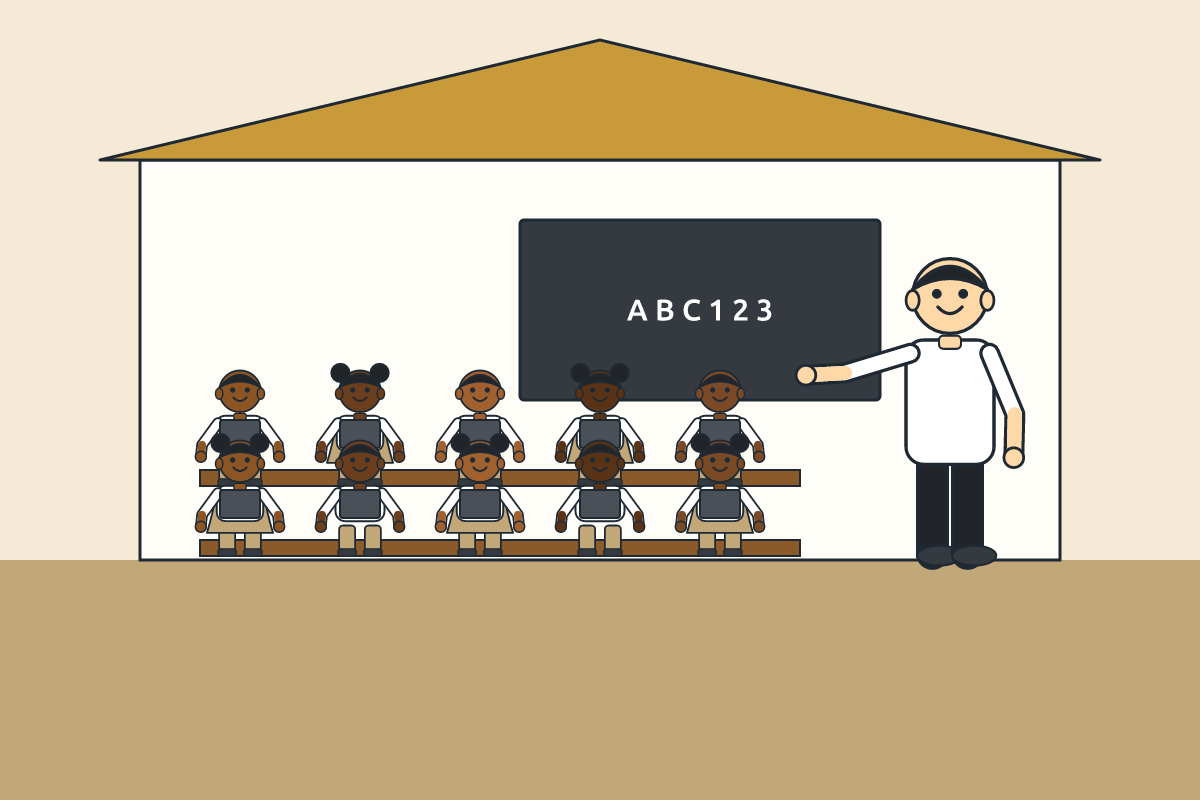
3. Government Schools
The colonial government later opened schools as well. Governor Gordon Guggisberg emphasised education, and Achimota College opened in 1927 with Dr J.E.K. Aggrey as Assistant Vice-Principal. Today Ghana has free public basic education and free senior high school education.
4. Effects of Formal Education
| Positive effects | Negative effects |
|---|---|
| reading, writing and arithmetic spread | local languages and knowledge were sometimes looked down upon |
| educated Africans became teachers, lawyers, doctors and clerks | it created a gap between educated and uneducated people |
| educated leaders led the fight for independence | early schools focused on clerical work, not technical skills |
| Ghanaian languages were written down | some customs were discouraged in schools |
New words
- formal education
- Learning in schools with teachers and a fixed curriculum.
- castle school
- An early school inside a European fort or castle.
- missionary
- A person sent to spread a religion.
- mission
- A religious organisation that sends missionaries.
- curriculum
- The subjects taught in a school.
- literacy
- The ability to read and write.
Summary
- Formal education began in castle schools.
- Missionaries spread schools and wrote Ghanaian languages down.
- Achimota College opened in 1927.
- Education produced leaders but also created gaps between people.
Class activity: School History Project
- Find out when your school was founded and by whom.
- Interview an older teacher or elder about schools in the past.
- Present a "then and now" chart of education.
You need: Ghana map, Printed photographs of forts, Early mission schools, Cowrie shells, Trade beads
Exercises
Answer in your exercise book first, then check your answers.
1. The first European-style schools were…
- A. castle schools
- B. online schools
- C. senior high schools
- D. universities
Show answer
Answer: castle schoolsInside forts and castles.2. Which mission founded Mfantsipim?
- A. Wesleyan Methodist
- B. Basel
- C. Bremen
- D. Catholic
Show answer
Answer: Wesleyan MethodistIn 1876.3. Achimota College opened in…
- A. 1927
- B. 1828
- C. 1957
- D. 1482
Show answer
Answer: 1927Under Guggisberg.4. Missionaries wrote down some Ghanaian languages.
- A. True
- B. False
Show answer
Answer: Truee.g. Twi, Ga, Ewe.5. Castle schools were mainly for farmers' children in the north.
- A. True
- B. False
Show answer
Answer: FalseThey served mainly coastal mulatto children and chiefs' sons.6. The Basel Mission trained teachers at ______.
Show answer
Answer: AkropongFrom 1848.7. State two positive effects of formal education.
Show answer
Answer: Spread of literacy and the rise of educated leaders who fought for independence.Any two.8. Why did missionaries want people to read the Bible in their own languages?
Show answer
Answer: They believed people would understand and accept Christianity better in their own language.Mission aims.
Homework
- Write a short history of the oldest school in your district.