Basic 6 · Ghanaian Language · Reading
Reading Novels and Newspapers Aloud and Summarising
In this topic you will read aloud passages from novels and newspapers with correct pronunciation and tone, and summarise what you read.
By the end of these notes you should be able to:
- Read novel and newspaper passages aloud fluently
- Identify the main points of a passage
- Write a short summary
What you already know
- Reading novels and newspapers (Basic 5)
Copy everything that has a blue line on its left into your notebook. The other parts are for reading.
- Strand
- Extensive Reading
- Sub-strand
- Reading
- Indicator
- B6.6.1.1.1-2 – Read aloud passages from novels and newspapers with correct pronunciation and tone
Introduction
Reading aloud is only the first step. A good reader can also tell others briefly what the passage was about. This is called summarising.
1. Novel Passage (English Version)
"The lorry groaned as it climbed the hill towards Bolgatanga. Fuseini pressed his face against the window. He had never travelled so far from home. His father had given him two things before he left: a small bag of groundnuts and one piece of advice. 'Wherever you go,' his father had said, 'remember who you are.' Now, as the lorry stopped in the busy town, Fuseini held the bag tightly and stepped out bravely into his new life at the secondary school."
2. Newspaper Passage (English Version)
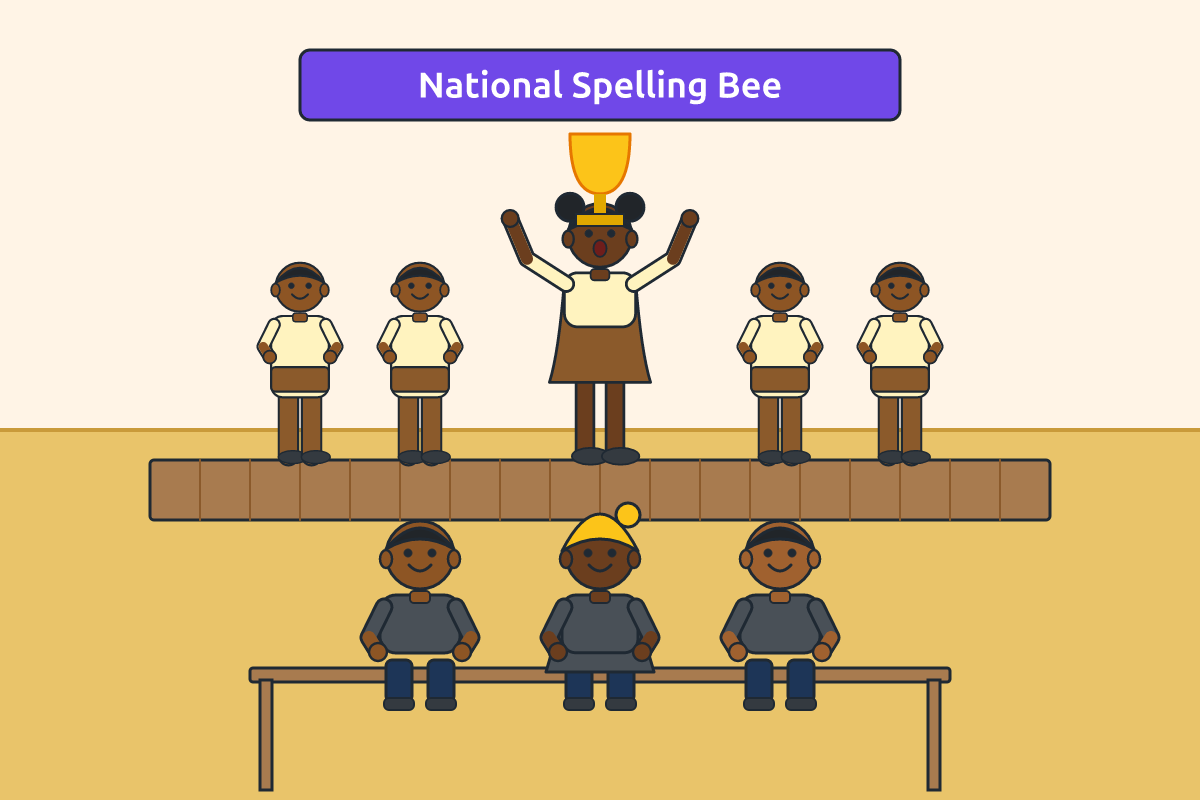
"PUPILS WIN NATIONAL SPELLING BEE. A Basic 6 pupil from Ho, Selasi Agbeko, has won this year's National Spelling Bee held in Accra on Saturday. Selasi correctly spelt 'conscientious' in the final round to beat 15 other finalists from across the country. Speaking after the contest, Selasi thanked her teachers and said she reads at least one book every week. She received a trophy, a laptop and a scholarship."
3. Reading Aloud
| Text | Reading style |
|---|---|
| novel | expressive; change your voice for characters; show feelings |
| newspaper | clear, steady, serious; pronounce names and numbers carefully |
4. Summarising
- Read the passage carefully.
- Underline the main points (who, what, where, why).
- Leave out small details, examples and repeated ideas.
- Write the main points in your own words in a few sentences.
Example
Summarise the newspaper passage in two sentences.
- Main points: Selasi from Ho won the National Spelling Bee in Accra; she spelt "conscientious"; she reads a book weekly; she won a trophy, laptop and scholarship.
Answer: Selasi Agbeko, a Basic 6 pupil from Ho, won the National Spelling Bee in Accra by spelling "conscientious" correctly. She credits her success to reading every week and won a trophy, a laptop and a scholarship.
Practise reading and summarising passages in your Ghanaian language from storybooks and Ghanaian-language newspapers or radio scripts.
New words
- novel
- A long fictional story book.
- newspaper
- A publication reporting news.
- summary
- A short account of the main points.
- main point
- An important idea in a passage.
- headline
- The title of a news story.
- fluent
- Reading smoothly and accurately.
Summary
- Read novels with expression and newspapers clearly and steadily.
- A summary gives only the main points in your own words.
- Underline main points and leave out small details.
- Practise reading and summarising in your Ghanaian language.
Class activity: Read and Summarise
- Each partner reads a passage aloud in your Ghanaian language.
- The listener writes a two-sentence summary.
- Compare summaries and discuss the main points.
You need: Ghanaian-language storybook, Locally made sentence cards, Pointer stick
Exercises
Answer in your exercise book first, then check your answers.
1. A short account of the main points is a…
- A. summary
- B. headline
- C. novel
- D. poem
Show answer
Answer: summaryBrief.2. What did Fuseini's father tell him?
- A. Remember who you are
- B. Never travel
- C. Sell groundnuts
- D. Stay at home
Show answer
Answer: Remember who you areHis advice.3. Which word did Selasi spell to win?
- A. conscientious
- B. Ghana
- C. trophy
- D. laptop
Show answer
Answer: conscientiousFinal round.4. Newspapers should be read in a clear, steady voice.
- A. True
- B. False
Show answer
Answer: TrueSerious tone.5. A summary should include every small detail.
- A. True
- B. False
Show answer
Answer: FalseOnly main points.6. The title of a news story is the ______.
Show answer
Answer: headlinee.g. "Pupils Win National Spelling Bee".7. Summarise the novel passage in one sentence.
Show answer
Answer: Fuseini travelled by lorry to Bolgatanga to start secondary school, remembering his father's advice to remember who he is.Main idea.8. Why is summarising a useful skill?
Show answer
Answer: It shows you understand the passage and helps you remember and share the main ideas quickly.Comprehension.
Homework
- Read a passage in your Ghanaian language and write a three-sentence summary.