Basic 6 · English Language
Instructions, Reading with Meaning, Modals, Describing Incidents and Spelling
In this topic you will create instructions for a game, read grade-level texts with meaning, use modals, write short paragraphs describing incidents and check literary work for spelling.
By the end of these notes you should be able to:
- Create and present instructions for playing a game
- Read a grade-level text with understanding
- Use modals for ability, permission, advice, possibility and obligation
- Describe an incident clearly in short paragraphs
- Check writing for spelling errors
What you already know
- Dramatisation, Skimming and Scanning, Conjunctions of Contrast and Condition, Persuasive Conclusions and Complex Sentences
Copy everything that has a blue line on its left into your notebook. The other parts are for reading.
Lesson 1
- Strand
- Oral Language
- Sub-strand
- Dramatization and Role Play
- Indicator
- B6.1.10.2.1 – Create and present simple instructions or a manual on how to play a game
Introduction
Clear instructions help people do things correctly. A game manual explains the goal, equipment, rules and steps.
Writing Instructions for a Game
| Part | Example: Oware |
|---|---|
| title | How to Play Oware |
| players | 2 |
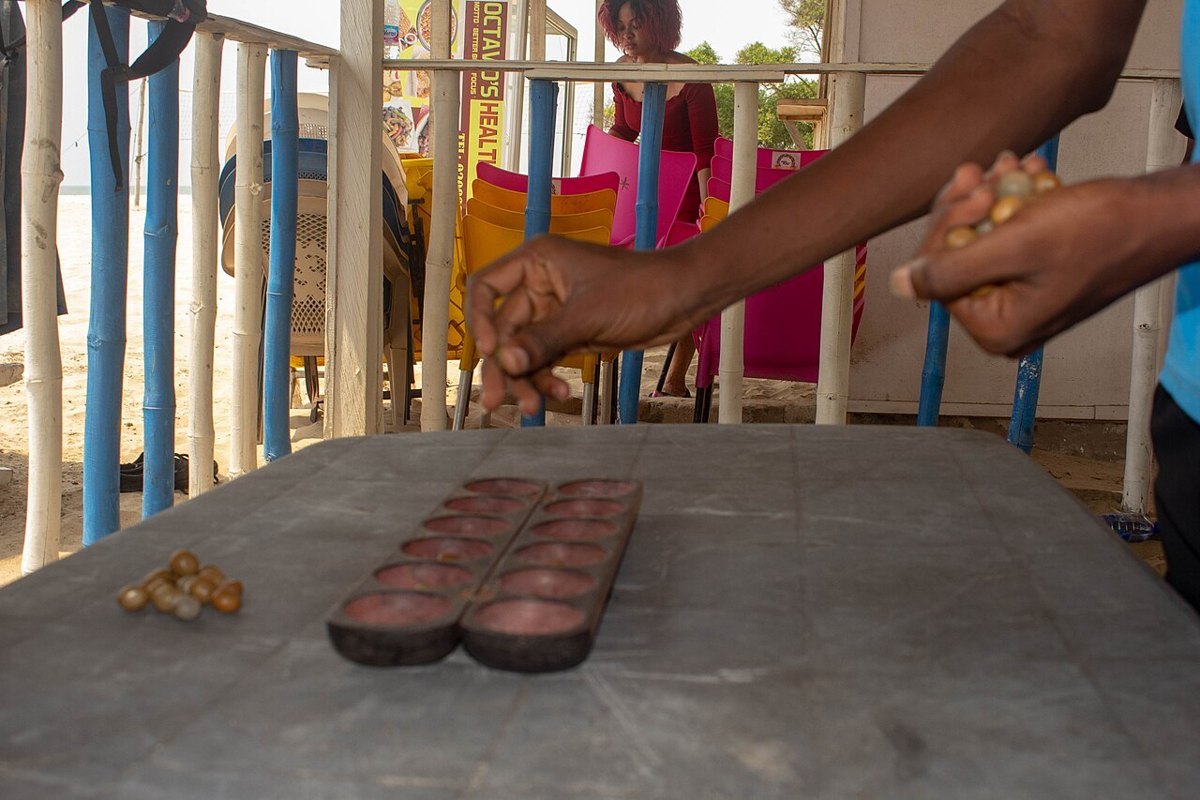
| equipment | an oware board with 12 pits and 48 seeds |
| goal | to capture more seeds than your opponent |
| set-up | place 4 seeds in each pit |
| steps | numbered instructions in order |
| rules | what is allowed and not allowed |
How to Play Oware (basic steps)
- Sit facing each other with the board between you; each player owns the six pits on their side.
- The first player picks up all the seeds from one of their pits.
- Moving anticlockwise, drop one seed into each following pit.
- If the last seed lands in an opponent's pit and makes a total of 2 or 3, capture those seeds.
- Players take turns until no more moves are possible.
- The player with more captured seeds wins.
New words
- instructions
- Steps that tell how to do something.
- manual
- A book or guide of instructions.
- imperative
- A command form of the verb, e.g. "Place".
Summary
- Game instructions include title, players, equipment, goal, set-up, steps and rules.
- Use numbered steps and imperative verbs.
Exercises
Answer in your exercise book first, then check your answers.
1. How many seeds go in each pit at the start of oware?
- A. 4
- B. 2
- C. 6
- D. 12
Show answer
Answer: 448 seeds ÷ 12 pits.2. Instructions should be in the correct order.
- A. True
- B. False
Show answer
Answer: TrueNumbered steps.3. Command verbs like "Place" are in the ______ form.
Show answer
Answer: imperativeInstructions.4. Write instructions for ampe in three steps.
Show answer
Answer: E.g. 1. Form two teams. 2. The leader jumps and claps with each player. 3. Points are scored when feet match or differ as agreed.Clear steps.
Lesson 2
- Strand
- Reading
- Sub-strand
- Comprehension
- Indicator
- B6.2.9.1.1 – Read grade-level text with meaning
Introduction
Reading with meaning means understanding the facts, the writer's purpose and the lessons in a text.
Reading Passage: The Akosombo Dam
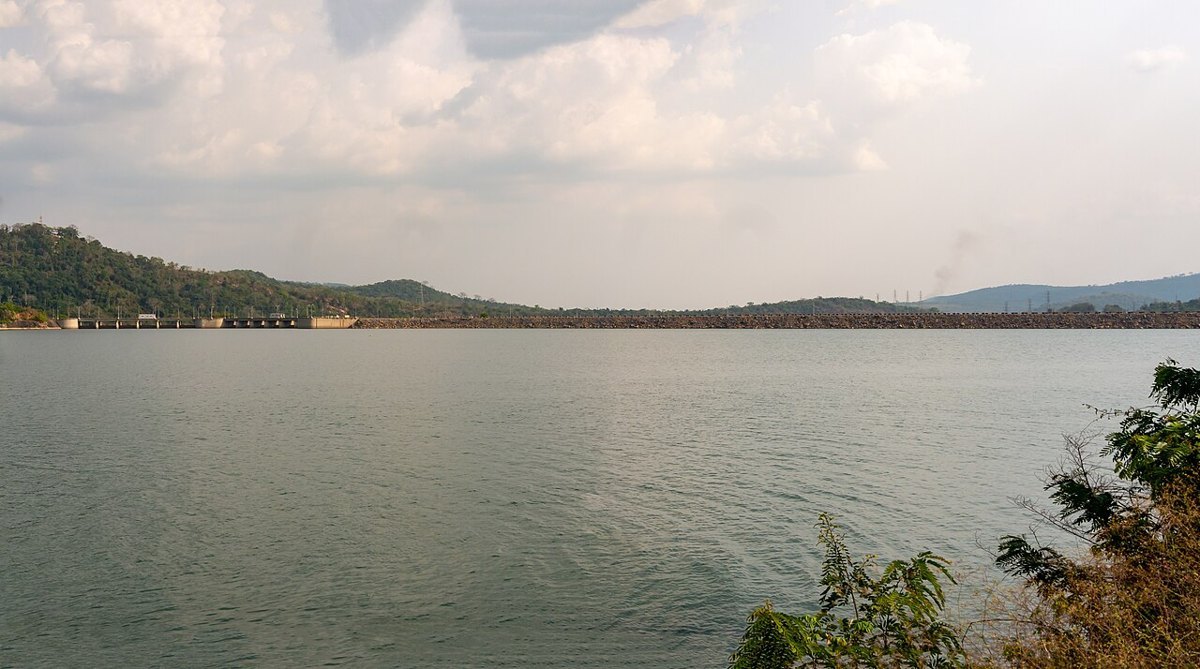
"In the early 1960s, Ghana began building one of the largest projects in its history: a dam across the Volta River at Akosombo. Dr Kwame Nkrumah believed that cheap electricity would power industries and lift the nation out of poverty.
The dam was completed in 1965. It created Lake Volta, one of the largest man-made lakes in the world by surface area, covering about 8,500 square kilometres. The dam's turbines produced electricity for homes, factories and the aluminium smelter at Tema, and power was even sold to neighbouring countries.
However, the project had a human cost. About 80,000 people living in over 700 villages had to leave their homes as the waters rose. Many were resettled in new towns, but some found it hard to farm the new lands, and some lost their traditional way of life.
The lake also brought new opportunities: fishing, lake transport between the north and south, and irrigation. Yet it also spread water-borne diseases such as bilharzia in some lakeside communities.
Today, Akosombo remains an important source of electricity for Ghana. Its story teaches that great development projects can bring great benefits, but they must also care for the people they affect."
| Question | Answer |
|---|---|
| Why did Nkrumah want the dam? | to provide cheap electricity for industries and development |
| When was it completed? | 1965 |
| What lake did it create? | Lake Volta |
| How many people had to move? | about 80,000 |
| State one benefit and one problem. | benefit: electricity or fishing; problem: displacement or bilharzia |
| What lesson does the passage teach? | development must also care for affected people |
New words
- dam
- A barrier built across a river to hold back water.
- turbine
- A machine turned by water to produce electricity.
- resettle
- To move people to live in a new place.
Summary
- The Akosombo Dam produces electricity and created Lake Volta.
- It brought benefits but also displaced many people.
Exercises
Answer in your exercise book first, then check your answers.
1. The Akosombo Dam was completed in…
- A. 1965
- B. 1957
- C. 1874
- D. 2000
Show answer
Answer: 1965Paragraph 2.2. About 80,000 people had to leave their homes.
- A. True
- B. False
Show answer
Answer: TrueParagraph 3.3. The dam created Lake ______.
Show answer
Answer: VoltaMan-made lake.4. What lesson does the last paragraph teach?
Show answer
Answer: Development projects bring benefits but must also care for the people they affect.Main lesson.
Lesson 3
- Strand
- Grammar
- Sub-strand
- Conjunctions
- Indicator
- B6.3.9.1.1 – Use modals to express a variety of meanings
Introduction
Modals are helping verbs that change the meaning of the main verb.
Modals and Their Meanings
| Meaning | Modals | Example |
|---|---|---|
| ability | can, could | I can swim. When I was five, I could read. |
| permission | may, can, could | May I come in? |
| possibility | may, might, could | It might rain later. |
| advice | should, ought to | You should drink more water. |
| obligation | must, have to | Pupils must wear uniform. |
| prohibition | must not | You must not cheat. |
| polite request | would, could | Would you help me, please? |
| future/willingness | will, shall | I will call you tomorrow. Shall we go? |
Modals are followed by the base form: "She can sing" (not "She can sings" or "She can to sing").
Passage: "Visitors must remove their shoes before entering the shrine. You may take photographs outside, but you must not touch the sacred drums. If you have questions, you should ask the guide. Would you like some water before we start?"
New words
- modal
- A helping verb that adds meaning such as ability or obligation.
- obligation
- Something you must do.
- prohibition
- Something not allowed.
Summary
- Modals express ability, permission, possibility, advice, obligation and requests.
- Use the base form after a modal.
Exercises
Answer in your exercise book first, then check your answers.
1. Which modal shows advice?
- A. should
- B. can
- C. may
- D. will
Show answer
Answer: shouldAdvice.2. "She can sings" is correct.
- A. True
- B. False
Show answer
Answer: False"She can sing."3. Visitors ______ not touch the sacred drums.
Show answer
Answer: mustProhibition.4. Write a polite request using "would".
Show answer
Answer: Would you please pass the salt?Polite.
Lesson 4
- Strand
- Writing
- Sub-strand
- Informative Writing
- Indicator
- B6.4.14.1.1 – Write short paragraphs to describe incidents such as accidents and fire outbreaks
Introduction
When describing an incident such as an accident or a fire, write clearly and in order so that readers understand exactly what happened.
Describing Incidents
| Question | Example: a market fire |
|---|---|
| what happened? | a fire broke out |
| when? | Tuesday afternoon at about 2 p.m. |
| where? | in the cloth section of the central market |
| who was involved? | traders, shoppers, firefighters |
| how did it happen? | suspected electrical fault |
| what was the result? | ten stalls burnt; no deaths; goods worth thousands of cedis lost |
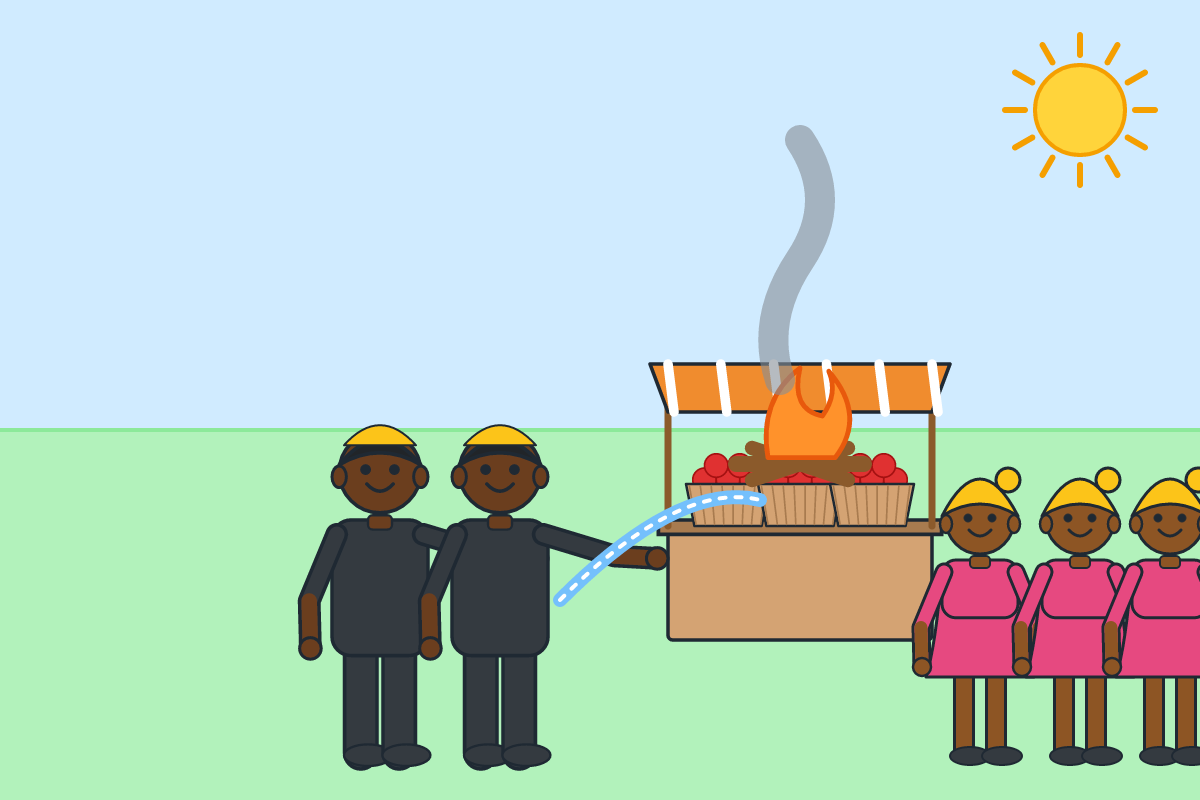
Sample paragraphs: "On Tuesday afternoon at about 2 p.m., a fire broke out in the cloth section of the central market. Thick black smoke rose into the sky as traders shouted for help and tried to save their goods.
Within twenty minutes, firefighters from the Ghana National Fire Service arrived and put out the fire. Ten stalls were destroyed, but fortunately no one was killed. Officers said an electrical fault may have caused the fire and advised traders to switch off power before leaving their stalls."
New words
- incident
- An event, often unexpected or serious.
- outbreak
- A sudden start of something, such as a fire.
- eyewitness
- A person who saw an event happen.
Summary
- Describe incidents in clear, ordered paragraphs.
- Answer what, when, where, who, how and the result.
Exercises
Answer in your exercise book first, then check your answers.
1. Which service puts out fires in Ghana?
- A. Ghana National Fire Service
- B. GES
- C. ECG
- D. GBC
Show answer
Answer: Ghana National Fire ServiceFirefighters.2. An incident description should be in a clear order.
- A. True
- B. False
Show answer
Answer: TrueSequence.3. A person who saw an event happen is an ______.
Show answer
Answer: eyewitnessWitness.4. State three questions to answer when describing an incident.
Show answer
Answer: What happened? When? Where? (or Who? How? Result?)Any three.
Lesson 5
- Strand
- Writing Conventions/ Extensive Reading
- Sub-strand
- Spelling, Building the Love and Culture of Reading
- Indicator
- B6.5.10.1.1 – Check pieces of literary work for spelling
Introduction
Spelling mistakes can change meaning and distract readers. Good writers check their work carefully.
Checking Spelling
| Wrong | Correct |
|---|---|
| recieve | receive |
| seperate | separate |
| definately | definitely |
| neccessary | necessary |
| begining | beginning |
| occured | occurred |
| untill | until |
| wich | which |
Strategies
- read your work slowly, word by word
- read it aloud to hear mistakes
- use the rule "i before e, except after c" (receive, believe), but learn exceptions such as "their" and "weird"
- check words you often get wrong in a dictionary
- keep a personal spelling list
- watch for homophones: their/there/they're, to/too/two
Practice: Find and correct the spelling errors: "It was definately the begining of a new season. We recieved the news untill evening and went to the farm, wich was seperate from the village."
Answer: definitely, beginning, received, until, which, separate.
New words
- proofread
- To read carefully to find and correct mistakes.
- misspelt
- Spelt wrongly.
- dictionary
- A book that gives spellings and meanings of words.
Summary
- Proofread slowly and aloud to find spelling errors.
- Learn spelling rules and keep a personal spelling list.
Exercises
Answer in your exercise book first, then check your answers.
1. Which is spelt correctly?
- A. receive
- B. recieve
- C. receeve
- D. resieve
Show answer
Answer: receivei before e except after c.2. Reading aloud can help you find mistakes.
- A. True
- B. False
Show answer
Answer: TrueYou hear errors.3. The correct spelling of "seperate" is ______.
Show answer
Answer: separateCommon error.4. Correct: "It was definately neccessary."
Show answer
Answer: It was definitely necessary.Two errors.
Homework
- Write instructions for your favourite game and proofread them for spelling.