Basic 6 · Creative Arts · Appreciating and Appraising
Analysing and Appreciating Performing Artworks
In this topic you will analyse and appreciate your own and others' performing artworks using elements of music, dance and drama.
By the end of these notes you should be able to:
- Identify elements of music, dance and drama
- Analyse a performance using these elements
- Write a short appreciation of a performance
What you already know
- Analysing visual artworks
Copy everything that has a blue line on its left into your notebook. The other parts are for reading.
- Strand
- Performing Arts
- Sub-strand
- Appreciating and Appraising
- Indicator
- B6.2.4.6.1 – Analyze and appreciate own or others’ artworks
Introduction
After watching a performance, people often say "It was nice." Now you will learn to explain exactly why a performance is effective.
1. Elements of Performing Arts
| Art form | Elements |
|---|---|
| music | melody, rhythm, tempo, dynamics, harmony, timbre (tone colour) |
| dance | body, action, space (levels, directions), time, energy, relationships |
| drama | plot, character, dialogue, setting, conflict, voice, movement |
2. Questions for Analysis
| Question | What to look for |
|---|---|
| What is the theme or message? | the main idea |
| How is it performed? | skill, accuracy, rhythm, expression |
| How are elements used? | e.g. tempo changes, dance levels, conflict in drama |
| How do costumes, props and setting help? | suitability and creativity |
| How does it make the audience feel? | emotions and reactions |
| What is its cultural meaning? | links to history and tradition |
3. Sample Appreciation
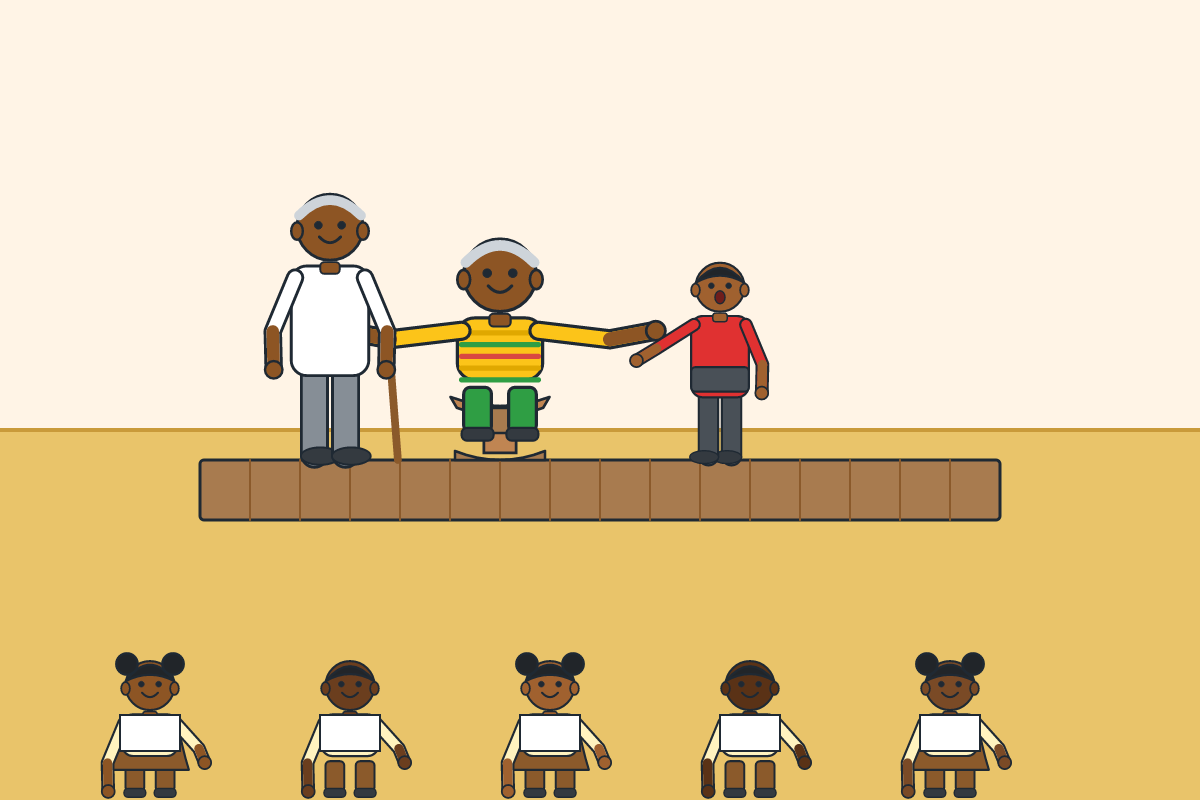
"The Kpanlogo dance by Group D was lively and well-coordinated. The dancers moved in time with the drums and used different levels, bending low and then leaping high, which added excitement. Their bright costumes matched the joyful mood. The message of unity was clear because everyone moved together in a circle. However, some dancers looked at the floor instead of the audience. Overall, it was an energetic and successful performance."
4. Structure of a Written Appreciation
- Introduction: name the performance and give your overall impression.
- Description: what happened.
- Analysis: how the elements were used.
- Interpretation: the message and feelings.
- Judgement: strengths, weaknesses and overall verdict.
Remember to consider the cultural context. A traditional dance may follow strict patterns passed down for generations, so its value lies partly in how faithfully it preserves tradition, not only in how new it is.
New words
- melody
- The tune of a piece of music.
- timbre
- The special sound quality of an instrument or voice.
- tempo
- The speed of music.
- conflict
- The problem or struggle in a drama.
- levels
- High, medium and low positions in dance.
- appreciation
- A thoughtful judgement of an artwork's qualities.
Summary
- Music, dance and drama each have elements to analyse.
- Ask about theme, skill, elements, costumes, feelings and culture.
- A written appreciation describes, analyses, interprets and judges.
- Balance praise with helpful suggestions.
Class activity: Write an Appreciation
- Watch a performance (live or recorded).
- Write a five-part appreciation.
- Read it to the class.
You need: Locally made drum, Gourd shaker, Printed photographs of Ghanaian performances
Exercises
Answer in your exercise book first, then check your answers.
1. The speed of music is its…
- A. tempo
- B. melody
- C. timbre
- D. harmony
Show answer
Answer: tempoFast or slow.2. The problem or struggle in a drama is the…
- A. conflict
- B. setting
- C. costume
- D. prop
Show answer
Answer: conflictDrives the plot.3. High, medium and low positions in dance are called…
- A. levels
- B. tempos
- C. scripts
- D. melodies
Show answer
Answer: levelsUse of space.4. A written appreciation should include strengths and weaknesses.
- A. True
- B. False
Show answer
Answer: TrueBalanced judgement.5. Timbre is the speed of music.
- A. True
- B. False
Show answer
Answer: FalseIt is tone colour.6. The tune of a song is its ______.
Show answer
Answer: melodyMusic element.7. Name three elements of dance.
Show answer
Answer: Body, space, time (or action, energy, relationships).Any three.8. Write two sentences appreciating a song you know.
Show answer
Answer: E.g. The melody is gentle and easy to remember. The slow tempo creates a peaceful mood.Analysis.
Homework
- Write an appreciation of a song, dance or play you watched at home or in church.