Basic 5 · Physical Education · Self-Responsibility
Being Active Outside School
In this topic you will plan and participate independently in fitness and skill development activities outside school.
By the end of these notes you should be able to:
- Explain the benefits of regular physical activity
- Plan a personal weekly activity programme
- Record and review your activities
What you already know
- Heart rate monitoring
Copy everything that has a blue line on its left into your notebook. The other parts are for reading.
- Strand
- Values and Psycho-social Concepts
- Sub-strand
- Self-Responsibility
- Indicator
- B5.5.1.5.1 – Participate independently in fitness and skill development activities outside school
Introduction
Physical education lessons happen only a few times a week, but your body needs activity every day. Children should be active for at least 60 minutes a day. You can take responsibility for staying fit at home and in your community.
1. Benefits of Regular Activity
- A stronger heart, lungs, muscles and bones.
- Healthy body weight.
- Better sleep and concentration in class.
- Less stress and a happier mood.
- New friends and teamwork skills.
2. Activities Outside School
| Type | Examples |
|---|---|
| aerobic | jogging, skipping, cycling, dancing, swimming |
| strength | push-ups, sit-ups, climbing, carrying water (safely) |
| flexibility | stretching, yoga |
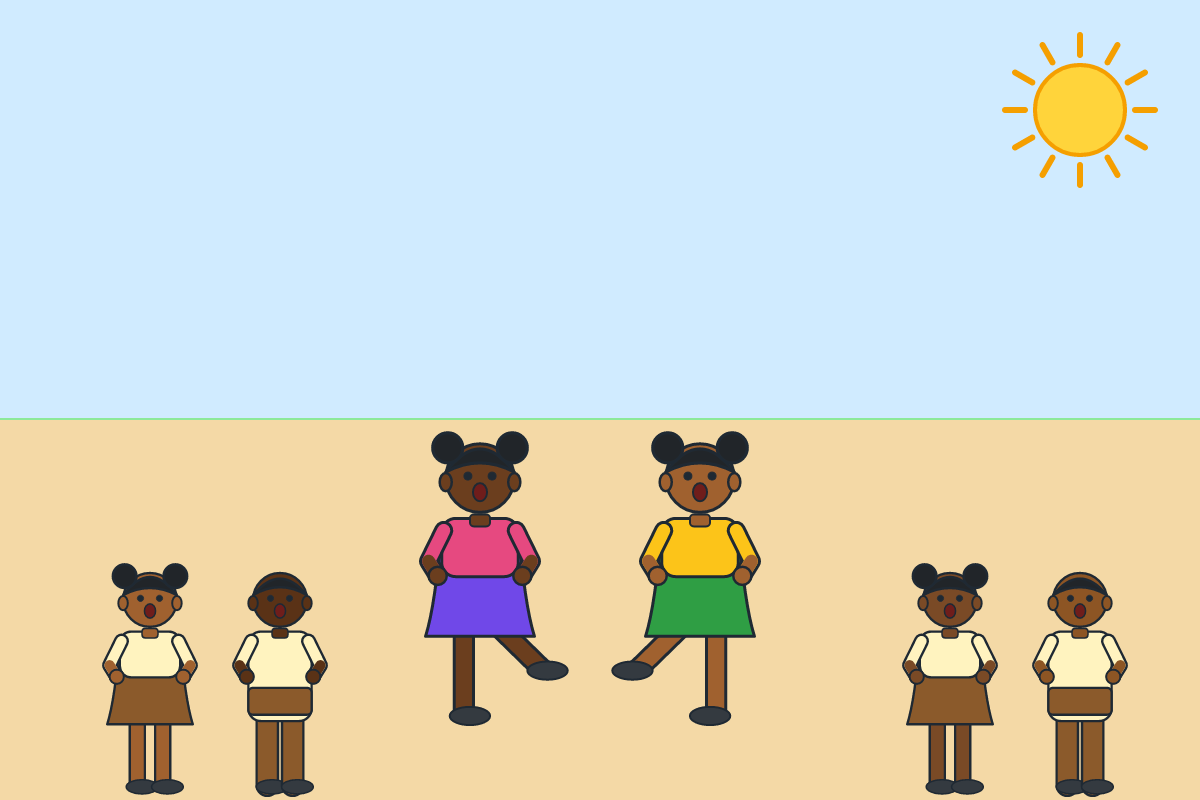
| skill | football, ampe, chaskele, netball shooting practice |
| chores | sweeping, weeding, fetching water |
3. Planning Your Week
| Day | Activity | Time |
|---|---|---|
| Monday | skipping and stretching | 30 min |
| Tuesday | football with friends | 60 min |
| Wednesday | jogging to music | 20 min |
| Thursday | ampe or dance | 30 min |
| Friday | strength circuit (push-ups, sit-ups) | 20 min |
| Saturday | cycling or long walk with family | 60 min |
| Sunday | rest or light stretching | 15 min |
4. Recording and Reviewing
Keep an activity log. Write the date, activity, time spent and how you felt. At the end of each week, check whether you met your goal and set a new target. Ask a parent or guardian to sign your log.
5. Self-Responsibility
Being responsible means doing your activities without being reminded, choosing safe places, warming up and cooling down, drinking water, and inviting friends or family to join you. Respect others while playing and follow the rules of games.
Safety: Play in safe places away from roads, gutters and open pits. Tell an adult where you are going.
New words
- independent
- Doing something on your own without being told.
- activity log
- A record of physical activities.
- goal
- Something you aim to achieve.
- flexibility
- The ability to bend and stretch easily.
- self-responsibility
- Taking charge of your own actions.
- target
- A specific aim to reach.
Summary
- Children need at least 60 minutes of activity daily.
- Activity improves health, mood and concentration.
- Plan a weekly programme with different activities.
- Keep a log and take responsibility for your fitness.
Class activity: My Activity Plan
- Write a one-week activity plan using the sample as a guide.
- Include at least three types of activity.
- Start your activity log today.
You need: Skipping rope, Locally made ball, Personal activity record cards
Exercises
Answer in your exercise book first, then check your answers.
1. How many minutes of activity should children do daily?
- A. At least 60
- B. 5
- C. 10
- D. None
Show answer
Answer: At least 60One hour a day.2. Which is a traditional Ghanaian active game?
- A. Ampe
- B. Chess
- C. Ludo
- D. Draughts
Show answer
Answer: AmpeIt involves jumping and clapping.3. A record of your physical activities is an…
- A. activity log
- B. atlas
- C. textbook
- D. register
Show answer
Answer: activity logIt tracks progress.4. Regular activity improves concentration in class.
- A. True
- B. False
Show answer
Answer: TrueIt helps the brain.5. You should play near roads and open pits.
- A. True
- B. False
Show answer
Answer: FalseChoose safe places.6. Taking charge of your own actions is self-______.
Show answer
Answer: responsibilityBeing independent.7. State three benefits of regular physical activity.
Show answer
Answer: Strong heart, healthy weight and better mood (or sleep, concentration).Any three.8. Why is keeping an activity log useful?
Show answer
Answer: It shows what you have done, helps you check goals and set new targets.Tracking progress.
Homework
- Follow your activity plan for one week and complete your activity log.