Basic 5 · Our World and Our People · Home and School
Skills for Dealing with Peer Pressure
In this topic you will describe and practise skills for resisting negative peer pressure.
By the end of these notes you should be able to:
- Describe refusal skills and assertiveness
- Use a decision-making process
- Practise resisting negative peer pressure
What you already know
- Understanding peer pressure
Copy everything that has a blue line on its left into your notebook. The other parts are for reading.
- Strand
- All About Us
- Sub-strand
- Home and School
- Indicator
- B5.1.4.1.1 – Describe skills for dealing with peer pressure
Introduction
Saying no to a friend can be hard. But with the right skills, you can stay true to yourself and still keep good friends.
1. Assertiveness
Assertiveness: Saying what you think and feel clearly, calmly and respectfully.
An assertive person is not rude or aggressive, and is not too shy to speak. They look the person in the eye, use a firm voice and say what they mean. For example: "No, I don't want to smoke. It is bad for my health."
2. Refusal Skills
| Skill | Example |
|---|---|
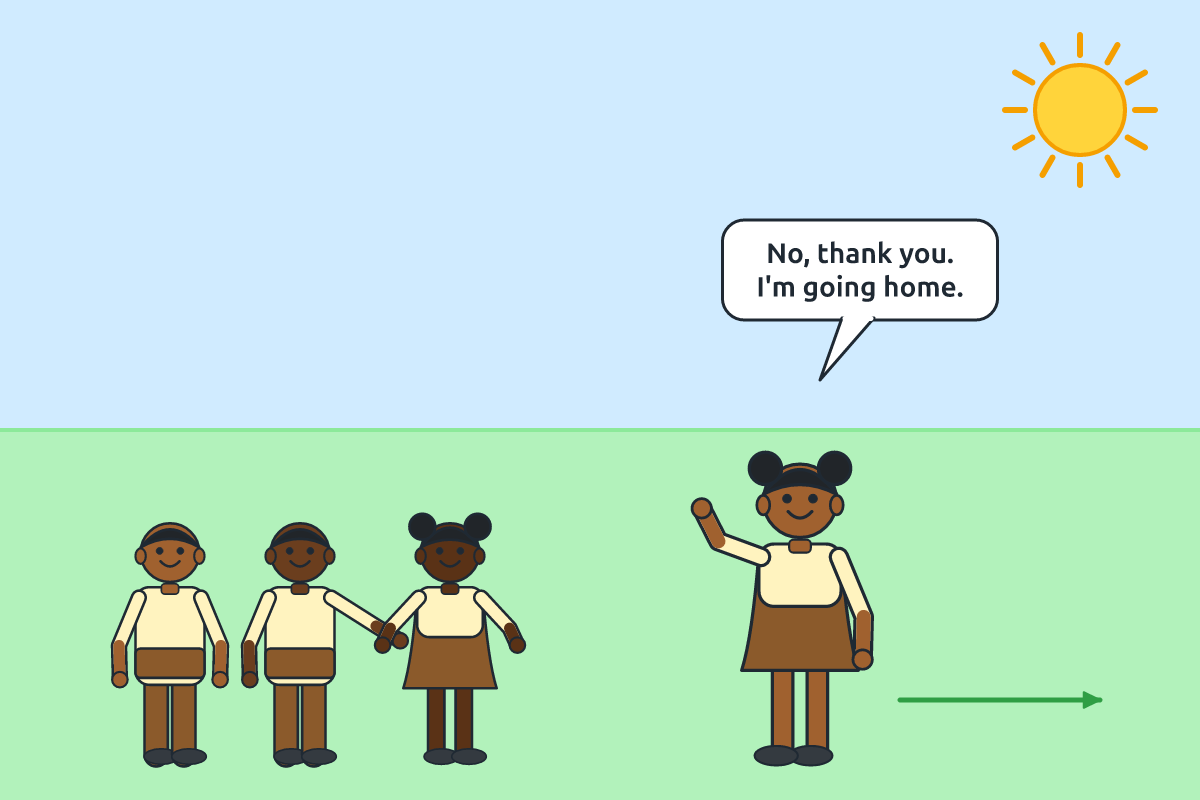
| say no clearly | "No, thank you." |
| give a reason | "I don't want to get into trouble." |
| repeat yourself | "I said no." (say it again without arguing) |
| suggest something else | "Let's play football instead." |
| walk away | leave the place calmly |
| use humour | "My mother would chase me with a broom!" |
| stay with good friends | go where your friends who share your values are |
3. Making Good Decisions
- Identify the problem: What am I being asked to do?
- Think of the choices: What can I do?
- Consider the results of each choice: What could happen to me and others?
- Check your values: Is it right? What would my parents or religion say?
- Choose the best option and act.
- Review: Did I make a good choice?
Using these steps helps you think before you act, instead of doing things just because others are doing them.
4. Other Helpful Skills
Build self-confidence by developing your talents and remembering your goals. Choose friends who share good values. Avoid places where bad things happen. Talk to parents, teachers or counsellors when you are under pressure. Remember that true friends respect your decisions; if a "friend" keeps pushing you to do wrong, that person is not a real friend.
Tip: Practise saying no in front of a mirror. It becomes easier with practice.
New words
- assertive
- Speaking clearly and respectfully about your views.
- aggressive
- Speaking or acting in a forceful, hostile way.
- refusal skills
- Ways of saying no.
- decision-making
- Choosing between options.
- values
- Beliefs about what is right and important.
- self-confidence
- Belief in yourself.
Summary
- Be assertive: clear, calm and respectful.
- Use refusal skills such as saying no, giving a reason and walking away.
- Follow the decision-making steps before acting.
- Choose good friends and talk to trusted adults.
Class activity: Say No Role-Play
- One partner applies pressure using a scenario card.
- The other uses at least two refusal skills.
- Swap roles and discuss which skills worked best.
You need: Printed local scenario cards, Hand puppet, Manila paper
Exercises
Answer in your exercise book first, then check your answers.
1. Which is a refusal skill?
- A. Walking away
- B. Giving in
- C. Shouting insults
- D. Fighting
Show answer
Answer: Walking awayIt removes you from pressure.2. Speaking clearly and respectfully about your views is…
- A. assertiveness
- B. aggression
- C. shyness
- D. rudeness
Show answer
Answer: assertivenessCalm and firm.3. The first step in decision-making is…
- A. identify the problem
- B. act quickly
- C. ask a stranger
- D. ignore it
Show answer
Answer: identify the problemKnow what is being asked.4. True friends respect your decisions.
- A. True
- B. False
Show answer
Answer: TrueThey do not force you.5. Being assertive means being rude.
- A. True
- B. False
Show answer
Answer: FalseIt is respectful.6. Beliefs about what is right and important are your ______.
Show answer
Answer: valuesThey guide decisions.7. List three refusal skills.
Show answer
Answer: Say no clearly, give a reason, walk away (or suggest an alternative, repeat).Any three.8. Use the decision-making steps for: a friend asks you to copy his homework.
Show answer
Answer: Problem: copying is cheating. Choices: copy or refuse. Results: copying may lead to punishment and no learning. Values: honesty. Decide to refuse and offer to study together.Steps applied.
Homework
- Write a short play in which a pupil uses refusal skills.