Basic 5 · Creative Arts · Planning, Making and Composing
Experimenting with Visual Arts Media
In this topic you will experiment with available media and methods such as drawing, painting, collage, printing and modelling to create your own artworks.
By the end of these notes you should be able to:
- Identify visual arts media and tools
- Experiment with at least three methods
- Create an artwork using a method of your choice
What you already know
- Visual artists of Ghana and Africa
Copy everything that has a blue line on its left into your notebook. The other parts are for reading.
- Strand
- Visual Arts
- Sub-strand
- Planning, Making and Composing
- Indicator
- B5.1.2.2.1 – Experiment with available relevant visual arts media and methods to create own visual artworks
Introduction
Artists try out different materials to discover what effects they can make. This is called experimenting. You will explore pencils, crayons, paint, paper, clay and found materials.
1. Media and Methods
| Method | Media and tools | What you can make |
|---|---|---|
| drawing | pencils, charcoal, crayons | sketches, portraits, landscapes |
| painting | water colours, poster colours, natural dyes, brushes | pictures, designs |
| collage | old magazines, fabric scraps, seeds, glue | pictures made by sticking materials |
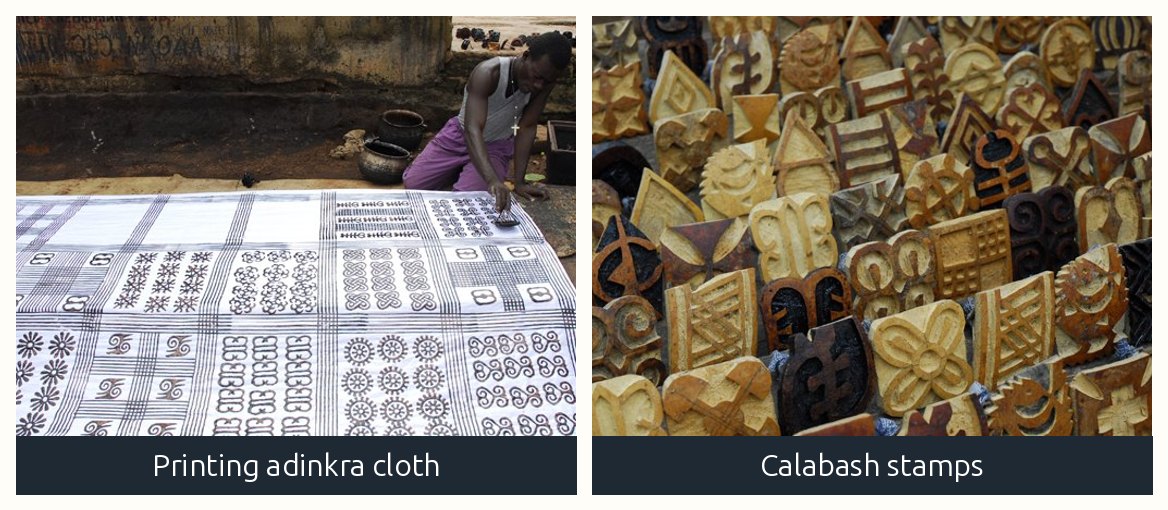
| printing | adinkra stamps from calabash, cut vegetables, cassava, ink | patterns on paper and cloth |
| modelling | clay, papier-mâché | pots, figures, masks |
| weaving | raffia, strips of paper, threads | mats, baskets, patterns |
2. Experimenting with Drawing and Shading
Use a pencil to make different lines: thick, thin, straight, curved and zigzag. Shade a square from dark to light by pressing harder and then softer. Try cross-hatching (lines crossing each other) and stippling (dots) to show light and shadow.
3. Experimenting with Printing
- Cut a cassava or a cocoyam in half.
- Carve a simple design, such as an adinkra symbol, on the flat surface. Ask an adult to help with the knife.
- Dip the carved surface in paint or ink.
- Press it firmly onto paper or cloth.
- Repeat to make a pattern.
4. Experimenting with Collage
Collect waste materials such as magazine pages, fabric scraps, seeds, sawdust and dry leaves. Plan a simple picture, for example a market woman. Tear or cut the materials into shapes and glue them onto card. Different textures make the picture interesting to look at and touch.
5. Recording Your Experiments
Keep a sketchbook or experiment sheet. For each method, write the materials used, what you did and what you discovered. Artists learn from mistakes as well as successes.
Safety: Use scissors and knives carefully. Wash hands after using paint and dyes, and keep materials away from your mouth.
New words
- media
- Materials used to make art.
- experiment
- To try out new ways.
- collage
- Art made by sticking materials onto a surface.
- printing
- Transferring a design by pressing.
- shading
- Making areas darker or lighter.
- texture
- How a surface feels or looks like it feels.
Summary
- Visual artists use many media and methods.
- Drawing, painting, collage, printing and modelling can be explored.
- Experimenting helps you discover effects.
- Record your experiments in a sketchbook.
Class activity: Media Exploration
- Try three methods: shading, printing and collage.
- Make a small sample of each on one sheet.
- Write one thing you learnt from each.
You need: Pencils, Crayons, Old cartons, Manila paper, Kente, Adinkra samples
Exercises
Answer in your exercise book first, then check your answers.
1. Art made by sticking materials onto a surface is…
- A. collage
- B. sculpture
- C. drama
- D. dance
Show answer
Answer: collageGlued pieces.2. Which can be used to make a printing block?
- A. Cassava
- B. Water
- C. Sand
- D. Air
Show answer
Answer: CassavaIt can be carved.3. Shading with crossing lines is called…
- A. cross-hatching
- B. stippling
- C. weaving
- D. modelling
Show answer
Answer: cross-hatchingLines cross.4. Clay can be used for modelling.
- A. True
- B. False
Show answer
Answer: TrueIt can be shaped.5. Artists only learn from successful experiments.
- A. True
- B. False
Show answer
Answer: FalseThey learn from mistakes too.6. The way a surface feels is its ______.
Show answer
Answer: textureRough or smooth.7. Name three visual arts methods and one medium for each.
Show answer
Answer: Drawing (pencil), painting (poster colours), modelling (clay).Any three.8. Why is it important to record your experiments?
Show answer
Answer: It helps you remember what worked, learn from mistakes and plan future artworks.Reflection.
Homework
- Collect five waste materials that could be used for a collage.