Basic 4 · Our World and Our People · Plants and Animals
Living and Non-Living Things Depend on Each Other
In this topic you will explore how living and non-living things in the environment are related.
By the end of these notes you should be able to:
- Name living and non-living parts of the environment
- Explain how living things depend on non-living things
- Describe a simple food chain
What you already know
- Living and non-living things (Basic 2)
Copy everything that has a blue line on its left into your notebook. The other parts are for reading.
- Strand
- All about us
- Sub-strand
- Plants and Animals
- Indicator
- B4.2.2.1.1 – Explore the relationship between living and non-living things in the environment
Introduction
A maize plant needs soil, water, air and sunlight to grow. A goat eats the maize. A person drinks the goat's milk. Everything in the environment is connected.
1. Living Things Need Non-Living Things
| Non-living thing | How living things use it |
|---|---|
| sunlight | plants make food |
| water | drinking, plant growth |
| air | breathing |
| soil | plants grow; animals live in it |
| rocks | shelter for animals; building materials |
2. Living Things Depend on Each Other
- Animals eat plants or other animals for food.
- Bees pollinate flowers.
- Trees give shelter to birds and monkeys.
- Dead plants and animals rot and make soil rich.
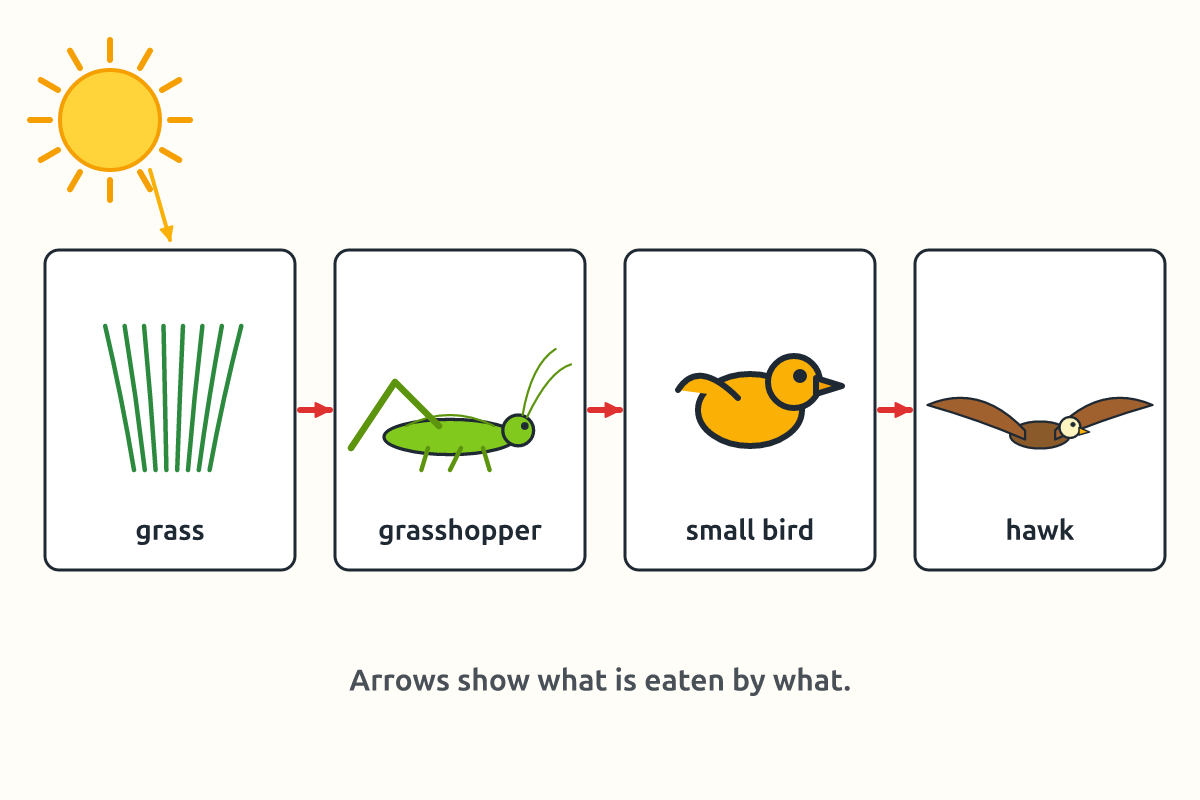
3. A Simple Food Chain
grass → grasshopper → bird → hawk
The arrow means "is eaten by". Energy passes from one living thing to the next.
New words
- environment
- All living and non-living things around us.
- depend
- To need something to survive.
- food chain
- A line showing who eats whom.
- pollinate
- To carry pollen from flower to flower.
- decompose
- To rot and break down.
- energy
- The power to live and grow.
Summary
- Living things need sunlight, water, air and soil.
- Living things also depend on each other.
- A food chain shows how energy passes from one living thing to another.
- Dead things decompose and make soil rich.
Class activity: Food Chain Cards
- Use cards of local plants and animals.
- Arrange them into food chains.
- Explain what happens if one link is removed.
You need: Potted maize plant, Local soil in a clear cup, Bottle of water
Exercises
Answer in your exercise book first, then check your answers.
1. Which non-living thing do plants need to make food?
- A. Sunlight
- B. Goats
- C. Birds
- D. Insects
Show answer
Answer: SunlightPlants use sunlight for photosynthesis.2. In the food chain grass → grasshopper → bird, what eats the grasshopper?
- A. Bird
- B. Grass
- C. Sun
- D. Soil
Show answer
Answer: BirdThe arrow means "is eaten by".3. What makes soil rich?
- A. Decomposing dead things
- B. Plastic
- C. Smoke
- D. Stones only
Show answer
Answer: Decomposing dead thingsThey add nutrients.4. Animals need air to breathe.
- A. True
- B. False
Show answer
Answer: TrueAir is non-living but needed.5. Living things do not depend on each other.
- A. True
- B. False
Show answer
Answer: FalseThey depend on each other for food and more.6. A line showing who eats whom is a food ______.
Show answer
Answer: chainThat is a food chain.7. Name three non-living things living things need.
Show answer
Answer: Any three: sunlight, water, air, soil, rocks.Living things need them.8. What could happen if all grasshoppers in a field died?
Show answer
Answer: Birds that eat them would lack food, and grass might grow too much.Food chains are connected.
Homework
- Write a food chain from your environment with at least three living things.