Basic 4 · Our World and Our People · Home and School
The Importance of Work
In this topic you will explain why work is important and the dignity of all kinds of work.
By the end of these notes you should be able to:
- Explain the meaning of work
- Give reasons why work is important
- Tell the difference between chores and child labour
What you already know
- The importance of education
Copy everything that has a blue line on its left into your notebook. The other parts are for reading.
- Strand
- All about us
- Sub-strand
- Home and School
- Indicator
- B4.1.4.1.1 – Explain importance of education and work as a responsible citizen
Introduction
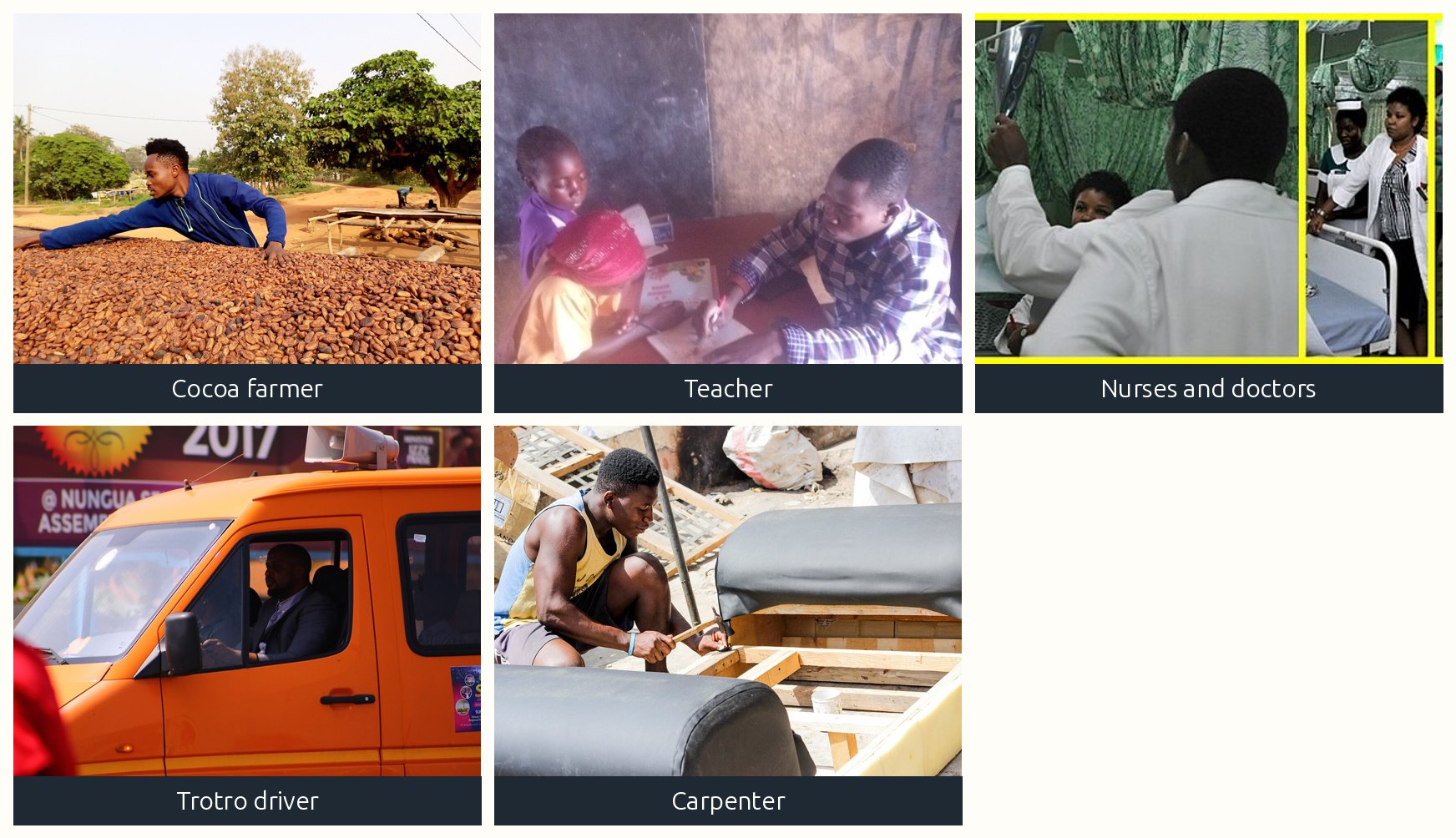
A farmer grows food, a teacher teaches, a driver carries people and a nurse cares for the sick. All work is important, and all workers deserve respect.
1. What is Work?
Work: Activity done to produce goods or provide services, often to earn money.
| Type | Examples |
|---|---|
| producing goods | farming, fishing, carpentry, weaving |
| providing services | teaching, nursing, driving, banking |
2. Why Work is Important
- it provides income to meet needs
- it produces goods and services we use
- it develops the nation
- it gives people dignity and purpose
3. Dignity of Labour
Dignity of labour: The idea that all honest work deserves respect.
A cleaner, a doctor and a farmer all do important work.
4. Chores and Child Labour
| Chores | Child labour |
|---|---|
| light tasks at home | heavy or dangerous work |
| done after school | stops children going to school |
| help children learn responsibility | harms children's health |
| sweeping, washing plates | carrying heavy loads, working in mines |
Remember: Child labour is against the law in Ghana. The Children's Act (1998) protects children.
New words
- work
- Activity to produce goods or services.
- income
- Money earned.
- service
- Work done to help people.
- dignity of labour
- Respect for all honest work.
- child labour
- Work that harms children or stops their schooling.
- goods
- Things that are made or grown.
Summary
- Work produces goods and services.
- Work gives income, dignity and national development.
- All honest work deserves respect.
- Child labour is harmful and against the law.
Class activity: Job Charades
- Act out a job without speaking.
- The class guesses the job.
- Say whether it produces goods or provides a service.
You need: Picture cards of Ghanaian occupations, Career role-play name cards, Goal ladder on manila card
Exercises
Answer in your exercise book first, then check your answers.
1. Which job provides a service?
- A. Nursing
- B. Farming
- C. Fishing
- D. Weaving
Show answer
Answer: NursingNurses care for people.2. Money earned from work is…
- A. Income
- B. Goods
- C. Service
- D. Labour
Show answer
Answer: IncomeThat is income.3. Which is child labour?
- A. Working in a mine instead of school
- B. Sweeping after school
- C. Washing plates
- D. Making your bed
Show answer
Answer: Working in a mine instead of schoolIt is dangerous and stops schooling.4. All honest work deserves respect.
- A. True
- B. False
Show answer
Answer: TrueThat is the dignity of labour.5. Child labour is allowed in Ghana.
- A. True
- B. False
Show answer
Answer: FalseThe Children's Act protects children.6. Things that are made or grown are ______.
Show answer
Answer: goodsFarming produces goods.7. Give two reasons why work is important.
Show answer
Answer: Any two: income, goods and services, national development, dignity.Work benefits all.8. Explain the difference between household chores and child labour.
Show answer
Answer: Chores are light tasks that do not stop schooling; child labour is heavy or dangerous work that harms children or stops school.They differ in harm.
Homework
- Interview an adult about their work. What do they like about it?