Basic 4 · Ghanaian Language · Vocabulary: Sight and Content Vocabulary
Reading Aloud with Correct Pronunciation and Tone
In this topic you will read aloud with correct pronunciation and tone.
By the end of these notes you should be able to:
- Pronounce words correctly when reading
- Explain that tone can change meaning in Ghanaian languages
- Read a passage aloud with correct tone and expression
What you already know
- Sounds and digraphs
Copy everything that has a blue line on its left into your notebook. The other parts are for reading.
- Strand
- Reading
- Sub-strand
- Vocabulary: Sight and Content Vocabulary
- Indicator
- B4.2.5.1.1-3 – Read aloud with correct pronunciation and tone
Introduction
In many Ghanaian languages, the same word said with a high or low tone can mean different things. Reading with the right tone helps listeners understand.
1. Pronunciation
Pronunciation: The way a word is spoken.
- Say each sound clearly.
- Stress the right syllable.
- Do not swallow word endings.
2. Tone
Tone: How high or low the voice is when saying a syllable.
Most Ghanaian languages are tonal languages. Changing the tone of a word can change its meaning. Your teacher will give examples from your Ghanaian language.
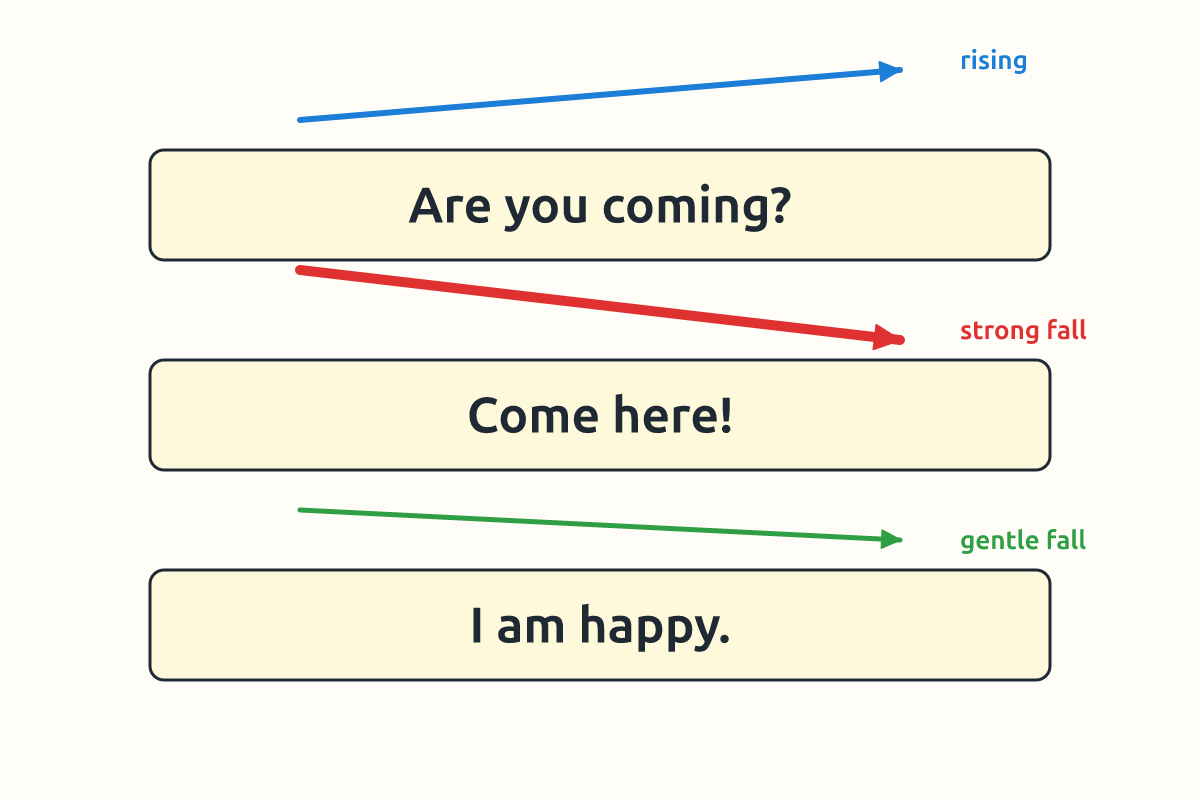
In English, tone shows feeling: a question rises at the end; an order is said firmly.
3. Reading Practice
- Read the passage silently first.
- Mark difficult words and practise them.
- Read aloud slowly with correct tone.
- Read again with expression.
New words
- pronunciation
- The way a word is spoken.
- tone
- The highness or lowness of the voice.
- tonal language
- A language where tone changes meaning.
- syllable
- A part of a word with one vowel sound.
- stress
- Saying part of a word more strongly.
- fluency
- Reading smoothly and correctly.
Summary
- Good pronunciation means saying words clearly and correctly.
- Many Ghanaian languages are tonal.
- Tone can change the meaning of a word.
- Practise difficult words before reading aloud.
Class activity: Tone Practice
- Your teacher gives words that change meaning with tone.
- Say each word with the correct tone.
- Read a short passage from the storybook to your partner.
You need: Ghanaian-language storybook, Locally made sentence cards, Pointer stick
Exercises
Answer in your exercise book first, then check your answers.
1. The way a word is spoken is its…
- A. Pronunciation
- B. Spelling
- C. Colour
- D. Size
Show answer
Answer: PronunciationThat is pronunciation.2. In a tonal language, changing the tone can…
- A. Change the meaning
- B. Do nothing
- C. Make it silent
- D. Change the spelling only
Show answer
Answer: Change the meaningTone carries meaning.3. What should you do before reading aloud?
- A. Read silently first
- B. Shout
- C. Close the book
- D. Skip words
Show answer
Answer: Read silently firstIt prepares you.4. Many Ghanaian languages are tonal.
- A. True
- B. False
Show answer
Answer: TrueTone matters.5. Tone never matters in Ghanaian languages.
- A. True
- B. False
Show answer
Answer: FalseIt changes meaning.6. A part of a word with one vowel sound is a ______.
Show answer
Answer: syllableThat is a syllable.7. Give two tips for good pronunciation.
Show answer
Answer: Any two: say sounds clearly, stress the right syllable, do not swallow endings.These improve speech.8. Why might a listener misunderstand you if you use the wrong tone?
Show answer
Answer: The word may mean something different, so the message changes.Tone carries meaning.
Homework
- Read a passage aloud to your family, paying attention to tone.