Basic 4 · English Language
Visual Presentations, Recognition Strategies, Modals, Letters and Invented Spelling
In this topic you will support presentations with visuals, use reading strategies, use modals, write friendly letters and use invented spelling for fluent writing.
By the end of these notes you should be able to:
- Support ideas with visual resources
- Use strategies to confirm understanding when reading
- Use modals to express meaning
- Write a friendly letter about personal experiences
What you already know
- Sentences and informative writing
Copy everything that has a blue line on its left into your notebook. The other parts are for reading.
Lesson 1
- Strand
- Oral Language
- Sub-strand
- Presentation
- Indicator
- B4.1.10.2.1 – Support ideas and points with visual resources to convey meaning appropriate to purpose and context
Introduction
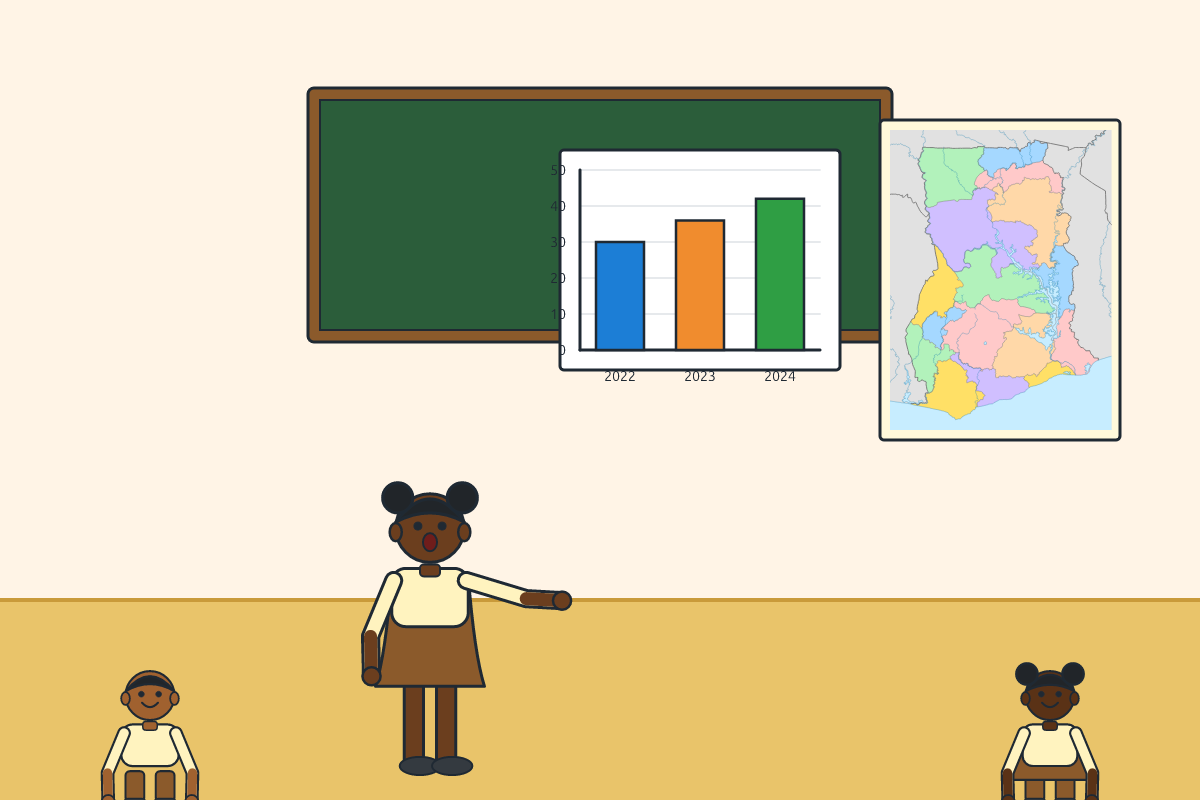
Pictures, charts and real objects make presentations clearer.
Using Visuals in Presentations
| Visual | Use |
|---|---|
| pictures | show what you describe |
| charts | show numbers and facts |
| real objects | let the audience see and touch |
| maps | show places |
New words
- visual
- Something you can see.
- chart
- A diagram of information.
- presentation
- A talk to an audience.
Summary
- Visuals make presentations clearer.
- Choose visuals that fit your purpose.
Exercises
Answer in your exercise book first, then check your answers.
1. Which visual shows places?
- A. Map
- B. Song
- C. Poem
- D. Letter
Show answer
Answer: MapMaps show places.2. Visuals help audiences understand.
- A. True
- B. False
Show answer
Answer: TrueThey show information.3. A diagram of information is a ______.
Show answer
Answer: chartThat is a chart.4. Name a visual you would use for a talk on fruits.
Show answer
Answer: E.g. real fruits or pictures of fruits.Fits the topic.
Lesson 2
- Strand
- Reading
- Sub-strand
- Fluency
- Indicator
- B4.2.9.1.2 – Use recognition strategies to confirm understanding of level-appropriate texts
Introduction
Good readers check their understanding as they read.
Recognition Strategies
- Re-read a sentence that is unclear.
- Use pictures and headings.
- Sound out difficult words.
- Ask "Does this make sense?"
- Summarise each paragraph in your head.
Passage: "Shea butter is made from the nuts of the shea tree, which grows in northern Ghana. Women crack, roast and grind the nuts, then knead the paste with water to separate the butter. It is used for cooking and skin care."
New words
- strategy
- A plan or method.
- confirm
- To make sure.
- knead
- To press and mix with the hands.
Summary
- Use strategies to confirm understanding.
- Shea butter is made from shea nuts in northern Ghana.
Exercises
Answer in your exercise book first, then check your answers.
1. Where does the shea tree grow?
- A. Northern Ghana
- B. The sea
- C. Cape Coast only
- D. Lake Volta
Show answer
Answer: Northern GhanaFrom the passage.2. Shea butter is used for skin care.
- A. True
- B. False
Show answer
Answer: TrueFrom the passage.3. To make sure is to ______.
Show answer
Answer: confirmThat is confirming.4. Name two steps in making shea butter.
Show answer
Answer: Any two: crack, roast, grind, knead.From the passage.
Lesson 3
- Strand
- Grammar
- Sub-strand
- Modals
- Indicator
- B4.3.9.1.1 – Use modals to express a variety of meanings
Introduction
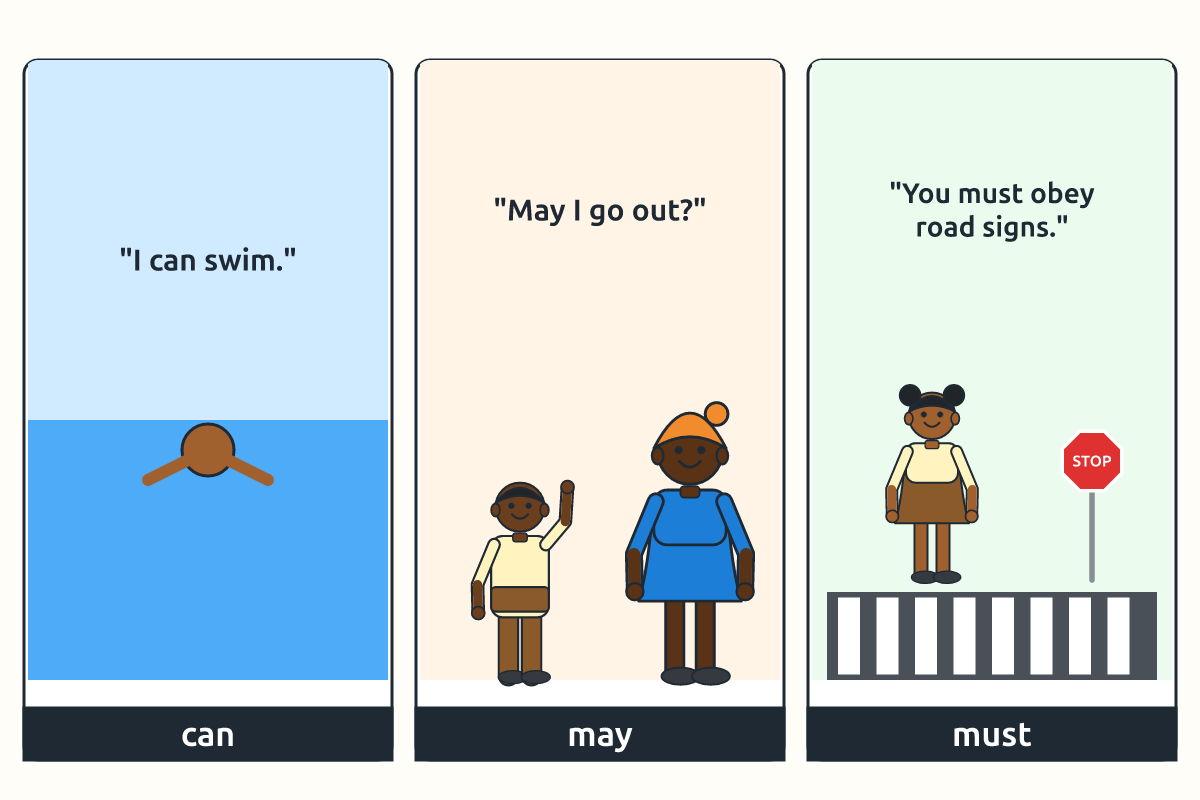
Modals are helping verbs that show ability, permission, possibility or duty.
Modals
| Modal | Meaning | Example |
|---|---|---|
| can | ability | I can swim. |
| may | permission or possibility | May I go out? It may rain. |
| must | duty | You must obey the rules. |
| should | advice | You should drink water. |
| will | future | We will travel tomorrow. |
New words
- modal
- A helping verb showing ability, permission or duty.
- ability
- Being able to do something.
- permission
- Being allowed.
Summary
- Modals add meaning to verbs.
- Can shows ability; may shows permission; must shows duty.
Exercises
Answer in your exercise book first, then check your answers.
1. Which modal shows ability?
- A. can
- B. must
- C. may
- D. should
Show answer
Answer: canIt shows ability.2. "You must obey the rules." shows duty.
- A. True
- B. False
Show answer
Answer: TrueMust shows duty.3. ______ I borrow your pen? (May / Must)
Show answer
Answer: MayAsking permission.4. Give advice using "should".
Show answer
Answer: E.g. You should sleep early.Should gives advice.
Lesson 4
- Strand
- Composition Writing
- Sub-strand
- Letter Writing
- Indicator
- B4.4.15.1.1 – Write to friends about personal experiences using appropriate letter formats
Introduction
Write a friendly letter about something that happened to you.
Letter About a Personal Experience
Example body paragraph: "Last weekend, I visited Mole National Park with my uncle. We saw elephants drinking at a waterhole. A warthog ran past our car! I was so excited that I took many photos."
Remember
- address and date
- greeting
- introduction, body, conclusion
- closing and your name
New words
- personal experience
- Something that happened to you.
- excited
- Very happy and eager.
- format
- The layout of a letter.
Summary
- Use the friendly letter format.
- Describe your experience with details.
Exercises
Answer in your exercise book first, then check your answers.
1. Where did the writer go?
- A. Mole National Park
- B. Kakum
- C. Makola
- D. Labadi
Show answer
Answer: Mole National ParkFrom the example.2. A friendly letter ends with a closing.
- A. True
- B. False
Show answer
Answer: TrueLike "Your friend,".3. The layout of a letter is its ______.
Show answer
Answer: formatThat is the format.4. Write an introduction sentence for a friendly letter.
Show answer
Answer: E.g. How are you and your family? I hope all is well.Friendly opening.
Lesson 5
- Strand
- Writing Conventions/ Extensive Reading
- Sub-strand
- Spelling, Building the Love and Culture of Reading
- Indicator
- B4.5.10.1.1 – Use invented spelling to increase fluency and free writing
Introduction
When writing freely, you can try to spell a new word by its sounds, then check it later. This is called invented spelling.
Invented Spelling for Fluent Writing
- Write your ideas without stopping.
- If unsure of a word, spell it the way it sounds.
- Underline words you are unsure about.
- Check the spellings in a dictionary afterwards.
Reading passage: "Writers do not stop for every hard word. They keep writing, mark the words they are not sure of and check them later. This helps them write fluently and still spell correctly in the final copy."
New words
- invented spelling
- Spelling a word by its sounds.
- fluently
- Smoothly and without stopping.
- final copy
- The corrected, neat version.
Summary
- Invented spelling keeps ideas flowing.
- Always check spellings for the final copy.
Exercises
Answer in your exercise book first, then check your answers.
1. Spelling a word by its sounds is…
- A. Invented spelling
- B. Copying
- C. Dictation
- D. Reading
Show answer
Answer: Invented spellingThat is invented spelling.2. We should check invented spellings later.
- A. True
- B. False
Show answer
Answer: TrueFor the final copy.3. Smoothly and without stopping means ______.
Show answer
Answer: fluentlyThat is fluently.4. Why do writers underline unsure words?
Show answer
Answer: So they remember to check them later.It helps correction.
Homework
- Write a friendly letter about a recent experience and check all spellings.