Basic 3 · English Language
Presenting Ideas, Sight Words, Radio Presentations and Spelling
In this topic you will present ideas logically, recognise high-frequency words, present your writing like a radio host and spell tricky words.
By the end of these notes you should be able to:
- Present ideas in a logical order
- Recognise high-frequency words quickly
- Present your own writing to an audience
- Spell phonically irregular words correctly
What you already know
- Fluent reading and opinion paragraphs
Copy everything that has a blue line on its left into your notebook. The other parts are for reading.
Lesson 1
- Strand
- Oral Language
- Sub-strand
- Presentation
- Indicator
- B3.1.10.1.1 – Present ideas logically
Introduction
When we present, our ideas should follow a clear order: beginning, middle and end.
Presenting Ideas Logically
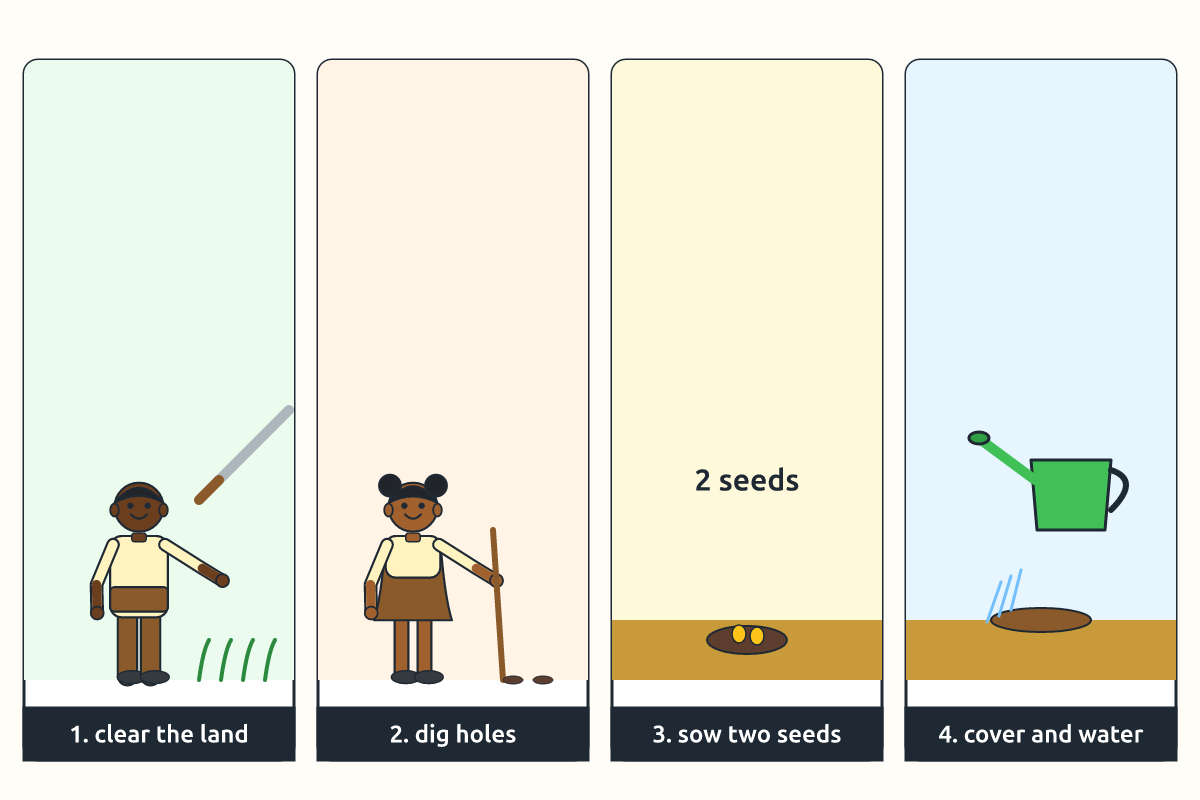
| Part | Example: "How to Plant Maize" |
|---|---|
| introduction | Today I will tell you how to plant maize. |
| steps | First, clear the land. Next, make holes. Then, put two seeds in each hole. Finally, cover and water. |
| conclusion | That is how to plant maize. Thank you. |
New words
- logical
- In a sensible order.
- introduction
- The beginning of a talk.
- sequence
- The order of events.
Summary
- Present ideas in order: introduction, steps, conclusion.
- Use first, next, then and finally.
Exercises
Answer in your exercise book first, then check your answers.
1. What comes at the start of a presentation?
- A. Introduction
- B. Conclusion
- C. Questions only
- D. Applause
Show answer
Answer: IntroductionStart with an introduction.2. "First, next, then, finally" show order.
- A. True
- B. False
Show answer
Answer: TrueThey are sequence words.3. In a sensible order means ______.
Show answer
Answer: logicalThat is logical.4. Write the first two steps for "How to Wash Your Hands".
Show answer
Answer: First, wet your hands. Next, rub soap on them.Use sequence words.
Lesson 2
- Strand
- Reading
- Sub-strand
- Fluency
- Indicator
- B3.2.9.1.2 – Recognize more than two hundred high frequency words with automaticity
Introduction
High-frequency words appear very often. Good readers know them instantly.
High-Frequency Words
| about | after | again | around |
|---|---|---|---|
| because | before | better | carry |
| clean | different | every | found |
| great | important | knew | money |
| people | right | should | together |
New words
- high-frequency word
- A word that appears very often.
- automatically
- Without stopping to think.
- recognise
- To know when you see it.
Summary
- High-frequency words appear very often.
- Knowing them quickly makes reading faster.
Exercises
Answer in your exercise book first, then check your answers.
1. Which is a high-frequency word?
- A. because
- B. hippopotamus
- C. xylophone
- D. kangaroo
Show answer
Answer: becauseIt appears very often.2. Knowing high-frequency words helps us read faster.
- A. True
- B. False
Show answer
Answer: TrueWe read them instantly.3. To know when you see it is to ______.
Show answer
Answer: recogniseThat is recognising.4. Write a sentence using "important".
Show answer
Answer: E.g. It is important to brush your teeth.It uses the word.
Lesson 3
- Strand
- Writing
- Sub-strand
- Academic Writing
- Indicator
- B3.4.14.1.2 – Make a radio/TV presentations/performances
Introduction
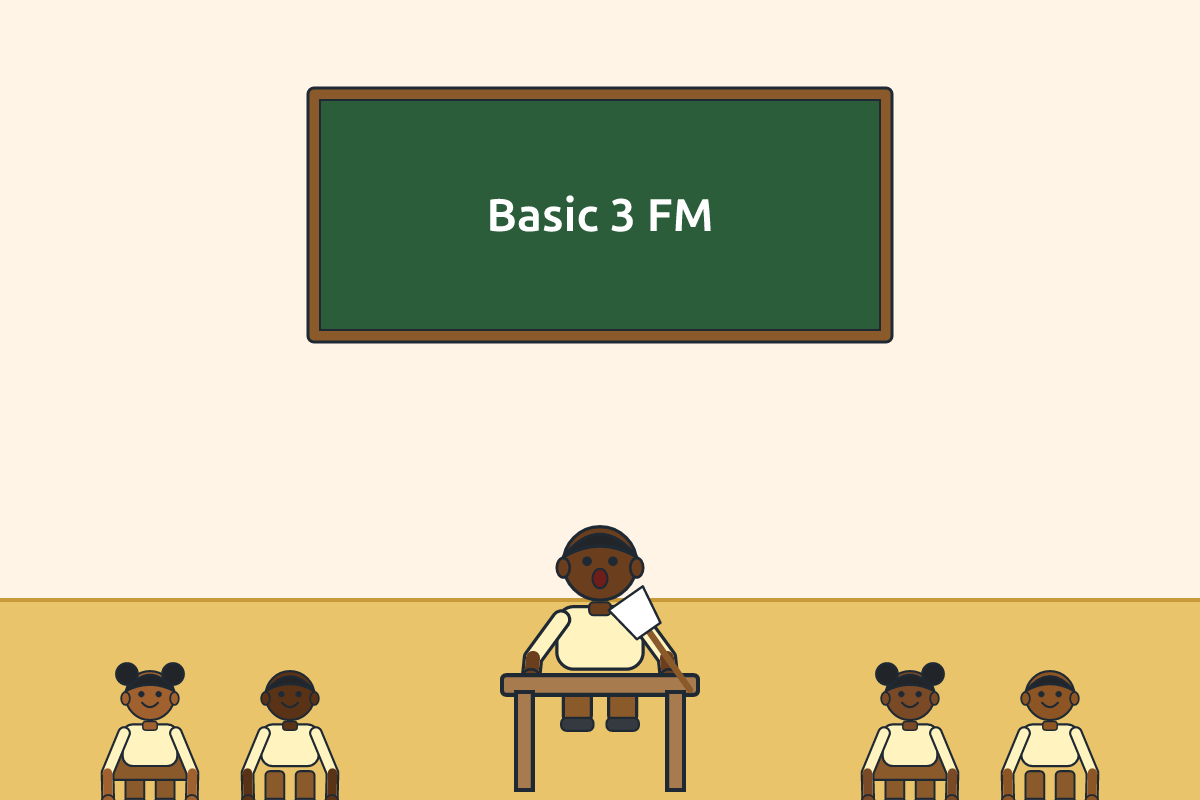
Radio presenters read clearly and with feeling. You can present your writing like a radio host.
Radio-Style Presentation
- Write a short news report or story.
- Practise reading it aloud.
- Start like a presenter: "Good morning, listeners!"
- Read clearly with expression.
- End: "That is all for today. Goodbye!"
Example: "Good morning, listeners! This is Basic 3 News. Yesterday, our school planted fifty trees. The headteacher thanked everyone. That is all for today. Goodbye!"
New words
- presenter
- A person who speaks on radio or TV.
- listener
- A person who listens.
- report
- A piece of news.
Summary
- Present your writing like a radio host.
- Greet listeners, read clearly and say goodbye.
Exercises
Answer in your exercise book first, then check your answers.
1. How does a radio presenter start?
- A. Good morning, listeners!
- B. Go away!
- C. Nothing
- D. Thank you, sit.
Show answer
Answer: Good morning, listeners!Presenters greet listeners.2. Presenters read with expression.
- A. True
- B. False
Show answer
Answer: TrueIt keeps listeners interested.3. A person who listens is a ______.
Show answer
Answer: listenerThat is a listener.4. Write the opening line of your class news.
Show answer
Answer: E.g. Good morning, listeners! This is Basic 3 News.Greet listeners.
Lesson 4
- Strand
- Grammar Usage
- Sub-strand
- Spelling
- Indicator
- B3.5.10.1.1 – Spell phonically irregular words correctly
Introduction
Some words are not spelt the way they sound. We learn them by heart.
Irregular Spellings
| Word | Tricky part |
|---|---|
| said | ai sounds like "e" |
| friend | ie sounds like "e" |
| because | au sounds like "o" |
| people | eo sounds like "ee" |
| water | a sounds like "aw" |
Tip: Look, say, cover, write and check.
New words
- irregular
- Not following the usual rule.
- tricky
- Hard to do.
- check
- To look for mistakes.
Summary
- Some words have irregular spellings.
- Learn them with look, say, cover, write, check.
Exercises
Answer in your exercise book first, then check your answers.
1. Which is spelt correctly?
- A. friend
- B. freind
- C. frend
- D. friand
Show answer
Answer: friendf-r-i-e-n-d.2. "said" is a tricky word.
- A. True
- B. False
Show answer
Answer: Trueai sounds like "e".3. Spell: p______ (men, women and children)
Show answer
Answer: peoplep-e-o-p-l-e.4. Spell the word that means "for the reason that".
Show answer
Answer: becauseb-e-c-a-u-s-e.
Lesson 5
- Strand
- Extensive Reading
- Sub-strand
- Reading
- Indicator
- B3.6.1.1.1 – Read a variety of age and level- appropriate books and summarize them
Introduction
Today we read and summarise a story about the end of the year.
Reading and Summarising
"It was the last day of the school year. Basic 3 cleaned their classroom and decorated it with balloons. They sang songs and ate cake. Their teacher praised them for working hard. Next year they will be in Basic 4. Everyone was excited."
Summary: Basic 3 celebrated the end of the year and look forward to Basic 4.
New words
- decorate
- To make a place look beautiful.
- praise
- To say good things about someone.
- excited
- Very happy and eager.
Summary
- Basic 3 celebrated the last day of the year.
- They are excited to go to Basic 4.
Exercises
Answer in your exercise book first, then check your answers.
1. What did they decorate the classroom with?
- A. Balloons
- B. Mud
- C. Paper bags
- D. Stones
Show answer
Answer: BalloonsThe story says balloons.2. The teacher praised them.
- A. True
- B. False
Show answer
Answer: TrueFor working hard.3. Very happy and eager means ______.
Show answer
Answer: excitedThat is excited.4. Write a one-sentence summary.
Show answer
Answer: Basic 3 celebrated the end of the year and look forward to Basic 4.Main points.
Homework
- Prepare a short radio-style news report about your family and present it at home.