Basic 3 · English Language
Community Events, Prefixes and Suffixes, Planning Writing and Adjectives
In this topic you will talk about community events, use prefixes and suffixes, plan your writing and use adjectives for size and height.
By the end of these notes you should be able to:
- Talk about events in the community
- Use prefixes and suffixes to understand words
- Choose a topic, brainstorm and organise ideas
- Use adjectives to describe height and length
What you already know
- Special greetings and paragraphs
Copy everything that has a blue line on its left into your notebook. The other parts are for reading.
Lesson 1
- Strand
- Oral Language
- Sub-strand
- Conversation
- Indicator
- B3.1.6.1.2 – Talk about events in the community
Introduction
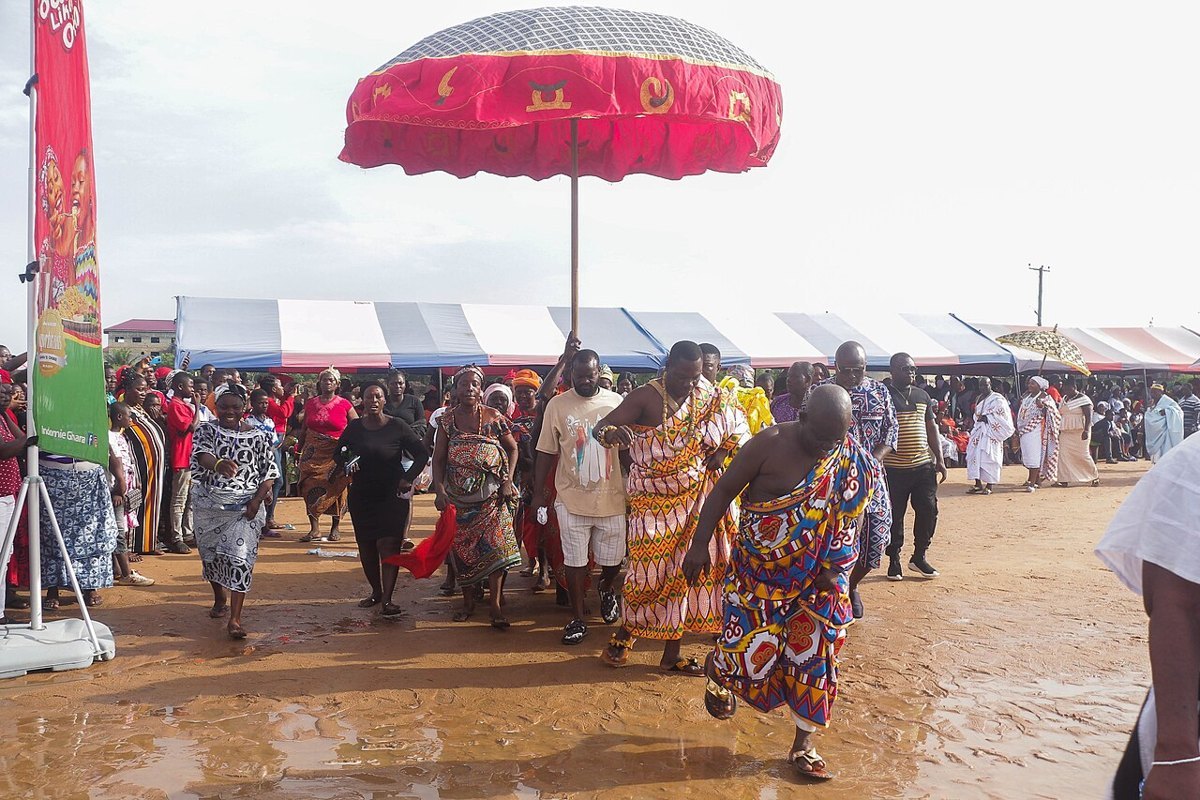
Communities hold many events: festivals, durbars, funerals, sports days and clean-up exercises.
Talking About Community Events
Example: "Last month, our chief held a durbar. People wore kente and danced to drums. The chief thanked everyone for keeping the town clean."
When talking about an event, say
- what the event was
- when and where it happened
- what people did
- how you felt
New words
- durbar
- A gathering where a chief meets the people.
- event
- Something that happens.
- community
- People living in the same area.
Summary
- Communities hold events like durbars and festivals.
- We describe events by saying what, when, where and how.
Exercises
Answer in your exercise book first, then check your answers.
1. A gathering where a chief meets the people is a…
- A. Durbar
- B. Market
- C. Class
- D. Game
Show answer
Answer: DurbarThat is a durbar.2. Festivals are community events.
- A. True
- B. False
Show answer
Answer: TrueThey bring people together.3. Something that happens is an ______.
Show answer
Answer: eventThat is an event.4. Describe one community event in two sentences.
Show answer
Answer: Answers will differ.Say what and when.
Lesson 2
- Strand
- Reading
- Sub-strand
- Vocabulary
- Indicator
- B3.2.6.1.2 – Use knowledge of prefixes and suffixes to interpret unfamiliar words
Introduction
Prefixes go at the start of a word. Suffixes go at the end. They change the meaning.
Prefixes and Suffixes
| Part | Meaning | Example |
|---|---|---|
| un- (prefix) | not | unhappy, unkind |
| re- (prefix) | again | redo, rewrite |
| -ful (suffix) | full of | helpful, careful |
| -less (suffix) | without | careless, homeless |
New words
- prefix
- A part added to the start of a word.
- suffix
- A part added to the end of a word.
- meaning
- What a word means.
Summary
- Prefixes like un- and re- change meaning at the start.
- Suffixes like -ful and -less change meaning at the end.
Exercises
Answer in your exercise book first, then check your answers.
1. "Unhappy" means…
- A. not happy
- B. very happy
- C. happy again
- D. full of happiness
Show answer
Answer: not happyun- means not.2. "Helpful" means full of help.
- A. True
- B. False
Show answer
Answer: True-ful means full of.3. To write again is to ______.
Show answer
Answer: rewritere- means again.4. Add a suffix to "care" to mean "without care".
Show answer
Answer: careless-less means without.
Lesson 3
- Strand
- Writing
- Sub-strand
- Writing As a Process
- Indicator
- B3.4.9.1.1 – Select a topic on familiar themes (e.g. myself) brainstorm and organize before writing
Introduction
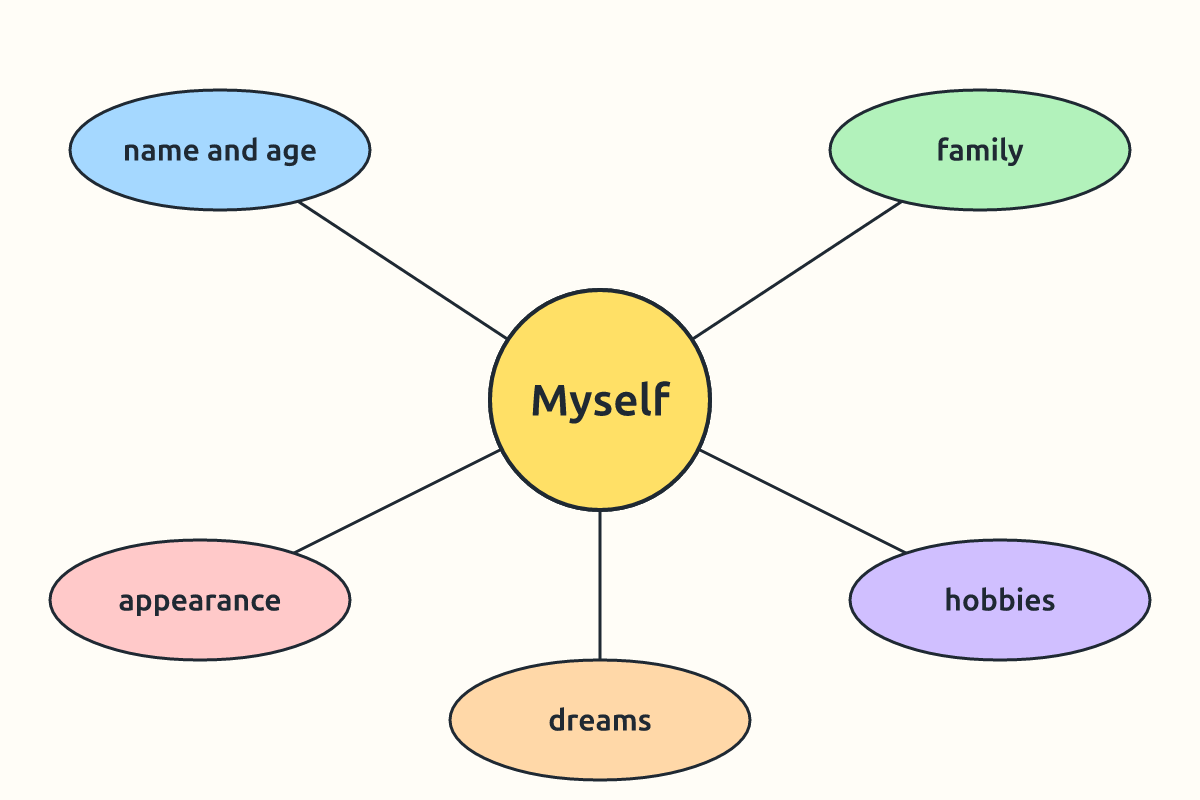
Before writing, good writers choose a topic, brainstorm ideas and organise them.
Planning Writing
- Choose a topic, e.g. "Myself".
- Brainstorm: write all your ideas quickly.
- Organise: group the ideas in order.
- Write your sentences.
New words
- topic
- What you write about.
- brainstorm
- To write many ideas quickly.
- organise
- To put ideas in order.
Summary
- Choose a topic, brainstorm, then organise ideas.
- A brainstorm web helps planning.
Exercises
Answer in your exercise book first, then check your answers.
1. Writing many ideas quickly is…
- A. Brainstorming
- B. Erasing
- C. Copying
- D. Reading
Show answer
Answer: BrainstormingThat is brainstorming.2. We should organise ideas before writing.
- A. True
- B. False
Show answer
Answer: TrueIt makes writing clear.3. What you write about is the ______.
Show answer
Answer: topicThat is the topic.4. Write three ideas for the topic "Myself".
Show answer
Answer: E.g. my name, my family, my hobbies.Brainstorm ideas.
Lesson 4
- Strand
- Grammar Usage
- Sub-strand
- Using Adjectives
- Indicator
- B3.5.5.1.1 – Identify and use adjectives in short sentences to describe height length etc
Introduction
Adjectives can describe height and length.
Adjectives for Size
| Adjective | Example |
|---|---|
| tall | The palm tree is tall. |
| short | My brother is short. |
| long | The River Volta is long. |
| wide | The road is wide. |
| narrow | The path is narrow. |
New words
- adjective
- A describing word.
- height
- How tall something is.
- length
- How long something is.
Summary
- Adjectives describe height, length and width.
- Tall, short, long, wide and narrow are size adjectives.
Exercises
Answer in your exercise book first, then check your answers.
1. Which adjective describes height?
- A. Tall
- B. Red
- C. Sweet
- D. Loud
Show answer
Answer: TallTall describes height.2. "Narrow" is the opposite of "wide".
- A. True
- B. False
Show answer
Answer: TrueThey are opposites.3. The River Volta is ______. (long / loud)
Show answer
Answer: longLong describes length.4. Write a sentence using "wide".
Show answer
Answer: E.g. The market road is wide.Wide describes width.
Lesson 5
- Strand
- Extensive Reading
- Sub-strand
- Reading
- Indicator
- B3.6.1.1.1 – Read a variety of age and level- appropriate books and summarize them
Introduction
Today we read and summarise a story about a durbar.
Reading and Summarising
"The Omanhene of our town held a durbar to welcome a new nurse. Drummers played and dancers wore kente. The nurse greeted the chief and promised to care for the sick. Everyone clapped. The chief gave her a gift of a kente cloth."
Summary: The chief held a durbar to welcome a new nurse and gave her kente.
New words
- Omanhene
- The paramount chief of an Akan town.
- welcome
- To greet someone who has arrived.
- promise
- To say you will surely do something.
Summary
- The chief welcomed a new nurse with a durbar.
- She promised to care for the sick.
Exercises
Answer in your exercise book first, then check your answers.
1. Who held the durbar?
- A. The Omanhene
- B. The nurse
- C. A teacher
- D. A trader
Show answer
Answer: The OmanheneThe chief held it.2. The nurse promised to care for the sick.
- A. True
- B. False
Show answer
Answer: TrueThe story says so.3. The chief gave her a ______ cloth.
Show answer
Answer: kenteThe story says kente.4. Write a one-sentence summary.
Show answer
Answer: The chief welcomed a new nurse at a durbar and gave her kente.Main points.
Homework
- Make a brainstorm web for "My Community".