Basic 3 · English Language
Information Texts, Comprehension Questions, Story Details and Adverbs of Time
In this topic you will listen to information texts, answer different types of questions, add details to stories and use adverbs of time.
By the end of these notes you should be able to:
- Listen to and discuss information texts
- Ask and answer factual, inferential and vocabulary questions
- Add details to narrative stories
- Use adverbs to express time
What you already know
- Self-correction and adverbs
Copy everything that has a blue line on its left into your notebook. The other parts are for reading.
Lesson 1
- Strand
- Oral Language
- Sub-strand
- Listening Comprehension
- Indicator
- B3.1.7.1.1 – Listen to and interact actively within information texts
Introduction
An information text gives facts. It teaches us about real things.
Listening to an Information Text
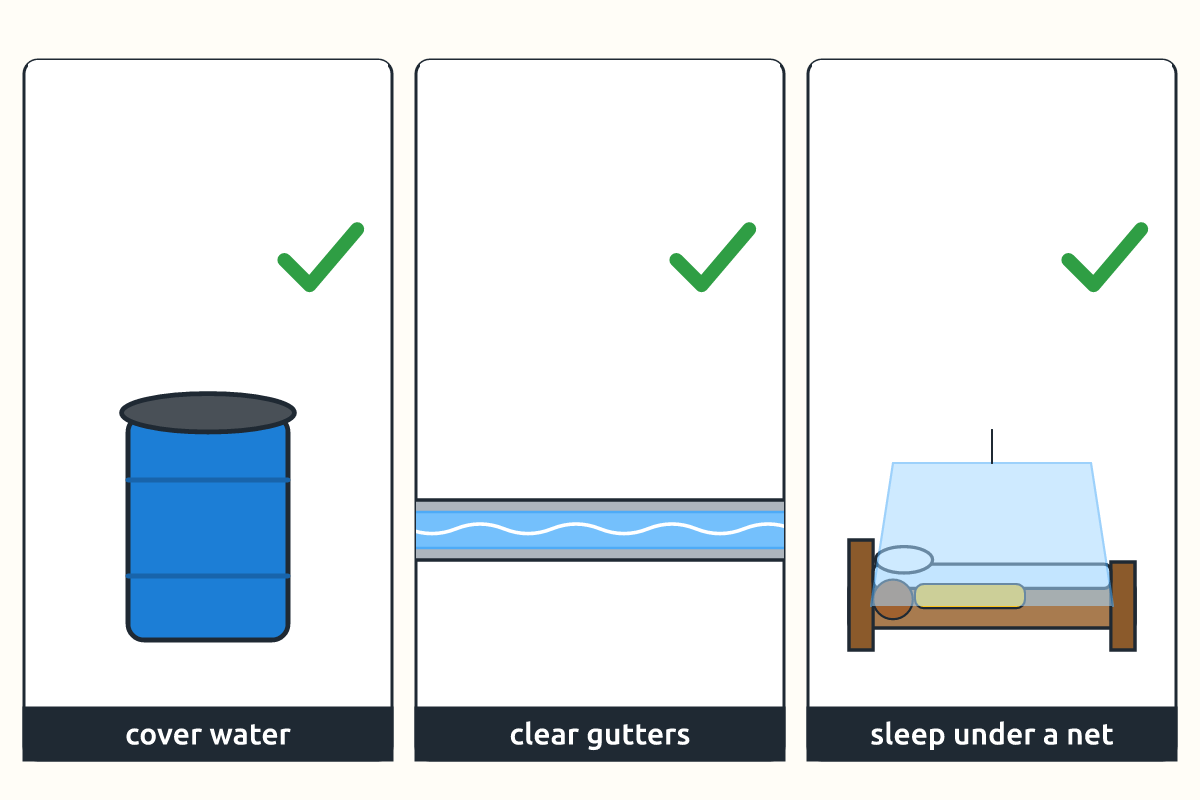
"Mosquitoes are small insects. Female mosquitoes bite people to get blood. Some carry malaria. Mosquitoes lay eggs in still water. To stop mosquitoes, cover water containers, clear gutters and sleep under treated nets."
| Question | Fact |
|---|---|
| What are mosquitoes? | small insects |
| Where do they lay eggs? | in still water |
| How can we stop them? | cover water, clear gutters, use nets |
New words
- information text
- Writing that gives facts.
- insect
- A small creature with six legs.
- still water
- Water that does not flow.
Summary
- Information texts give facts.
- Mosquitoes breed in still water and can carry malaria.
Exercises
Answer in your exercise book first, then check your answers.
1. Where do mosquitoes lay eggs?
- A. Still water
- B. Sand
- C. Trees
- D. Fire
Show answer
Answer: Still waterThe text says so.2. Information texts give facts.
- A. True
- B. False
Show answer
Answer: TrueThey teach real things.3. A small creature with six legs is an ______.
Show answer
Answer: insectThat is an insect.4. Give two ways to stop mosquitoes.
Show answer
Answer: Any two: cover water, clear gutters, use treated nets.From the text.
Lesson 2
- Strand
- Reading
- Sub-strand
- Comprehension
- Indicator
- B3.2.7.1.2 – Ask and answer factual inferential and vocabulary questions about level-appropriate texts
Introduction
Different questions check different kinds of understanding.
Types of Questions
| Type | What it asks | Example (mosquito text) |
|---|---|---|
| factual | facts in the text | Where do mosquitoes lay eggs? |
| inferential | what the text suggests | Why should we clear gutters? |
| vocabulary | meaning of words | What does "still" mean here? |
New words
- factual
- Based on facts in the text.
- inferential
- Working out what is not directly said.
- vocabulary
- Words and their meanings.
Summary
- Factual answers are in the text.
- Inferential and vocabulary questions need thinking.
Exercises
Answer in your exercise book first, then check your answers.
1. "What does 'still' mean?" is a…
- A. Vocabulary question
- B. Factual question
- C. Song
- D. Command
Show answer
Answer: Vocabulary questionIt asks for meaning.2. Inferential questions need thinking beyond the text.
- A. True
- B. False
Show answer
Answer: TrueWe work them out.3. Questions about facts in the text are ______ questions.
Show answer
Answer: factualThat is factual.4. Answer: Why should we clear gutters?
Show answer
Answer: So water does not collect for mosquitoes to breed.This is inferred.
Lesson 3
- Strand
- Writing
- Sub-strand
- Narrative Writing
- Indicator
- B3.4.10.1.1 – Add more details of a story structure to narrative stories
Introduction
Good stories have a beginning, middle and end, with interesting details.
Adding Details to Stories
| Part | What it has | Example detail |
|---|---|---|
| beginning | characters and setting | "On a hot afternoon in Tamale…" |
| middle | a problem | "…Adwoa lost her new sandals." |
| end | the solution | "…her dog found them under the bed." |
Tip: Add details: colours, sounds, feelings and places.
New words
- setting
- Where and when a story happens.
- problem
- Something that goes wrong in a story.
- detail
- A small piece of information.
Summary
- Stories have a beginning, middle and end.
- Details make stories interesting.
Exercises
Answer in your exercise book first, then check your answers.
1. Where and when a story happens is the…
- A. Setting
- B. Problem
- C. Ending
- D. Title
Show answer
Answer: SettingThat is the setting.2. Details make stories more interesting.
- A. True
- B. False
Show answer
Answer: TrueThey help us picture events.3. Something that goes wrong in a story is the ______.
Show answer
Answer: problemThat is the problem.4. Add a detail to: "Adwoa lost her sandals."
Show answer
Answer: E.g. Adwoa lost her shiny new red sandals.Add colour or feelings.
Lesson 4
- Strand
- Grammar Usage
- Sub-strand
- Using Adverbs
- Indicator
- B3.5.6.1.2 – Use adverbs correctly to express time
Introduction
Some adverbs tell us when something happens.
Adverbs of Time
| Adverb | Example |
|---|---|
| yesterday | I visited Grandma yesterday. |
| today | We have a test today. |
| tomorrow | We will travel tomorrow. |
| now | Come here now. |
| soon | The bus will arrive soon. |
New words
- adverb of time
- A word that tells when.
- yesterday
- The day before today.
- tomorrow
- The day after today.
Summary
- Adverbs of time tell when an action happens.
- Yesterday, today and tomorrow are adverbs of time.
Exercises
Answer in your exercise book first, then check your answers.
1. Which tells when?
- A. tomorrow
- B. quickly
- C. loudly
- D. happily
Show answer
Answer: tomorrowIt tells time.2. "Soon" is an adverb of time.
- A. True
- B. False
Show answer
Answer: TrueIt tells when.3. The day before today is ______.
Show answer
Answer: yesterdayThat is yesterday.4. Write a sentence using "tomorrow".
Show answer
Answer: E.g. I will go to church tomorrow.It tells when.
Lesson 5
- Strand
- Extensive Reading
- Sub-strand
- Reading
- Indicator
- B3.6.1.1.1 – Read a variety of age and level- appropriate books and summarize them
Introduction
Today we read and summarise an information text.
Reading and Summarising
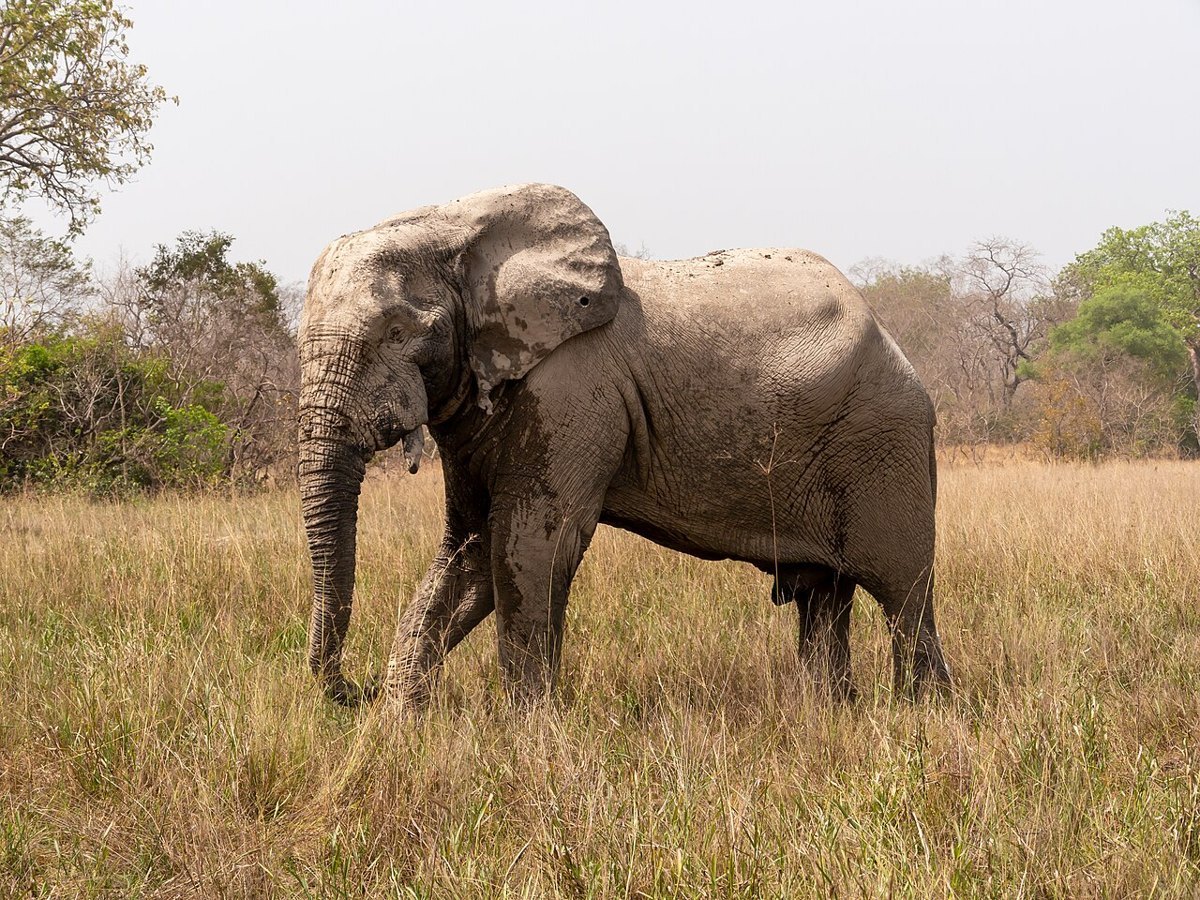
"The African elephant is the largest land animal. It lives in grasslands and forests. Elephants eat grass, leaves and fruit. In Ghana, you can see elephants at Mole National Park in the Savannah Region. We must protect elephants from hunters."
Summary: The elephant is the largest land animal, and Ghana's elephants live at Mole National Park.
New words
- largest
- Biggest of all.
- national park
- Protected land for wild animals.
- protect
- To keep safe.
Summary
- The elephant is the largest land animal.
- Elephants live at Mole National Park in Ghana.
Exercises
Answer in your exercise book first, then check your answers.
1. Where can you see elephants in Ghana?
- A. Mole National Park
- B. Makola Market
- C. Kumasi Zoo only
- D. Lake Volta
Show answer
Answer: Mole National ParkThe text says so.2. Elephants eat grass and leaves.
- A. True
- B. False
Show answer
Answer: TrueThe text says so.3. Protected land for wild animals is a national ______.
Show answer
Answer: parkThat is a national park.4. Write a one-sentence summary.
Show answer
Answer: The elephant is the largest land animal and Ghana's elephants live at Mole National Park.Main points.
Homework
- Write a short story with a beginning, middle and end. Add two details.