Basic 2 · English Language
Giving Commands, Reading Fluently, Feelings and Spelling
In this topic you will give and follow commands, read with pace and expression, describe feelings and spell tricky words.
By the end of these notes you should be able to:
- Give and respond to commands
- Read passages with good pace and expression
- Use simple sentences to describe feelings
- Spell words with tricky letter patterns
What you already know
- Instructions and narrative writing
Copy everything that has a blue line on its left into your notebook. The other parts are for reading.
Lesson 1
- Strand
- Oral Language
- Sub-strand
- Giving and Responding to Commands
- Indicator
- B2.1.9.1.1 – Give and respond to commands
Introduction
Class leaders give commands during games and drills.
Giving Commands
| Command | Action |
|---|---|
| Stand in a line! | form a straight line |
| Turn left! | face left |
| Jump three times! | jump three times |
| Stop! | freeze |
New words
- command
- Words telling someone to do something.
- leader
- A person who guides others.
- obey
- To do what you are told.
Summary
- Commands tell people what to do.
- Good leaders speak clearly.
Exercises
Answer in your exercise book first, then check your answers.
1. What do you do when the leader says "Stop!"?
- A. Freeze
- B. Run
- C. Sing
- D. Sit down slowly
Show answer
Answer: FreezeStop means freeze.2. Commands should be clear.
- A. True
- B. False
Show answer
Answer: TrueClear commands are easy to obey.3. A person who guides others is a ______.
Show answer
Answer: leaderThat is a leader.4. Give a command for your classmates.
Show answer
Answer: E.g. Raise your hands!It tells them what to do.
Lesson 2
- Strand
- Reading
- Sub-strand
- Fluency
- Indicator
- B2.2.9.1.1 – Read passages with good pace accuracy and expression
Introduction
Fluent readers read at a good speed, correctly and with feeling.
Reading Fluently
| Skill | Meaning |
|---|---|
| pace | not too fast, not too slow |
| accuracy | reading every word correctly |
| expression | using your voice to show feeling |
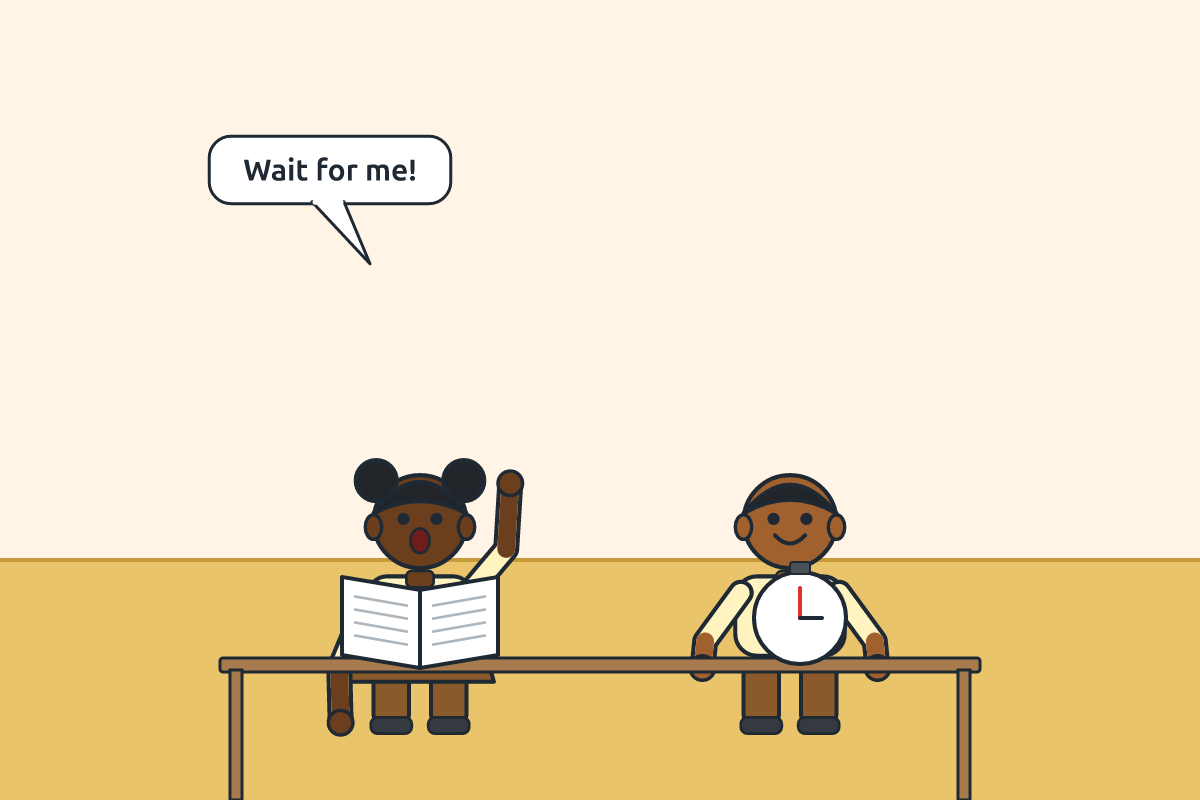
Practise: "Hurry! The bus is leaving! Kofi ran as fast as he could. 'Wait for me!' he shouted."
New words
- fluent
- Reading smoothly and well.
- pace
- Speed.
- accuracy
- Being correct.
Summary
- Fluent readers read with good pace, accuracy and expression.
- Use your voice to show feelings.
Exercises
Answer in your exercise book first, then check your answers.
1. Reading every word correctly is…
- A. Accuracy
- B. Pace
- C. Volume
- D. Speed
Show answer
Answer: AccuracyThat is accuracy.2. Fluent readers read with expression.
- A. True
- B. False
Show answer
Answer: TrueThey show feeling.3. Reading smoothly and well is being ______.
Show answer
Answer: fluentThat is fluency.4. How should you read "Wait for me!"?
Show answer
Answer: Loudly and with excitement.It ends with !.
Lesson 3
- Strand
- Writing
- Sub-strand
- Descriptive Writing
- Indicator
- B2.4.12.1.1 – Use simple sentences to describe feelings
Introduction
We can describe how we feel and why.
Describing Feelings
- I feel excited because tomorrow is my birthday.
- I feel worried because my mother is sick.
- I feel calm when I listen to music.
New words
- excited
- Very happy about something coming.
- worried
- Thinking something bad may happen.
- calm
- Peaceful and quiet.
Summary
- We describe feelings with simple sentences.
- We can say why we feel that way using "because".
Exercises
Answer in your exercise book first, then check your answers.
1. How do you feel before your birthday?
- A. Excited
- B. Worried
- C. Angry
- D. Sleepy
Show answer
Answer: ExcitedSomething good is coming.2. "Calm" means peaceful.
- A. True
- B. False
Show answer
Answer: TrueThat is calm.3. I feel ______ because my mother is sick.
Show answer
Answer: worriedWorried fits.4. Write a sentence about a feeling using "because".
Show answer
Answer: E.g. I feel happy because I won.It explains the feeling.
Lesson 4
- Strand
- Writing Conventions & Grammar Usage
- Sub-strand
- Spelling
- Indicator
- B2.5.10.1.1 – Use phonics knowledge to spell words with irregular phonic letter pattern
Introduction
Some words are not spelt the way they sound. We must learn them.
Tricky Spellings
| Word | Tricky part |
|---|---|
| night | igh says "i" |
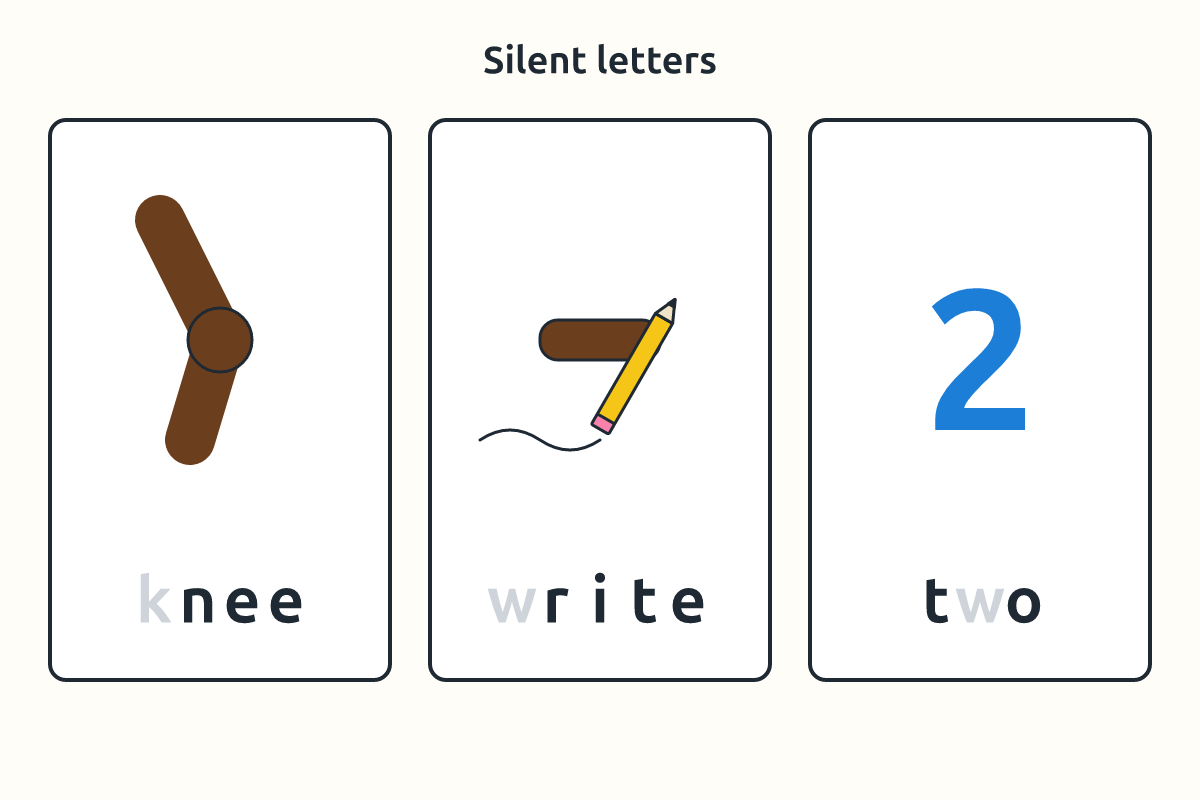
| knee | k is silent |
| write | w is silent |
| two | w is silent |
| laugh | gh says "f" |
New words
- silent letter
- A letter we write but do not say.
- spell
- To write letters in order.
- pattern
- Letters that often go together.
Summary
- Some words have silent letters.
- Learn tricky words by looking, saying and writing.
Exercises
Answer in your exercise book first, then check your answers.
1. Which word has a silent k?
- A. knee
- B. kite
- C. king
- D. kick
Show answer
Answer: kneeWe say "nee".2. The w in "write" is silent.
- A. True
- B. False
Show answer
Answer: TrueWe say "rite".3. In "night", igh says ______.
Show answer
Answer: iIt sounds like "i".4. Spell the word that means a part of your leg that bends.
Show answer
Answer: kneek-n-e-e.
Lesson 5
- Strand
- Extensive Reading
- Sub-strand
- Building the Love and Culture of Reading
- Indicator
- B2.6.1.1.1 – Read a variety of age and level appropriate books and texts from print
Introduction
Today we read about catching a bus.
Reading Time
"Kofi woke up late. He dressed quickly and ran to the bus stop. 'Wait for me!' he shouted. The driver stopped and smiled. Kofi climbed in, panting. 'Thank you, Sir!' he said."
Questions
- Why did Kofi run? (He woke up late.)
- What did Kofi say to the driver? ("Thank you, Sir!")
New words
- late
- After the right time.
- pant
- To breathe fast after running.
- driver
- A person who drives a vehicle.
Summary
- Kofi woke up late and ran for the bus.
- The kind driver waited for him.
Exercises
Answer in your exercise book first, then check your answers.
1. Why did Kofi run?
- A. He woke up late
- B. He was early
- C. He wanted exercise
- D. He lost his bag
Show answer
Answer: He woke up lateThe passage says so.2. The driver stopped for Kofi.
- A. True
- B. False
Show answer
Answer: TrueHe stopped and smiled.3. Kofi climbed in, ______.
Show answer
Answer: pantingHe was breathing fast.4. How did Kofi show good manners?
Show answer
Answer: He said "Thank you, Sir!"He thanked the driver.
Homework
- Read a passage aloud to your family with good pace and expression.