Basic 1 · English Language
Songs, Books, Patterns and Capital Letters
In this topic you will sing songs, learn to handle books, draw writing patterns, write capital letters and enjoy a storybook.
By the end of these notes you should be able to:
- Sing familiar songs with expression
- Handle a book the right way
- Trace and draw writing patterns
- Write capital letters correctly
What you already know
- Songs and rhymes from KG
Copy everything that has a blue line on its left into your notebook. The other parts are for reading.
Lesson 1
- Strand
- Oral Language
- Sub-strand
- Songs
- Indicator
- B1.1.1.1.1 – Listen and sing familiar songs with appropriate expressions
Introduction
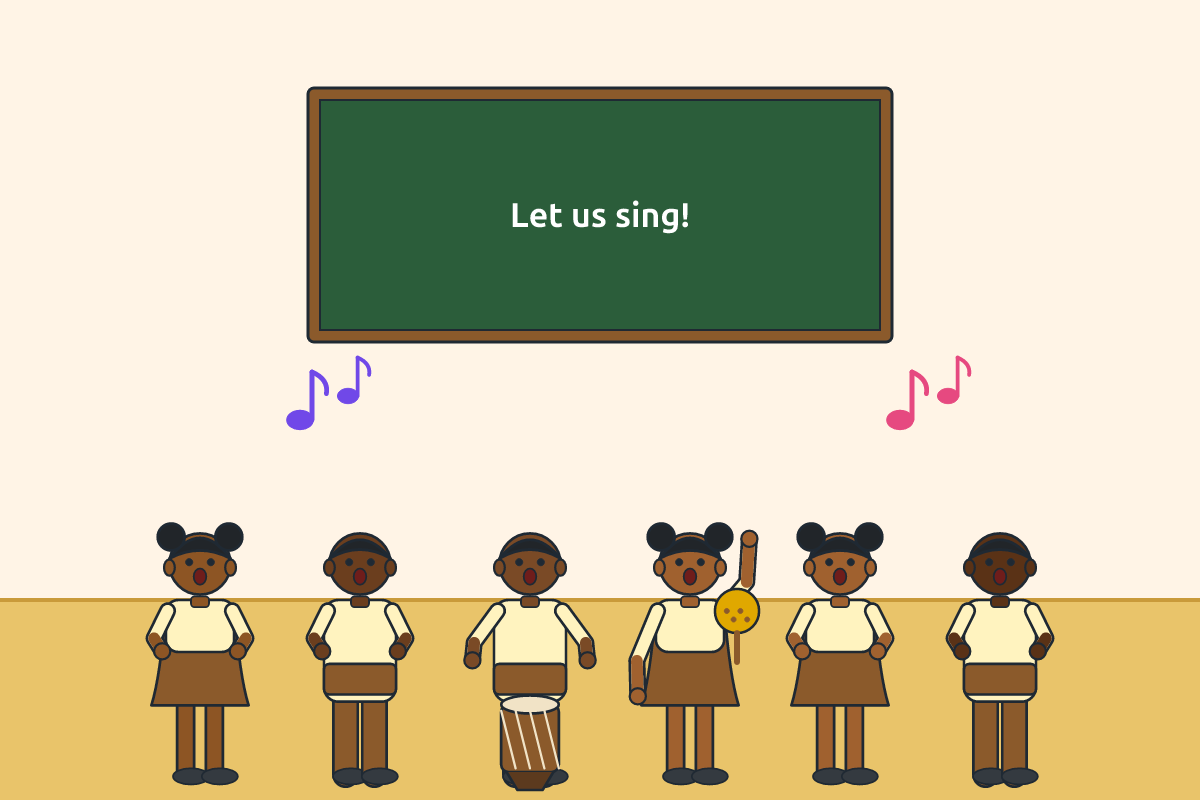
We sing songs at home, in church and at school. Today we sing songs we know and show how they make us feel.
Singing Songs
Sing with a happy face for a happy song.
Sing softly for a slow, gentle song.
When singing
- listen first
- say the words clearly
- clap or tap to the beat
New words
- song
- Words sung with music.
- beat
- The steady pulse of music.
- expression
- Showing feeling with your face and voice.
Summary
- We sing songs clearly and keep the beat.
- We show feeling when we sing.
Exercises
Answer in your exercise book first, then check your answers.
1. How should you sing a happy song?
- A. With a happy face
- B. Crying
- C. Silently
- D. Shouting angrily
Show answer
Answer: With a happy faceShow the feeling of the song.2. We can clap to the beat of a song.
- A. True
- B. False
Show answer
Answer: TrueClapping keeps the beat.3. Showing feeling with your face and voice is ______.
Show answer
Answer: expressionThat is expression.4. Name one song you like to sing.
Show answer
Answer: Answers will differ.Learners name a song.
Lesson 2
- Strand
- Reading
- Sub-strand
- Pre-Reading Activities
- Indicator
- B1.2.1.1.1 – Handle books appropriately
Introduction
Books are our friends. When we care for them, they last a long time.
Handling Books
- Wash and dry your hands.
- Hold the book the right way up.
- Turn the pages gently from the corner.
- Close the book and keep it in a safe place.
Cover your books with clean paper to keep them neat.
New words
- book
- Pages joined together with words and pictures.
- cover
- The outside of a book.
- page
- One sheet in a book.
Summary
- Hold books the right way up and turn pages gently.
- Keep books clean and covered.
Exercises
Answer in your exercise book first, then check your answers.
1. What should you do before reading a book?
- A. Wash your hands
- B. Eat oily food
- C. Wet the book
- D. Tear a page
Show answer
Answer: Wash your handsClean hands keep books clean.2. We should fold the pages of our books.
- A. True
- B. False
Show answer
Answer: FalseFolding damages books.3. One sheet in a book is a ______.
Show answer
Answer: pageBooks have many pages.4. Write one way to keep your book clean.
Show answer
Answer: E.g. cover it with paper.Covering protects books.
Lesson 3
- Strand
- Writing
- Sub-strand
- Pre-Writing
- Indicator
- B1.4.1.1.1 – Give patterns trace and draw various objects
Introduction
Before we write letters, we practise patterns. Patterns make our hands strong and steady.
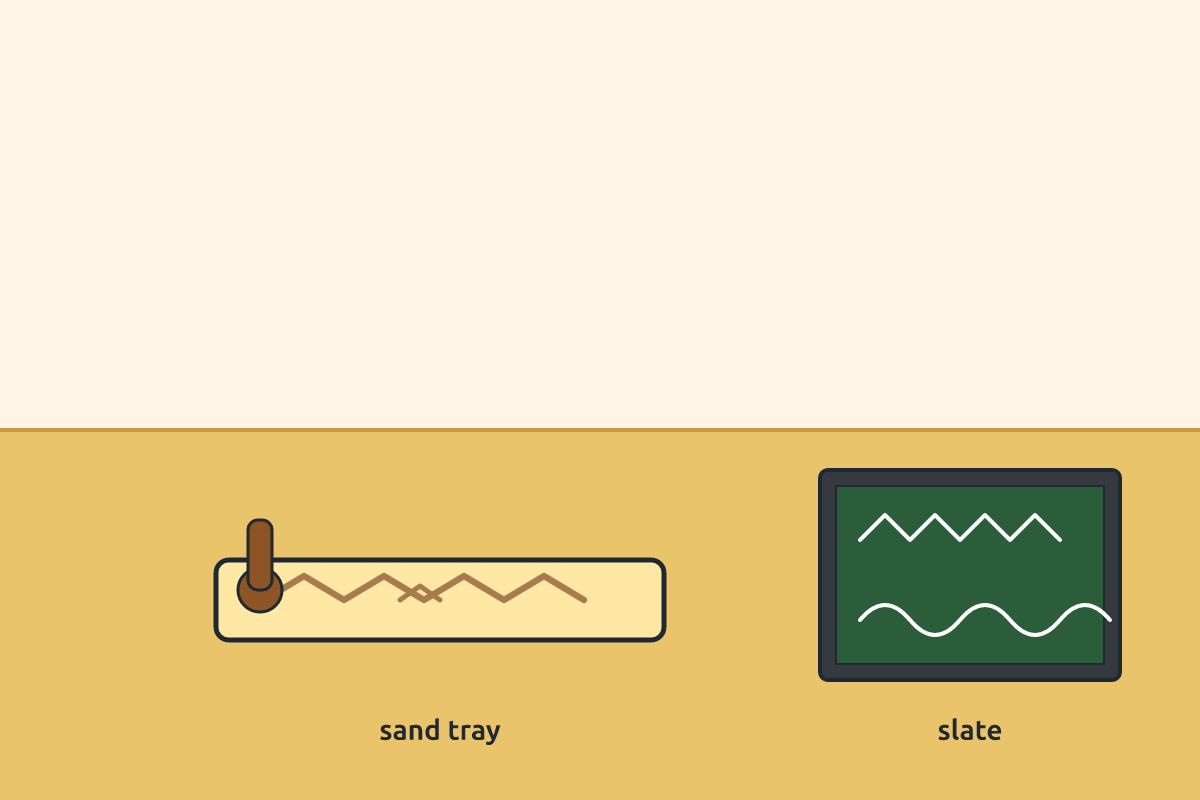
Writing Patterns
| Pattern | Looks like |
|---|---|
| zigzag | /\/\/\ |
| waves | ~~~~ |
| circles | oooo |
| loops | llll |
Trace the patterns with your finger in sand first. Then use chalk or a pencil.
New words
- pattern
- Shapes that repeat.
- trace
- To draw over lines already there.
- slate
- A small board for writing with chalk.
Summary
- Patterns help us get ready to write.
- We trace patterns in sand, then on a slate or paper.
Exercises
Answer in your exercise book first, then check your answers.
1. Which is a pattern?
- A. /\/\/\
- B. A cup
- C. A dog
- D. A tree
Show answer
Answer: /\/\/\It is a zigzag pattern.2. We can trace patterns in sand.
- A. True
- B. False
Show answer
Answer: TrueSand trays help practice.3. To draw over lines already there is to ______.
Show answer
Answer: traceThat is tracing.4. Draw a wave pattern.
Show answer
Answer: ~~~~Waves go up and down.
Lesson 4
- Strand
- Writing Conventions & Grammar Usage
- Sub-strand
- Using Capitalization
- Indicator
- B1.5.1.1.1 – Write capital letters correctly
Introduction
Look at the word "Ghana". It starts with a big G. Big letters are called capital letters.
Capital Letters
There are 26 capital letters: A B C D E F G H I J K L M N O P Q R S T U V W X Y Z.
We use a capital letter to start a name and to start a sentence.
Examples
- Ama
- Kumasi
- The cat is black.
New words
- capital letter
- A big letter, like A or G.
- alphabet
- All the letters from A to Z.
- name
- What a person or place is called.
Summary
- There are 26 capital letters.
- Names and sentences start with capital letters.
Exercises
Answer in your exercise book first, then check your answers.
1. Which is a capital letter?
- A. G
- B. g
- C. a
- D. b
Show answer
Answer: GG is a capital letter.2. "kofi" is written correctly.
- A. True
- B. False
Show answer
Answer: FalseIt should be "Kofi".3. All the letters from A to Z make the ______.
Show answer
Answer: alphabetThat is the alphabet.4. Write your first name with a capital letter.
Show answer
Answer: Answers will differ.Names begin with a capital letter.
Lesson 5
- Strand
- Extensive Reading
- Sub-strand
- Building the Love and Culture of Reading
- Indicator
- B1.6.1.1.1 – Read a variety of age and level appropriate books and texts from print
Introduction
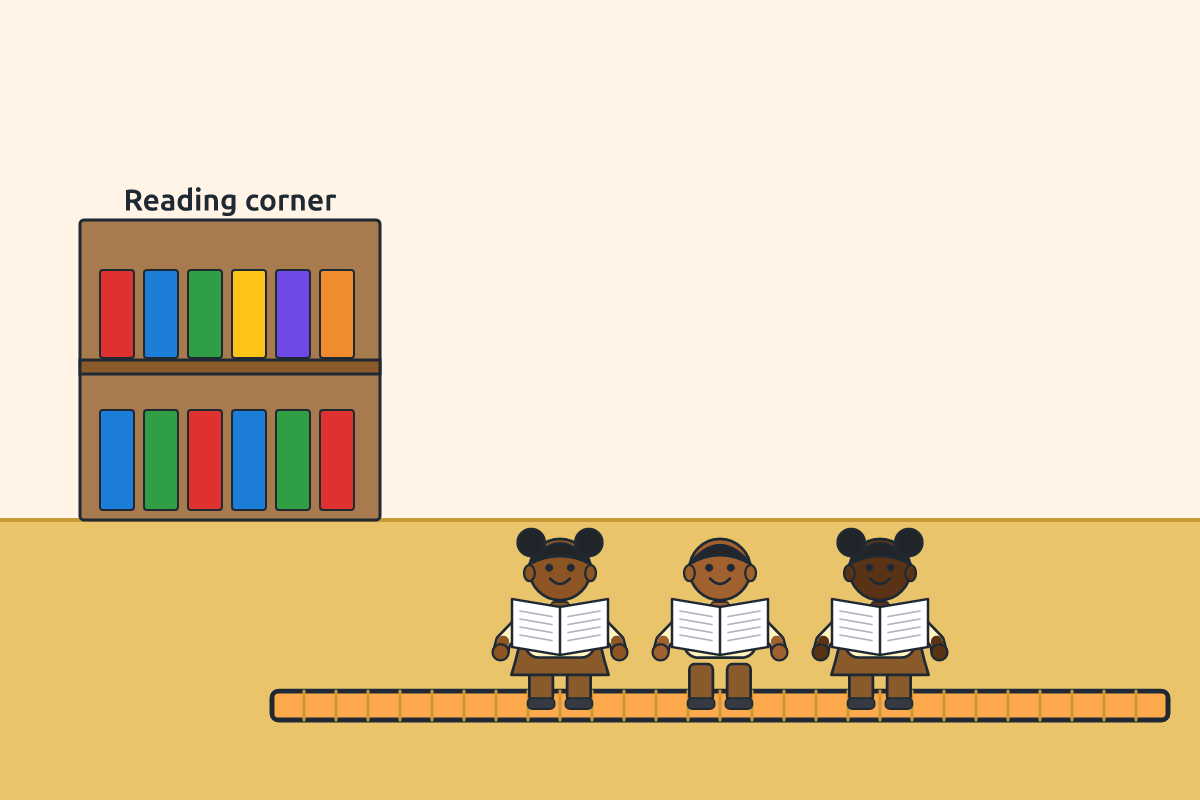
A storybook can take you to new places. Today we read a story about a Ghanaian community.
Enjoying a Storybook
- Look at the cover and the title.
- Look at the pictures.
- Guess what the story is about.
- Listen as the story is read.
- Talk about your favourite part.
New words
- story
- A telling of what happened.
- title
- The name of a book or story.
- picture
- A drawing or photo.
Summary
- Look at the title and pictures before reading.
- Talk about your favourite part of the story.
Exercises
Answer in your exercise book first, then check your answers.
1. The name of a book is its…
- A. Title
- B. Page
- C. Cover
- D. Picture
Show answer
Answer: TitleEvery book has a title.2. Pictures help us guess what a story is about.
- A. True
- B. False
Show answer
Answer: TruePictures give clues.3. A telling of what happened is a ______.
Show answer
Answer: storyThat is a story.4. Write the title of a book you like.
Show answer
Answer: Answers will differ.Learners write a title.
Homework
- Read a storybook with someone at home. Tell them your favourite part.