Basic 6 · Ghanaian Language · Vocabulary
Reading Passages Aloud with Correct Pronunciation and Tone
In this topic you will read longer passages aloud with correct pronunciation, tone, pace and expression.
By the end of these notes you should be able to:
- Pronounce words correctly with the right tone
- Read longer passages fluently
- Use expression to show meaning and feeling
What you already know
- Reading aloud (Basic 5)
Copy everything that has a blue line on its left into your notebook. The other parts are for reading.
- Strand
- Reading
- Sub-strand
- Vocabulary
- Indicator
- B6.2.5.1.1-2 – Read passages aloud with correct pronunciation and tone
Introduction
A good reader makes listeners feel as if they are inside the story. Correct pronunciation and tone make the meaning clear, and expression brings the words to life.
1. Reminders on Tone
Ghanaian languages are tonal. Changing the pitch of a syllable can change the meaning of a word. Listen carefully to fluent speakers and copy their tones. When you are not sure, ask your teacher.
2. Practice Passage (English Version)
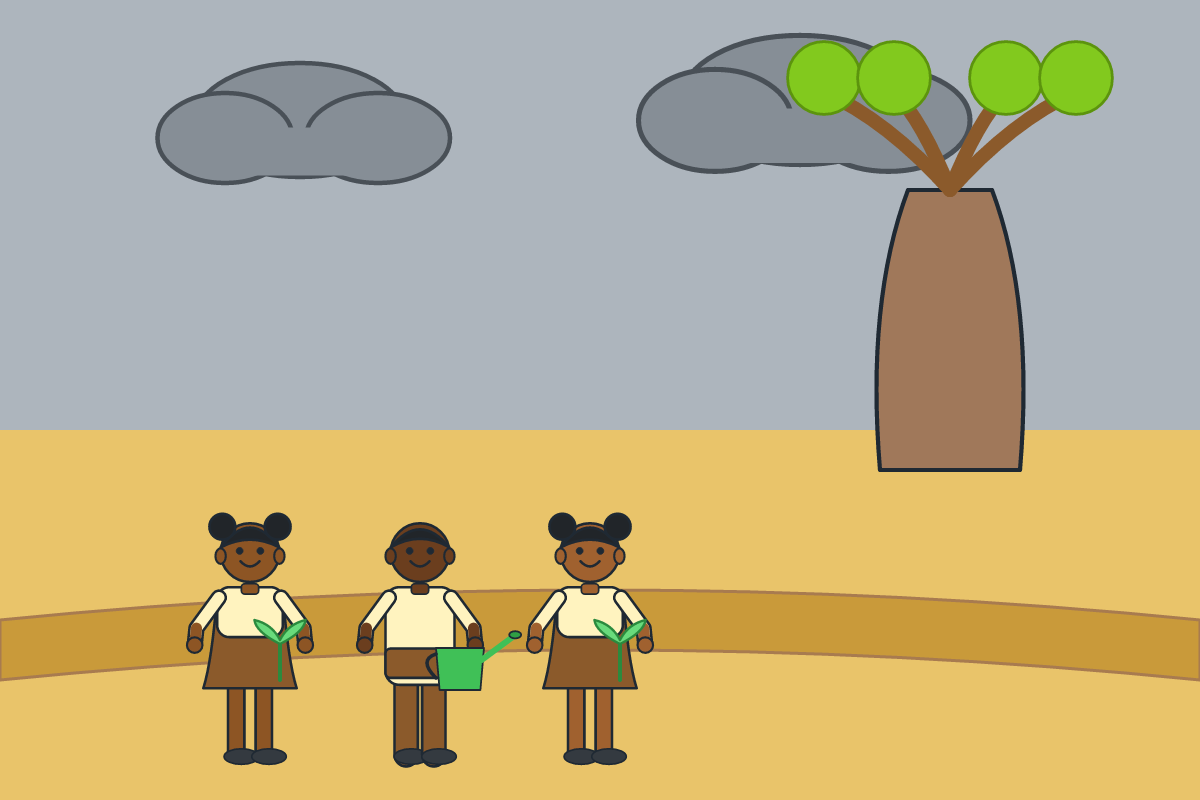
"The rain had refused to fall for many months. The rivers were dry, and the cattle were thin. One evening, old Mma Ayishetu gathered the children under the baobab tree. 'Long ago,' she said, 'when the rain stayed away, our people planted trees and prayed together. Then the clouds came back.' The next morning, the children carried seedlings to the riverbank. Weeks later, as they watered the young trees, thunder rumbled across the sky. Big drops fell on their faces, and they danced and sang with joy."
| Part | How to read |
|---|---|
| "The rain had refused to fall…" | slow and serious |
| Mma Ayishetu's words | the calm, wise voice of an elder |
| "thunder rumbled across the sky" | build excitement |
| "they danced and sang with joy" | joyful and bright |
3. Reading Skills Checklist
| Skill | Question |
|---|---|
| pronunciation | Did I say every word clearly? |
| tone | Did I use the correct high and low pitches? |
| pace | Was I too fast or too slow? |
| pausing | Did I pause at commas and full stops? |
| expression | Did my voice match the feelings? |
| volume | Could everyone hear me? |
4. Improving Through Practice
- Read the passage silently to understand it.
- Mark difficult words and practise them.
- Mark places to pause, slow down or show feeling.
- Read aloud to a partner and use the checklist for feedback.
- Record yourself on a phone (if possible) and listen back.
Your teacher will give you the passage in your Ghanaian language. Practise until you can read it smoothly with the right tones.
New words
- pronunciation
- The way words are said.
- tone
- The pitch of a syllable that can change meaning.
- pace
- The speed of reading.
- expression
- Showing feeling in the voice.
- fluency
- Reading smoothly and accurately.
- elder
- An older, respected person.
Summary
- Correct tone and pronunciation give the right meaning.
- Use pace, pauses and expression to bring passages to life.
- Use a checklist and partner feedback to improve.
- Practise regularly to become fluent.
Class activity: Reading Showcase
- Prepare a passage in your Ghanaian language.
- Read it to the class using the reading guide.
- Classmates give feedback using the checklist.
You need: Ghanaian-language storybook, Locally made sentence cards, Pointer stick
Exercises
Answer in your exercise book first, then check your answers.
1. Reading smoothly and accurately is…
- A. fluency
- B. tone
- C. volume
- D. spelling
Show answer
Answer: fluencySmooth reading.2. How should the elder's words be read?
- A. in a calm, wise voice
- B. very fast
- C. in a whisper
- D. angrily
Show answer
Answer: in a calm, wise voiceMatches the character.3. What did the children do in the passage?
- A. planted trees by the river
- B. went to the market
- C. played football
- D. slept
Show answer
Answer: planted trees by the riverFollowing the elder's advice.4. Tone can change the meaning of a word in Ghanaian languages.
- A. True
- B. False
Show answer
Answer: TrueThey are tonal.5. You should never pause when reading aloud.
- A. True
- B. False
Show answer
Answer: FalsePause at punctuation.6. The speed of reading is called ______.
Show answer
Answer: paceNot too fast.7. List four skills on the reading checklist.
Show answer
Answer: Pronunciation, tone, pace, expression (or pausing, volume).Any four.8. Why should your voice change when reading different parts of a story?
Show answer
Answer: It shows the feelings and characters, making the story clear and interesting.Expression.
Homework
- Read a passage aloud to your family and ask them to use the checklist.