Basic 6 · Ghanaian Language · Story Telling
Folktales and Other Stories: Similarities and Differences
In this topic you will compare folktales with other stories, identify their similarities and differences and discuss their morals and values.
By the end of these notes you should be able to:
- Distinguish folktales from other stories
- Identify similarities and differences between them
- Discuss the morals and values they teach
What you already know
- Retelling folktales (Basic 5)
Copy everything that has a blue line on its left into your notebook. The other parts are for reading.
- Strand
- Oral Language
- Sub-strand
- Story Telling
- Indicator
- B6.1.4.1.1-2 – Indicate the similarities and differences between folktales and stories and discuss the values or morals of folktales and of stories
Introduction
Ananse stories and the story of a girl who wins a scholarship can both teach lessons. But one is a folktale and the other is a real-life story. How are they alike and how are they different?
1. Folktales and Stories
| Feature | Folktale | Other stories (real-life or modern) |
|---|---|---|
| origin | passed down orally from long ago | written or told by a known author or person |
| characters | animals that talk, spirits, kings, tricksters | ordinary people |
| setting | long ago, unnamed village or forest | real places and times |
| events | magical or impossible | realistic |
| opening and closing | traditional formulas | no fixed formula |
| purpose | entertain and teach morals | entertain, inform or teach |
2. Example Folktale (Summary)
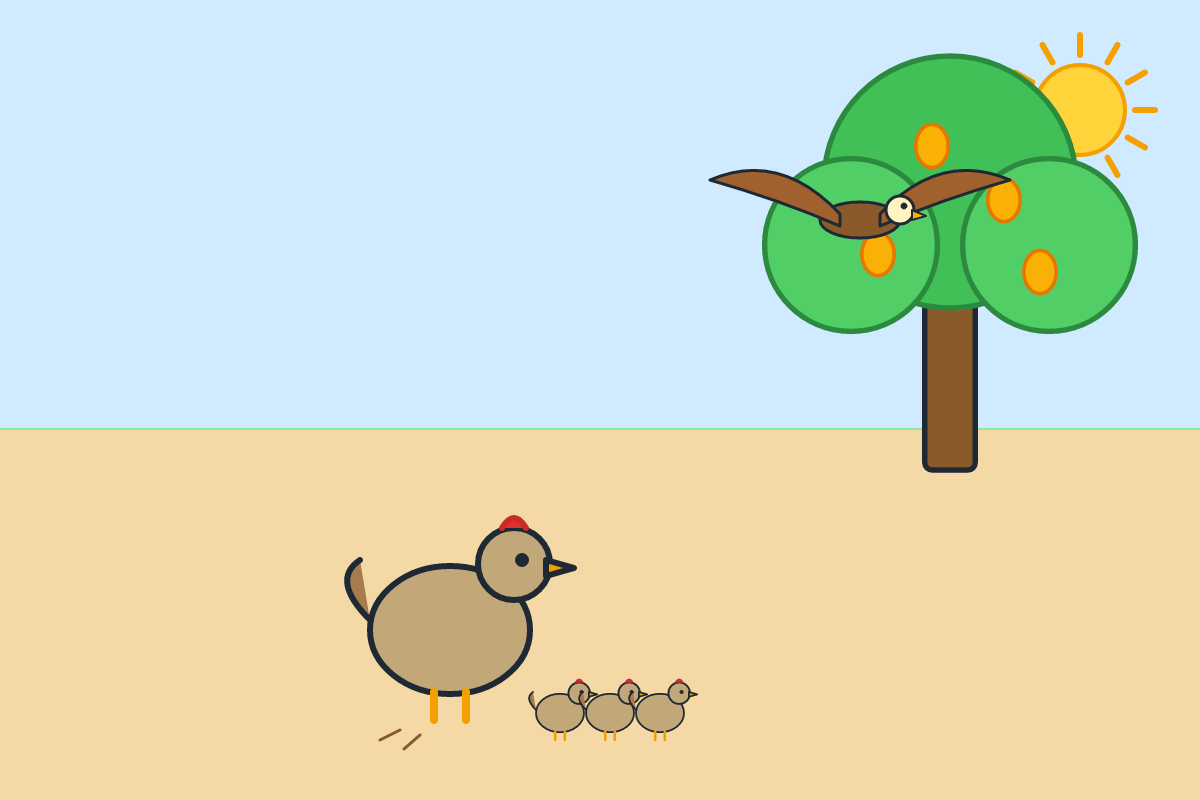
"Why the Hen Scratches the Ground": Long ago, the hen borrowed a needle from the hawk to sew her dress. She dropped it on the ground and could not find it. The hawk said that until the needle was returned, he would take her chicks. Since then, the hen scratches the ground searching for the needle, and the hawk snatches chicks. Moral: Take good care of what you borrow.
3. Example Real-Life Story (Summary)
"The Borrowed Book": Abena borrowed her friend's mathematics textbook. She left it outside and rain soaked it. Her friend was very upset. Abena used her savings to buy a new book and apologised. They remained friends. Moral: Take good care of what you borrow and take responsibility for mistakes.
4. Similarities
- Both have characters, a setting and a plot.
- Both can teach the same moral (here, caring for borrowed things).
- Both entertain the listener or reader.
- Both have a problem and a resolution.
5. Values and Morals
| Value | Folktale example | Real-life example |
|---|---|---|
| responsibility | the hen must return the needle | Abena replaces the book |
| honesty | Ananse is punished for lying | a pupil confesses breaking a window |
| hard work | the tortoise wins the race | a farmer's patient work brings a good harvest |
Retell the folktale and the real story in your Ghanaian language using the correct opening and closing formulas for the folktale.
New words
- folktale
- A traditional story passed down orally.
- trickster
- A clever character who deceives others, such as Ananse.
- realistic
- Like real life.
- moral
- The lesson a story teaches.
- value
- A belief about what is good and important.
- oral
- Spoken, not written.
Summary
- Folktales are old oral stories with magical events and talking animals.
- Other stories are often realistic with ordinary people.
- Both have characters, settings, plots and can teach morals.
- Folktales and stories teach values such as responsibility and honesty.
Class activity: Story Comparison
- Read or listen to one folktale and one real-life story.
- Fill in a table of similarities and differences.
- State the moral of each and act one out.
You need: Ghanaian-language folktale picture book, Character picture cards, Calabash, Kente cloth props
Exercises
Answer in your exercise book first, then check your answers.
1. Talking animals are usually found in…
- A. folktales
- B. news reports
- C. textbooks
- D. letters
Show answer
Answer: folktalesImaginary.2. Why does the hen scratch the ground in the folktale?
- A. She is looking for the hawk's needle
- B. She is planting seeds
- C. She is building a nest
- D. She is dancing
Show answer
Answer: She is looking for the hawk's needleFrom the story.3. What do both stories teach?
- A. Take care of what you borrow
- B. Steal from friends
- C. Never share
- D. Run away
Show answer
Answer: Take care of what you borrowSame moral.4. Folktales are passed down by word of mouth.
- A. True
- B. False
Show answer
Answer: TrueOral tradition.5. Real-life stories usually have magical events.
- A. True
- B. False
Show answer
Answer: FalseThey are realistic.6. A clever character who deceives others is a ______.
Show answer
Answer: trickstere.g. Ananse.7. Give two differences between folktales and real-life stories.
Show answer
Answer: Folktales have talking animals and magic; real-life stories have ordinary people and realistic events.Any two.8. Why do folktales use animals to teach morals?
Show answer
Answer: Animals make the stories interesting and memorable and allow lessons to be taught without naming real people.Purpose.
Homework
- Ask an elder for a folktale and write a real-life story with the same moral.