Basic 6 · Ghanaian Language · Songs
Songs for Traditional Dances
In this topic you will sing traditional songs used for traditional dances with their correct rhythms and explain their meanings and uses.
By the end of these notes you should be able to:
- Name traditional dances and the songs that go with them
- Sing a dance song with the correct rhythm
- Explain the meaning and occasion of dance songs
What you already know
- Cradle songs (Basic 5)
Copy everything that has a blue line on its left into your notebook. The other parts are for reading.
- Strand
- Oral Language
- Sub-strand
- Songs
- Indicator
- B6.1.1.1.1 – Sing some traditional songs which are used for traditional dances and their correct rhythms
Introduction
In Ghana, music and dance always go together. Every traditional dance has its own songs and drum rhythms. When the drums begin, people know which dance to perform.
1. Traditional Dances and Their Songs
| Dance | People | Occasion | Features of the songs |
|---|---|---|---|
| Adowa | Akan | funerals, festivals, durbars | graceful, with proverbs and praise of ancestors |
| Kete | Asante | royal occasions | drummed and played on reed pipes for the chief |
| Agbadza | Ewe | festivals, social gatherings | call-and-response songs about history and life |
| Kpanlogo | Ga | recreation, celebrations | lively songs with modern and traditional themes |
| Bamaya | Dagomba | harvest and thanksgiving | songs about the rain and the harvest |
| Takai | Dagomba | festivals and chiefs' gatherings | songs with rhythmic striking of metal rods |
| Bɔbɔɔbɔ | Ewe | social events and celebrations | joyful, modern-style dance songs |
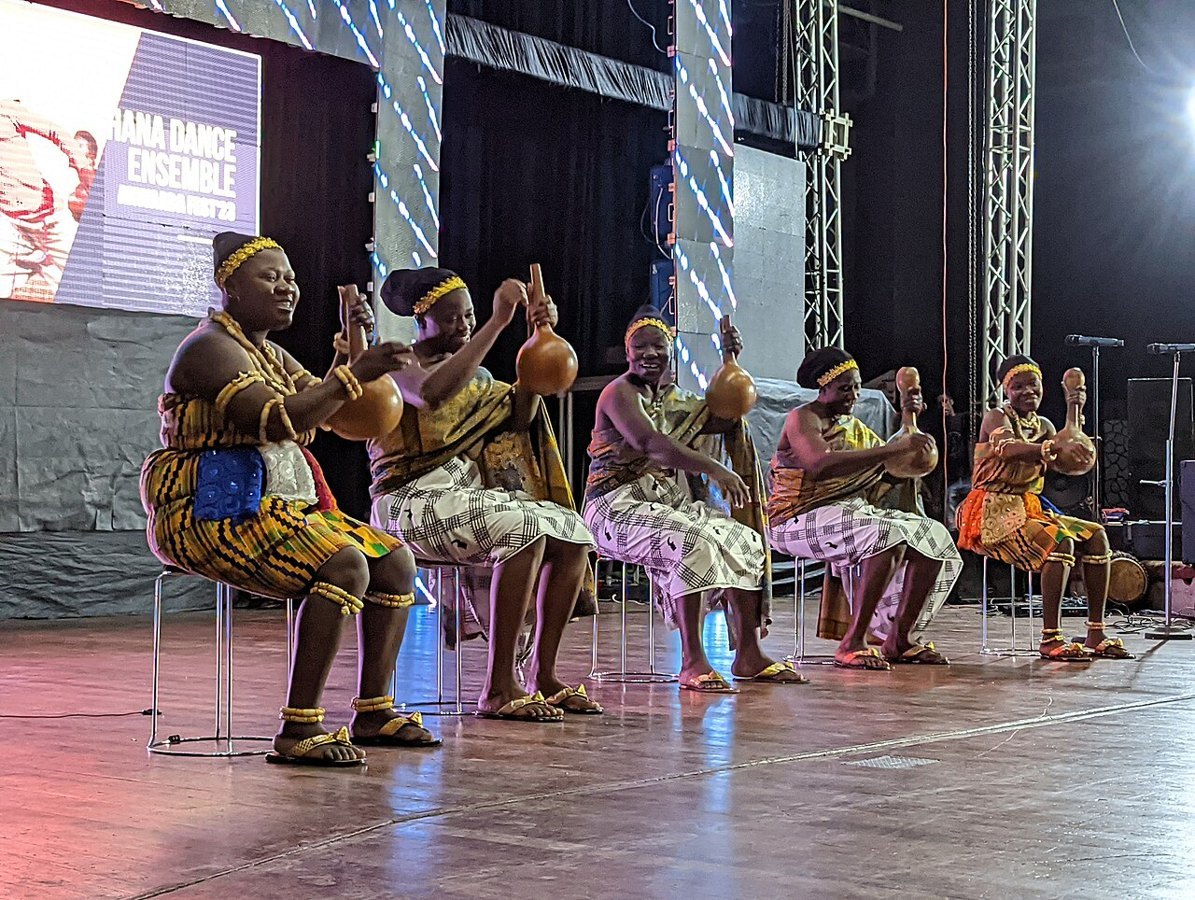
2. Rhythm in Dance Songs
Dance songs follow the rhythm of the drums. The bell (dawuro or gankogui) keeps a steady time line, and the song fits into this pattern. Singers clap or stamp to keep time. Many songs use call-and-response: the cantor (lead singer) sings a line and the chorus answers.
3. Meaning and Purpose
| Purpose | Example |
|---|---|
| to praise | praising chiefs and ancestors at durbars |
| to mourn | Adowa songs at funerals comforting the bereaved |
| to celebrate | harvest songs during Bamaya |
| to teach | songs with proverbs about good behaviour |
| to record history | Agbadza songs about past events |
4. Learning a Dance Song
- Listen to the song several times.
- Learn the words and their meaning in your Ghanaian language.
- Clap the rhythm with the bell pattern.
- Sing the call and the response with your group.
- Add simple dance steps and gestures.
Tip: Ask elders, cultural groups or your teacher to teach you a dance song in your Ghanaian language.
New words
- traditional dance
- A dance passed down through generations.
- cantor
- The lead singer in call-and-response.
- chorus
- The group that answers the lead singer.
- time line
- The steady pattern played by the bell.
- durbar
- A gathering of chiefs and people.
- bereaved
- People mourning a dead relative.
Summary
- Each traditional dance has its own songs and rhythms.
- The bell keeps the time line; songs often use call-and-response.
- Dance songs praise, mourn, celebrate, teach and record history.
- Learn songs by listening, clapping the rhythm and singing in parts.
Class activity: Dance Song Performance
- Learn a traditional dance song in your Ghanaian language.
- Perform it with clapping or drumming and simple steps.
- Explain its meaning and when it is used.
You need: Locally made song or poem cards, Local drum, Gourd shaker
Exercises
Answer in your exercise book first, then check your answers.
1. Adowa is a dance of the…
- A. Akan
- B. Ewe
- C. Ga
- D. Dagomba
Show answer
Answer: AkanPerformed at funerals and festivals.2. The lead singer in call-and-response is the…
- A. cantor
- B. chorus
- C. drummer
- D. chief
Show answer
Answer: cantorLeads the song.3. Bamaya is mainly performed for…
- A. harvest and thanksgiving
- B. weddings only
- C. school sports
- D. war
Show answer
Answer: harvest and thanksgivingDagomba dance.4. Traditional dances have their own songs.
- A. True
- B. False
Show answer
Answer: TrueMusic and dance go together.5. The bell plays a changing pattern without a steady beat.
- A. True
- B. False
Show answer
Answer: FalseIt keeps a steady time line.6. Kpanlogo is a dance of the ______ people.
Show answer
Answer: GaLively recreational dance.7. Name three traditional dances and the people who perform them.
Show answer
Answer: Adowa (Akan), Agbadza (Ewe), Bamaya (Dagomba).Any three.8. How do dance songs help to record history?
Show answer
Answer: They describe past events and heroes and are passed down by singing, so people remember them.Oral history.
Homework
- Ask an elder to teach you a traditional dance song and write its meaning.