Basic 5 · Creative Arts · Displaying and Sharing
Staging a Display of Performing Arts
In this topic you will stage a display of your performing artworks that reflect the history and culture of the people of Africa.
By the end of these notes you should be able to:
- Plan a performance programme
- Prepare costumes, props and the stage
- Perform with confidence before an audience
What you already know
- Creating performing artworks
Copy everything that has a blue line on its left into your notebook. The other parts are for reading.
- Strand
- Performing Arts
- Sub-strand
- Displaying and Sharing
- Indicator
- B5.2.3.4.1 – Stage a display of own portfolio of performing artworks that reflect the history and culture of the people of Africa
Introduction
A good performance needs more than talent. It needs planning: a programme, costumes, props, a stage and an audience. Now you will stage your own show about African culture.
1. Choosing Performances That Reflect African Culture
Choose songs, dances, drama and poems that show African history and culture. Examples include a traditional dance such as Adowa or Bamaya, a folk song, a drama about a festival such as Homowo or Aboakyer, a poem about Yaa Asantewaa, or drumming patterns from your community.
2. Planning the Programme
| Item | Performance | Performers |
|---|---|---|
| 1 | Opening prayer and welcome | MC (master of ceremonies) |
| 2 | Drumming: Kete rhythms | Group A |
| 3 | Poem: "Yaa Asantewaa" | Akua and Yaw |
| 4 | Drama: "The Homowo Feast" | Group B |
| 5 | Dance: Kpanlogo | Group C |
| 6 | Closing song and vote of thanks | All |
3. Costumes, Props and Stage
| Element | Examples |
|---|---|
| costumes | kente, batik, smocks, raffia skirts, beads |
| props | calabashes, pestles, stools, farming tools |
| instruments | drums, gourd shakers, bells (gankogui), xylophones |
| stage | classroom front, school hall, under a tree; clear space for movement |
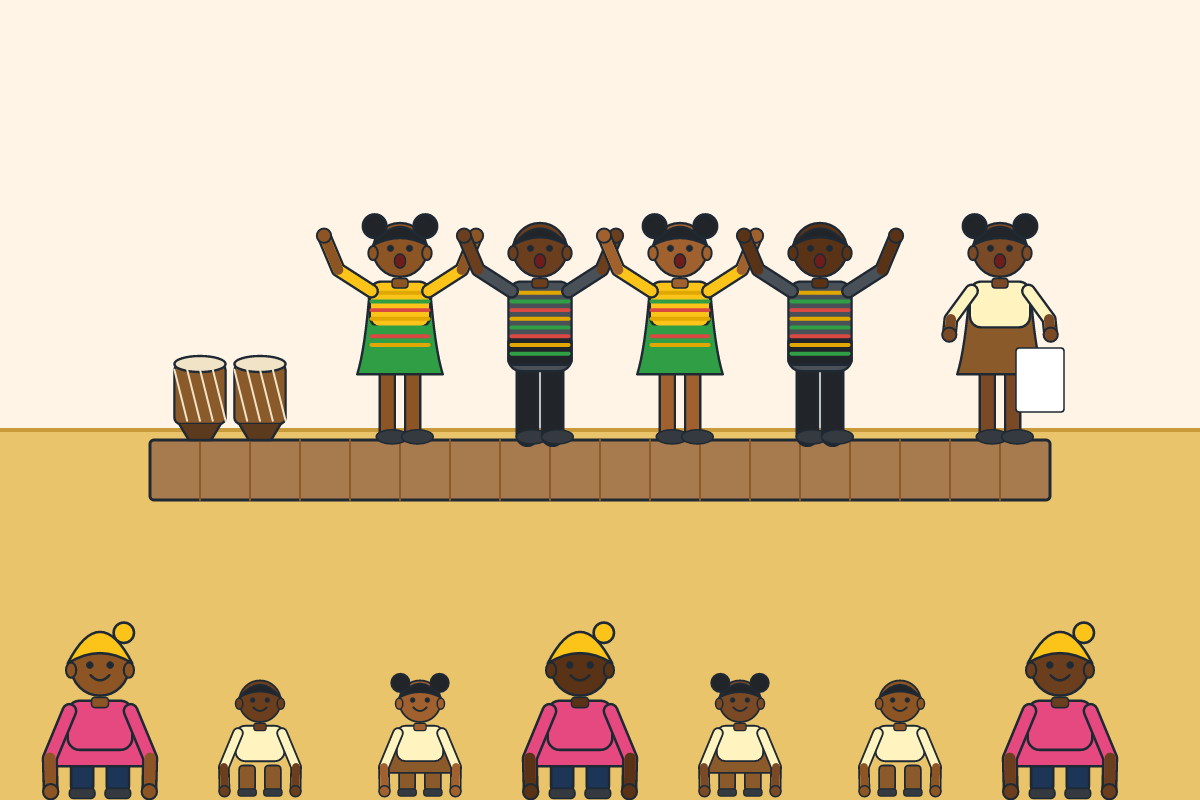
4. Roles in Staging
- Director: guides rehearsals and the whole show.
- Master of ceremonies (MC): introduces each item.
- Performers: sing, dance, act and play instruments.
- Stage managers: arrange props and keep time.
- Ushers: welcome and seat the audience.
5. Performing with Confidence
Rehearse the whole programme in order at least once before the show (a dress rehearsal). On the day, arrive early, check costumes and props, and warm up your voice and body. Face the audience, speak and sing clearly, and keep going even if you make a small mistake. Thank the audience at the end.
New words
- stage
- The area where performers perform.
- programme
- The order of items in a show.
- costume
- Clothes worn for a performance.
- prop
- An object used in a performance.
- MC
- Master of ceremonies who introduces items.
- dress rehearsal
- A full practice with costumes before the show.
Summary
- Choose performances that show African history and culture.
- Plan a programme, costumes, props and stage.
- Assign roles such as director, MC and ushers.
- Rehearse fully and perform with confidence.
Class activity: Class Cultural Show
- Plan a 20-minute cultural display with at least four items.
- Prepare costumes and props from local materials.
- Perform for another class.
You need: Locally made drum, Gourd shaker, Kente cloth sample
Exercises
Answer in your exercise book first, then check your answers.
1. The person who introduces items in a show is the…
- A. MC
- B. usher
- C. drummer
- D. audience
Show answer
Answer: MCMaster of ceremonies.2. An object used in a performance is a…
- A. prop
- B. costume
- C. programme
- D. stage
Show answer
Answer: prope.g. a pestle.3. A full practice with costumes before the show is a…
- A. dress rehearsal
- B. exhibition
- C. audition
- D. festival
Show answer
Answer: dress rehearsalIt checks everything.4. Costumes help show the culture in a performance.
- A. True
- B. False
Show answer
Answer: Truee.g. kente and smocks.5. Performers should stop if they make a small mistake.
- A. True
- B. False
Show answer
Answer: FalseThey should keep going.6. The order of items in a show is the ______.
Show answer
Answer: programmeIt is planned in advance.7. Name three costumes or props used in Ghanaian performances.
Show answer
Answer: Kente, smock and calabash (or beads, stool, drum).Any three.8. Why should performances reflect African culture?
Show answer
Answer: To preserve and promote our heritage and teach the audience about our history and values.Cultural identity.
Homework
- Write a programme for a short cultural show with five items.