Basic 4 · Our World and Our People · Nature of God
Valuing Ourselves and Others
In this topic you will learn about self-esteem and how to respect the uniqueness of others, including people with disabilities.
By the end of these notes you should be able to:
- Explain self-esteem
- Show respect for people's differences
- Treat people with disabilities fairly
What you already know
- Every person is unique
Copy everything that has a blue line on its left into your notebook. The other parts are for reading.
- Strand
- All about us
- Sub-strand
- Nature of God
- Indicator
- B4.1.1.1.1 – Explain how special each individual is
Introduction
Kwabena uses a wheelchair. He is the best storyteller in his class. His classmates help him up the steps and he helps them with their reading.
1. Self-Esteem
Self-esteem: How much you value and respect yourself.
Building healthy self-esteem
- Know your strengths.
- Accept that you make mistakes and learn from them.
- Speak kindly to yourself.
- Do things you are proud of.
2. Respecting Others
| Do | Do not |
|---|---|
| include everyone in games | leave people out |
| use kind words | call people names |
| help when needed | laugh at disabilities |
| listen to others' ideas | look down on other cultures |
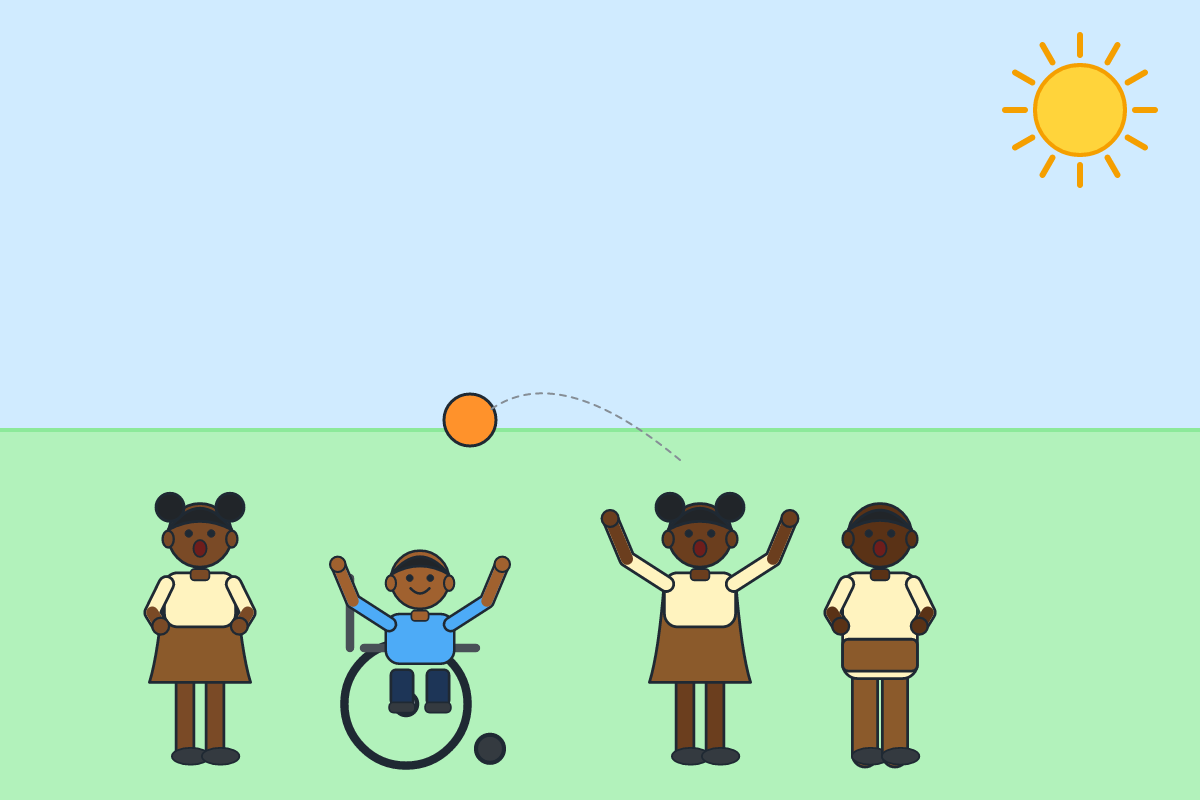
3. People with Disabilities
A disability is a condition that makes some activities hard, such as seeing, hearing or walking.
People with disabilities have the same rights as everyone. Ghana's Persons with Disability Act (2006) protects their rights.
New words
- self-esteem
- How much you value yourself.
- respect
- To treat someone with care and honour.
- disability
- A condition that makes some activities difficult.
- include
- To let someone take part.
- rights
- Things every person is allowed to have or do.
- discriminate
- To treat someone unfairly because they are different.
Summary
- Self-esteem means valuing yourself.
- We respect people's differences.
- People with disabilities have equal rights.
- We include everyone and never discriminate.
Class activity: Kindness Pledge
- Look at the portraits of different Ghanaian children.
- List ways to make everyone feel included.
- Write a class kindness pledge.
You need: Hand mirrors, Printed portraits of diverse Ghanaian children, Personal-strength cards on manila paper
Exercises
Answer in your exercise book first, then check your answers.
1. How much you value yourself is your…
- A. Self-esteem
- B. Height
- C. Age
- D. Hometown
Show answer
Answer: Self-esteemThat is self-esteem.2. Which shows respect for a classmate with a disability?
- A. Including them in games
- B. Laughing at them
- C. Ignoring them
- D. Calling them names
Show answer
Answer: Including them in gamesInclusion shows respect.3. Which law protects people with disabilities in Ghana?
- A. Persons with Disability Act
- B. Road Traffic Act
- C. Education Act only
- D. Forest Act
Show answer
Answer: Persons with Disability ActIt was passed in 2006.4. People with disabilities have equal rights.
- A. True
- B. False
Show answer
Answer: TrueAll people have equal rights.5. Making mistakes means you have no value.
- A. True
- B. False
Show answer
Answer: FalseEveryone makes mistakes and can learn.6. To treat someone unfairly because they are different is to ______.
Show answer
Answer: discriminateThat is discrimination.7. Write two ways to build healthy self-esteem.
Show answer
Answer: Any two: know your strengths, learn from mistakes, speak kindly to yourself, do things you are proud of.These build self-worth.8. How can your school help pupils with disabilities?
Show answer
Answer: E.g. ramps, seats near the front, friendly classmates, special learning materials.Schools can include everyone.
Homework
- Do one kind thing to include someone who is often left out.