Basic 4 · History · Why and How We Study History
How We Learn About Ghana's Past
In this topic you will learn the sources historians use to study Ghana's past.
By the end of these notes you should be able to:
- Name the sources of history
- Explain oral, written and archaeological sources
- Give Ghanaian examples of each
What you already know
- Why we study Ghana's history
Copy everything that has a blue line on its left into your notebook. The other parts are for reading.
- Strand
- My country Ghana
- Sub-strand
- Why and How We Study History
- Indicator
- B4.1.1.1.1 – Explain the importance of studying the history of Ghana
Introduction
Historians are like detectives. They use clues from the past to find out what happened.
1. Sources of History
| Source | Description | Ghanaian examples |
|---|---|---|
| oral tradition | history passed by word of mouth | stories of elders, drum language, linguists' accounts |
| written records | documents and books | colonial records, letters, newspapers, diaries of traders |
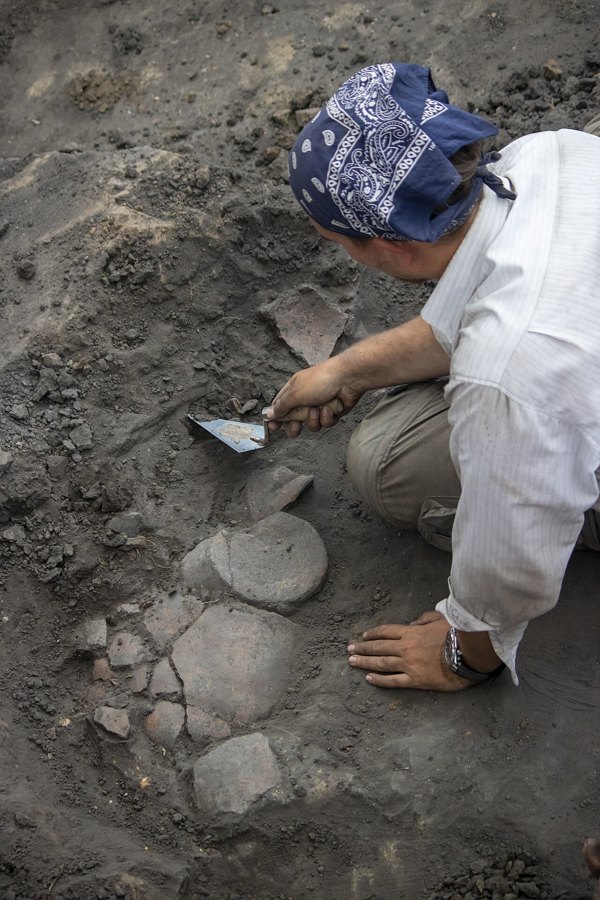
| archaeology | objects dug from the ground | pottery and beads from Begho; old tools |
| artefacts and buildings | old objects and structures | castles, forts, stools, gold weights |
| photographs and films | pictures and recordings | photos of independence day |
2. Strengths and Weaknesses
| Source | Strength | Weakness |
|---|---|---|
| oral tradition | tells history of people who did not write | details may change over time |
| written records | exact dates and details | may show only the writer's view |
| archaeology | gives real objects from long ago | objects do not tell the whole story |
New words
- source
- Where information comes from.
- oral tradition
- History passed by word of mouth.
- archaeology
- The study of the past through objects dug from the ground.
- artefact
- An object made by people long ago.
- document
- A written record.
- historian
- A person who studies history.
Summary
- Historians use oral, written and archaeological sources.
- Oral tradition is important in Ghana.
- Castles, stools and gold weights are artefacts.
- Using many sources gives a fuller picture of the past.
Class activity: History Detectives
- Look at the clay pot, old photographs and calabash.
- Decide what kind of source each is.
- Say what each tells us about the past.
You need: Old family photographs, Clay pot or calabash, Exercise books
Exercises
Answer in your exercise book first, then check your answers.
1. History passed by word of mouth is…
- A. Oral tradition
- B. Archaeology
- C. A newspaper
- D. A photograph
Show answer
Answer: Oral traditionElders pass it on.2. The study of the past through objects dug from the ground is…
- A. Archaeology
- B. Geography
- C. Biology
- D. Astronomy
Show answer
Answer: ArchaeologyArchaeologists dig.3. Which is an artefact?
- A. An old Akan gold weight
- B. A cloud
- C. A river
- D. Today's newspaper
Show answer
Answer: An old Akan gold weightIt was made long ago.4. Castles are sources of history.
- A. True
- B. False
Show answer
Answer: TrueThey are historical buildings.5. Oral tradition never changes over time.
- A. True
- B. False
Show answer
Answer: FalseDetails may change.6. A person who studies history is a ______.
Show answer
Answer: historianThat is a historian.7. Name three sources of history.
Show answer
Answer: Any three: oral tradition, written records, archaeology, artefacts, photographs.These are sources.8. Why should historians use more than one source?
Show answer
Answer: Each source has weaknesses; using many gives a fuller and truer picture.Sources support each other.
Homework
- Find one old object at home and ask what it tells about the past.