Basic 4 · History · Major Historical Locations
Other Historical Places in Ghana
In this topic you will describe other historical places such as Salaga, Assin Manso, Paga and Larabanga.
By the end of these notes you should be able to:
- Describe historical places linked to the slave trade
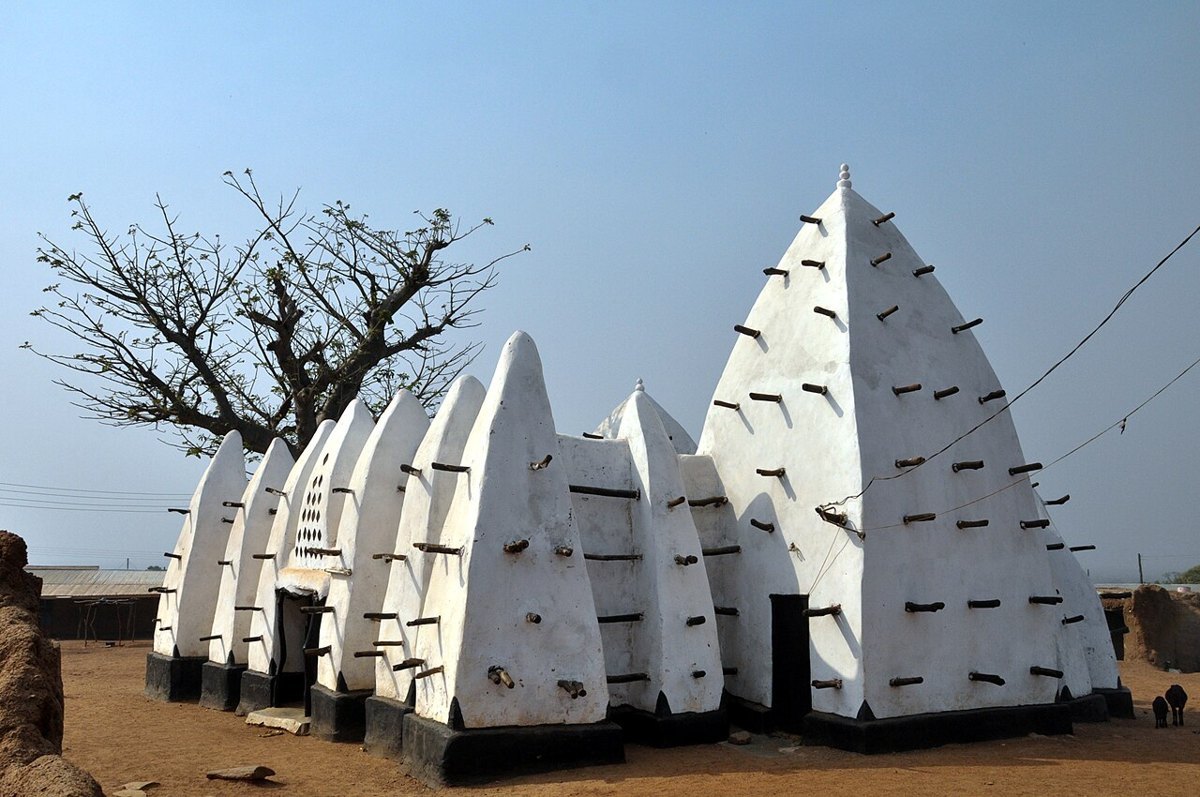
- Describe Larabanga Mosque
- Explain why historical places must be preserved
What you already know
- Historical places in Accra
Copy everything that has a blue line on its left into your notebook. The other parts are for reading.
- Strand
- My country Ghana
- Sub-strand
- Major Historical Locations
- Indicator
- B4.1.4.1.1 – Describe the history of Ghana's major historical locations
Introduction
The slave trade affected the whole of Ghana, not only the coast. In the north and the middle belt, there are places that remind us of this sad history.
1. Historical Places
| Place | Region | History |
|---|---|---|
| Salaga slave market | Savannah | a large market where enslaved people were sold in the 1800s |
| Assin Manso Slave River | Central | enslaved people took their last bath here before being taken to the coast |
| Paga Nania slave camp | Upper East | a camp where enslaved people were held |
| Larabanga Mosque | Savannah | one of the oldest mosques in Ghana, built of mud in the Sudanese style |
2. Why Preserve Historical Places?
- to remember the people who suffered
- to teach history to future generations
- to attract tourists and bring income
- to protect our heritage
New words
- slave market
- A place where people were sold as slaves.
- heritage
- Valuable things passed down from the past.
- preserve
- To keep safe and in good condition.
- tourism
- Travelling to visit places.
- Sudanese style
- A building style using mud and wooden beams.
- generation
- People born around the same time.
Summary
- Salaga, Assin Manso and Paga are linked to the slave trade.
- Larabanga Mosque is one of Ghana's oldest mosques.
- Historical places teach lessons and attract tourists.
- We must preserve them for future generations.
Class activity: Heritage Brochure
- Choose one historical place.
- Make a brochure with a drawing and three facts.
- Present it to the class.
You need: Ghana map, Printed photographs of major Ghanaian historical sites, Locally made site-name cards
Exercises
Answer in your exercise book first, then check your answers.
1. Where is Larabanga Mosque?
- A. Savannah Region
- B. Volta Region
- C. Ashanti Region
- D. Central Region
Show answer
Answer: Savannah RegionIt is in the north.2. Where did enslaved people take their last bath?
- A. Assin Manso
- B. Kumasi
- C. Ho
- D. Wa
Show answer
Answer: Assin MansoAt the Slave River.3. Salaga was famous for…
- A. A slave market
- B. A castle
- C. A university
- D. A port
Show answer
Answer: A slave marketIt was a big market in the 1800s.4. Historical places attract tourists.
- A. True
- B. False
Show answer
Answer: TrueThey bring income.5. The slave trade affected only coastal Ghana.
- A. True
- B. False
Show answer
Answer: FalseIt affected the north and middle belt too.6. To keep safe and in good condition is to ______.
Show answer
Answer: preserveThat is preserving.7. Give two reasons for preserving historical places.
Show answer
Answer: Any two: remember victims, teach history, attract tourists, protect heritage.Preservation has many benefits.8. Why is Assin Manso an important place of remembrance?
Show answer
Answer: Enslaved people had their last bath there before being taken to the coast; it reminds us of their suffering.It is a memorial site.
Homework
- Find out about a historical place in your own region.