Basic 2 · Creative Arts · Thinking and Exploring Ideas
Music and Dance from Other Communities
In this topic you will talk about music and dances from different Ghanaian communities.
By the end of these notes you should be able to:
- Name dances from different communities
- Name traditional instruments
- Talk about performances you have seen
What you already know
- Music and dance in our community (Basic 1)
Copy everything that has a blue line on its left into your notebook. The other parts are for reading.
- Strand
- Visual Arts
- Sub-strand
- Thinking and Exploring Ideas
- Indicator
- B2.2.1.1.1 – Explore own experiences to talk about performing artworks that reflect the history and culture of people in other Ghanaian communities
Introduction
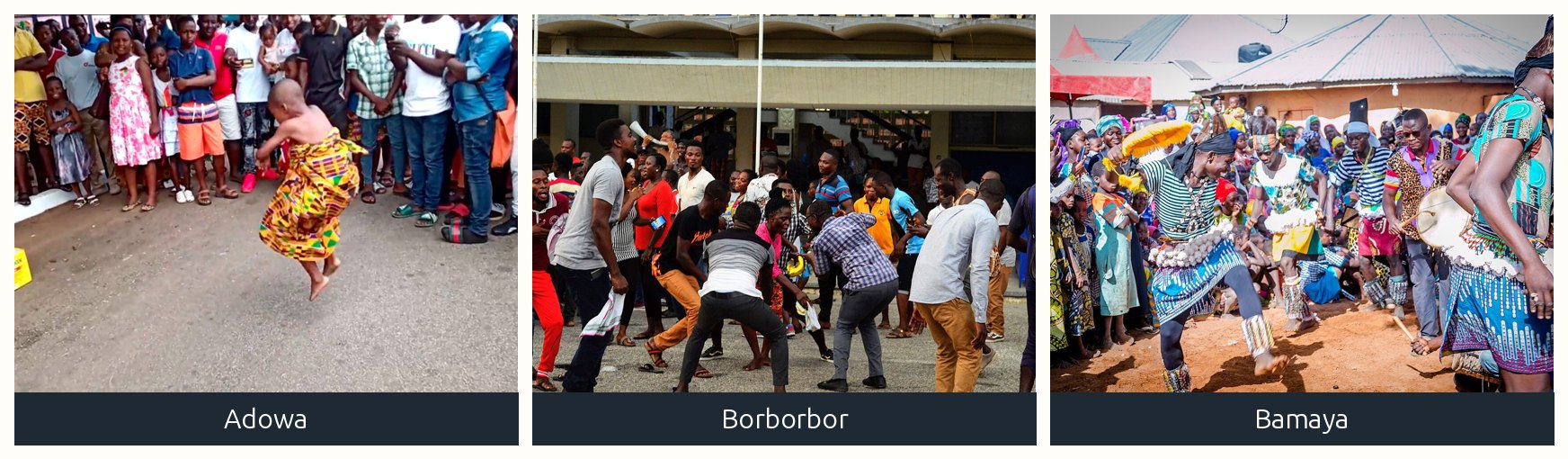
At the National Theatre, dancers performed Bamaya from the north, Borborbor from the Volta and Adowa from Ashanti. Each dance has a story.
1. Dances of Ghana
| Dance | People |
|---|---|
| Adowa | Akan (Asante) |
| Apatampa | Fante |
| Kpanlogo | Ga |
| Borborbor | Ewe |
| Bamaya | Dagomba |
| Takai | Dagomba |
2. Instruments
| Instrument | Type |
|---|---|
| atumpan (talking drums) | drum |
| gonje | stringed fiddle |
| xylophone (gyil) | struck wooden keys |
| axatse | gourd shaker |
| gankogui | double bell |
New words
- performance
- Music, dance or drama shown to others.
- talking drum
- A drum that copies the sounds of speech.
- xylophone
- An instrument with wooden keys struck with sticks.
- costume
- Clothes worn to perform.
Summary
- Ghana has many dances, like Adowa, Kpanlogo, Borborbor and Bamaya.
- Instruments include talking drums, gonje and xylophone.
- Performances tell the history and culture of a people.
Class activity: Rhythm Share
- Look at photographs of Ghanaian performances.
- Tell your group about a performance you have seen.
- Play a simple rhythm on the drum and shaker.
You need: Locally made drum, Gourd shaker, Printed photographs of Ghanaian, African performances
Exercises
Answer in your exercise book first, then check your answers.
1. Borborbor is a dance of the…
- A. Ewe
- B. Ga
- C. Dagomba
- D. Fante
Show answer
Answer: EweBorborbor comes from the Volta Region.2. Which instrument copies the sounds of speech?
- A. Talking drum
- B. Bell
- C. Shaker
- D. Flute
Show answer
Answer: Talking drumAtumpan can "talk".3. Bamaya is a Dagomba dance.
- A. True
- B. False
Show answer
Answer: TrueIt comes from the north.4. The gyil is a type of drum.
- A. True
- B. False
Show answer
Answer: FalseIt is a xylophone.5. Clothes worn to perform are a ______.
Show answer
Answer: costumeThat is a costume.6. Name two Ghanaian dances and their peoples.
Show answer
Answer: E.g. Adowa – Akan; Kpanlogo – Ga.Each group has dances.
Homework
- Ask an elder about a dance from your hometown.