Basic 1 · History · Why and How We Study History
Objects and Stories Tell Us About the Past
In this topic you will learn that old objects and stories from elders also tell us about the past.
By the end of these notes you should be able to:
- Name old objects that show the past
- Explain how stories from elders teach history
- Describe an old object
What you already know
- Photographs tell us about the past
Copy everything that has a blue line on its left into your notebook. The other parts are for reading.
- Strand
- History as a Subject
- Sub-strand
- Why and How We Study History
- Indicator
- B1.1.1.1.2 – Describe how sources of historical evidence help us find out about past human activities
Introduction
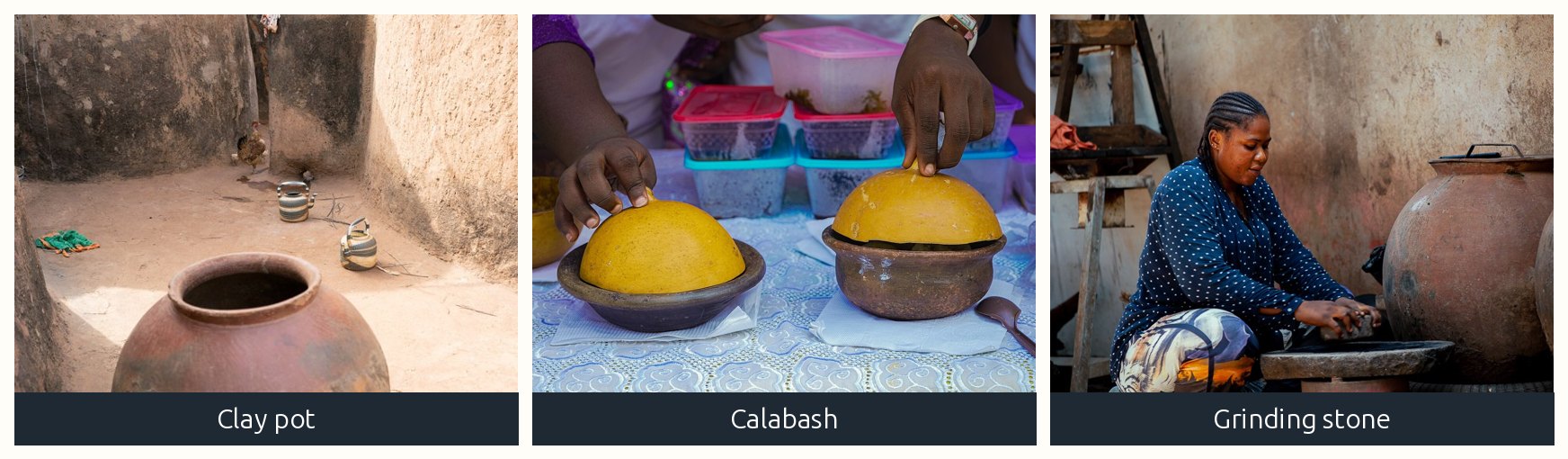
Grandmother keeps an old clay pot. She says her mother used it to store water. The pot tells us how people lived long ago.
1. Old Objects
| Object | What it tells us |
|---|---|
| clay pot | how people stored water and cooked |
| calabash | how people drank and served food |
| grinding stone | how people ground pepper and grain |
| kente cloth | what people wore for special days |
2. Stories from Elders
Long ago, many people did not write things down.
Elders told stories to pass on history. This is called oral history.
Wedding stories, war stories and stories of how towns began are oral history.
Remember: Handle old objects with care. They can break.
New words
- object
- A thing you can see and touch.
- calabash
- A bowl made from a dried gourd.
- oral history
- History told by word of mouth.
- ancestor
- A family member who lived long ago.
Summary
- Old objects tell us how people lived.
- Elders pass on history through stories.
- History told by word of mouth is oral history.
Class activity: Object Detectives
- Look carefully at the clay pot and the calabash.
- Say what each one is made of.
- Guess how people used it long ago.
You need: Old family photographs, Clay pot or calabash, Exercise books
Exercises
Answer in your exercise book first, then check your answers.
1. What was a clay pot used for long ago?
- A. Storing water
- B. Watching TV
- C. Writing
- D. Driving
Show answer
Answer: Storing waterPeople kept water in clay pots.2. History told by word of mouth is…
- A. Oral history
- B. A photo
- C. A map
- D. A song book
Show answer
Answer: Oral historyOral means spoken.3. Elders tell stories about the past.
- A. True
- B. False
Show answer
Answer: TrueThey pass on history.4. Old objects tell us nothing about the past.
- A. True
- B. False
Show answer
Answer: FalseThey show how people lived.5. A bowl made from a dried gourd is a ______.
Show answer
Answer: calabashCalabashes come from gourds.6. Name two old objects that tell us about the past.
Show answer
Answer: Any two: clay pot, calabash, grinding stone, kente.They show how people lived.
Homework
- Find an old object at home. Ask an adult how it was used.