Basic 1 · English Language
Speaking, Sight Words, Describing Myself and Missing Letters
In this topic you will speak confidently to an audience, read more sight words, write about yourself and fill in missing letters.
By the end of these notes you should be able to:
- Speak confidently before others
- Recognise common sight words
- Write simple sentences to describe yourself
- Fill in missing letters in words
What you already know
- Commands and spelling
Copy everything that has a blue line on its left into your notebook. The other parts are for reading.
Lesson 1
- Strand
- Oral Language
- Sub-strand
- Presentation
- Indicator
- B1.1.10.1.1 – Speak with confidence before different audiences
Introduction
Speaking in front of others can feel scary. With practice, you become confident.
Speaking with Confidence
- Stand up straight.
- Look at your audience.
- Speak loudly and clearly.
- Smile.
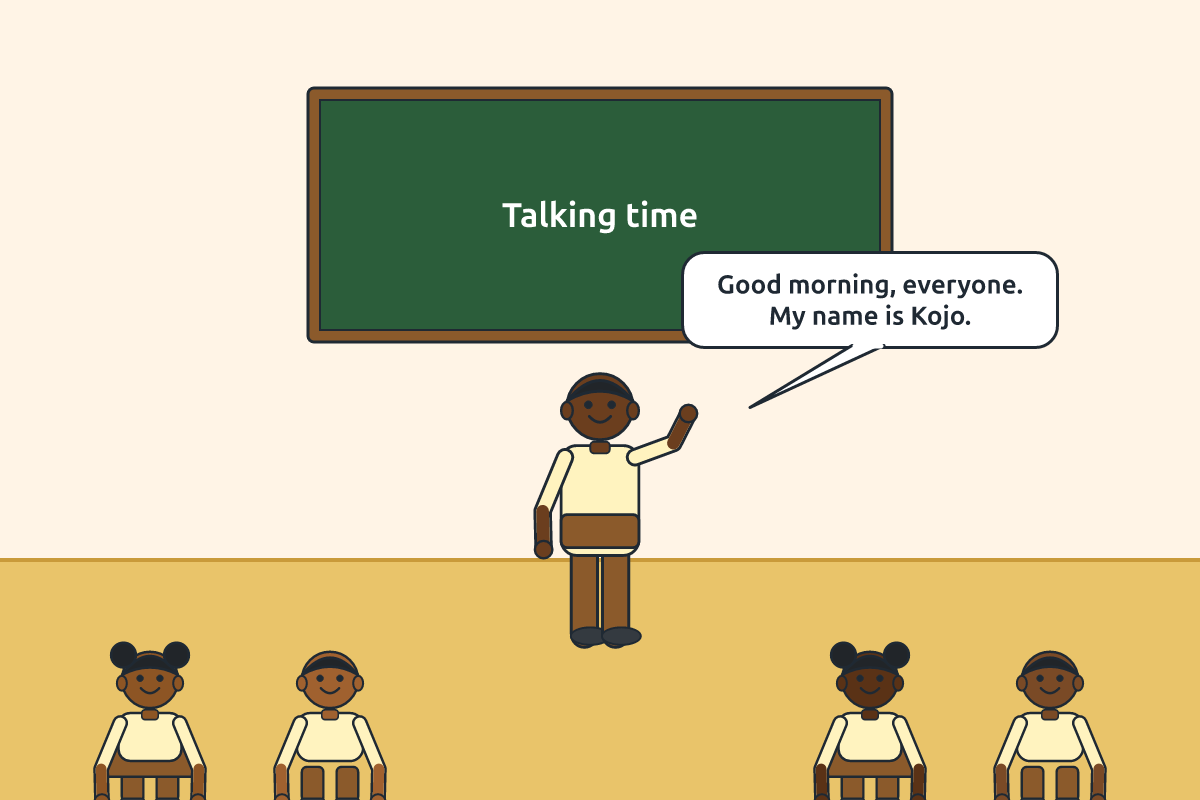
Example talk: "Good morning, everyone. My name is Kojo. I live in Ho. I like drawing. Thank you."
New words
- confident
- Sure of yourself.
- audience
- People who listen or watch.
- clearly
- In a way that is easy to hear.
Summary
- Stand straight, look at the audience and speak clearly.
- Practice makes us confident.
Exercises
Answer in your exercise book first, then check your answers.
1. How should you stand when speaking?
- A. Straight
- B. Bent over
- C. Lying down
- D. Hidden
Show answer
Answer: StraightStand up straight.2. We should look at the audience.
- A. True
- B. False
Show answer
Answer: TrueIt shows confidence.3. Being sure of yourself is being ______.
Show answer
Answer: confidentThat is confidence.4. Write the first sentence of a talk about yourself.
Show answer
Answer: E.g. Good morning, everyone.Start with a greeting.
Lesson 2
- Strand
- Reading
- Sub-strand
- Fluency
- Indicator
- B1.2.9.1.1 – Recognize one hundred and twenty sight words including content words
Introduction
Good readers know many sight words.
Sight Word Review
| said | what | when | where |
|---|---|---|---|
| there | could | would | their |
| come | some | here | went |
Read: "Where is the cat? It is there." "Mother said, 'Come here.'"
New words
- where
- In what place.
- there
- In that place.
- said
- Spoke.
Summary
- We review sight words.
- Knowing sight words helps us read fast.
Exercises
Answer in your exercise book first, then check your answers.
1. Which word asks about a place?
- A. Where
- B. Said
- C. Come
- D. Some
Show answer
Answer: Where"Where" asks about place.2. "said" is a sight word.
- A. True
- B. False
Show answer
Answer: TrueIt appears often.3. ______ is my pen? (Where / There)
Show answer
Answer: WhereIt is a question about place.4. Write a sentence using "there".
Show answer
Answer: E.g. The ball is there.It uses the sight word.
Lesson 3
- Strand
- Writing
- Sub-strand
- Descriptive Writing
- Indicator
- B1.4.12.1.1 – Use words and simple sentences to describe self
Introduction
We can write simple sentences about ourselves.
Describing Myself
Example: "My name is Akua. I am seven years old. I have short hair. I am kind. I like to dance."
Things to write about
- your name
- your age
- how you look
- what you like
New words
- describe
- To say what someone is like.
- age
- How old you are.
- like
- To enjoy.
Summary
- We describe ourselves with simple sentences.
- Write your name, age, looks and likes.
Exercises
Answer in your exercise book first, then check your answers.
1. Which sentence tells your age?
- A. I am seven years old.
- B. I like rice.
- C. I have short hair.
- D. I am kind.
Show answer
Answer: I am seven years old.It tells how old you are.2. "I like to dance." tells what you enjoy.
- A. True
- B. False
Show answer
Answer: TrueIt describes a like.3. My ______ is Akua.
Show answer
Answer: nameIt tells your name.4. Write two sentences describing yourself.
Show answer
Answer: E.g. I am tall. I like football.They describe you.
Lesson 4
- Strand
- Writing Conventions & Grammar Usage
- Sub-strand
- Spelling
- Indicator
- B1.5.10.1.2 – Fill in blank spaces in simple words
Introduction
Some words have missing letters. Can you fill them in?
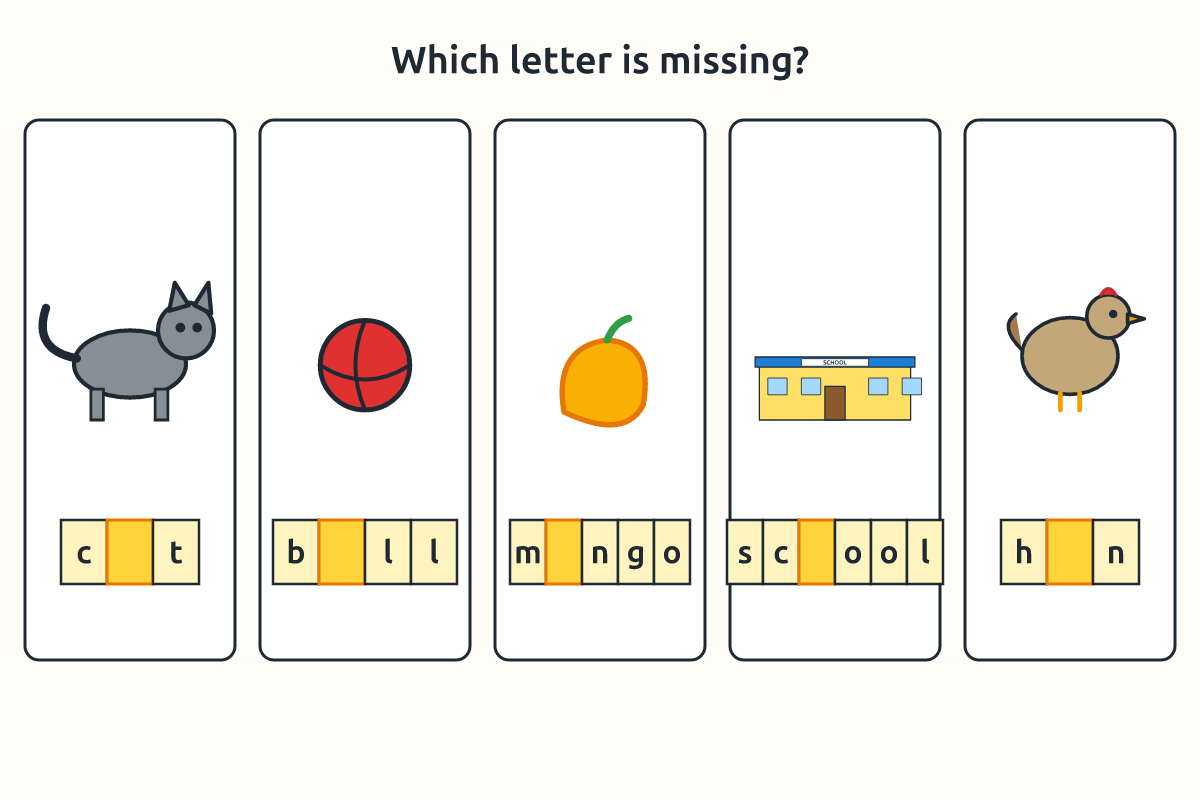
Filling Missing Letters
| Word | Answer |
|---|---|
| c_t | cat |
| b_ll | ball |
| m_ngo | mango |
| sc_ool | school |
| h_n | hen |
New words
- missing
- Not there.
- fill in
- To write what is missing.
- blank
- An empty space.
Summary
- We fill in missing letters to complete words.
- Say the word aloud to hear the missing sound.
Exercises
Answer in your exercise book first, then check your answers.
1. Which letter completes "c_t"?
- A. a
- B. e
- C. o
- D. u
Show answer
Answer: aIt spells cat.2. "h_n" is completed with "e" to make hen.
- A. True
- B. False
Show answer
Answer: Trueh-e-n.3. Fill in: sc_ool
Show answer
Answer: hIt spells school.4. Fill in the missing letter: m_ngo
Show answer
Answer: a (mango)It spells mango.
Lesson 5
- Strand
- Extensive Reading
- Sub-strand
- Building the Love and Culture of Reading
- Indicator
- B1.6.1.1.1 – Read a variety of age – appropriate books and texts from print
Introduction
Today we read about the beach.
Reading Time
"On Sunday, we went to the beach. The sand was hot. We played in the water. We saw a big crab."
Questions
- When did they go to the beach? (on Sunday)
- What did they see? (a big crab)
New words
- beach
- Sandy land beside the sea.
- crab
- A sea animal with claws.
- sand
- Tiny grains on the beach.
Summary
- We read about a trip to the beach.
- They saw a big crab.
Exercises
Answer in your exercise book first, then check your answers.
1. What did they see at the beach?
- A. A big crab
- B. A lion
- C. A car
- D. A house
Show answer
Answer: A big crabThe story says a big crab.2. The sand was cold.
- A. True
- B. False
Show answer
Answer: FalseThe sand was hot.3. They went to the beach on ______.
Show answer
Answer: SundayThe story says Sunday.4. What did they do in the water?
Show answer
Answer: They played.The story says they played in the water.
Homework
- Practise a short talk about yourself and say it to your family.